
La rue du Haut-Pavé vers le quai de Montebello (inondations de 1910) — History & Facts
Can paint confess what words never could? In La rue du Haut-Pavé vers le quai de Montebello (inondations de 1910), color becomes the voice of the inundation, speaking volumes about the turmoil that gripped Paris during a devastating flood. Look to the bottom right, where the murky water swirls, reflecting the muted, melancholic hues that permeate the scene. The artist’s brushstrokes create a sense of movement, as if the water itself is alive, threatening to pull the viewer into the chaos. Notice how the shadows of buildings loom over the floodwaters, their dark outlines softened by the gentle wash of color, suggesting the weight of history pressing down on the present moment. As you explore further, the contrasts reveal profound meanings: the tension between nature and civilization, the fragility of human constructs against the relentless force of water.
The juxtaposition of the muted blue and gray tones against occasional warm highlights evokes a sense of nostalgia, raising questions about resilience in the face of disaster. Each detail, from the submerged cobblestones to the silhouetted figures navigating the flood, tells stories of loss and perseverance. In 1910, while Paris faced the worst floods in decades, Germain Eugène Bonneton captured this tumultuous moment. He painted amidst a city grappling with the dual crises of natural disaster and urban life, capturing the spirit of an era that, like the floodwaters, was at once destructive and transformative.
This work not only reflects the environmental challenges of the time but also marks a pivotal moment in the evolution of urban landscapes in art.
More Artworks by Germain Eugène Bonneton
Browse all →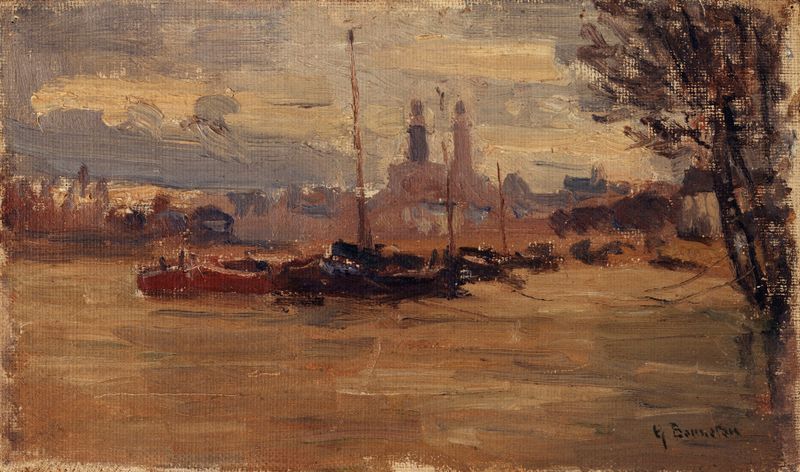
La Seine au pont des Invalides (inondations de 1910)
Germain Eugène Bonneton
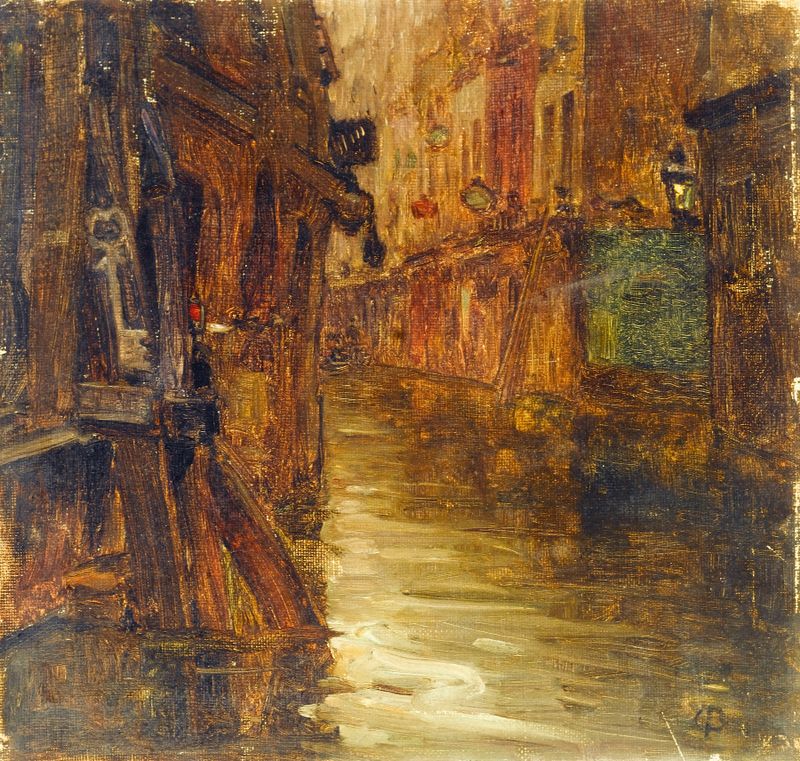
La rue de Bièvre, vue du boulevard Saint-Germain (inondations de 1910)
Germain Eugène Bonneton
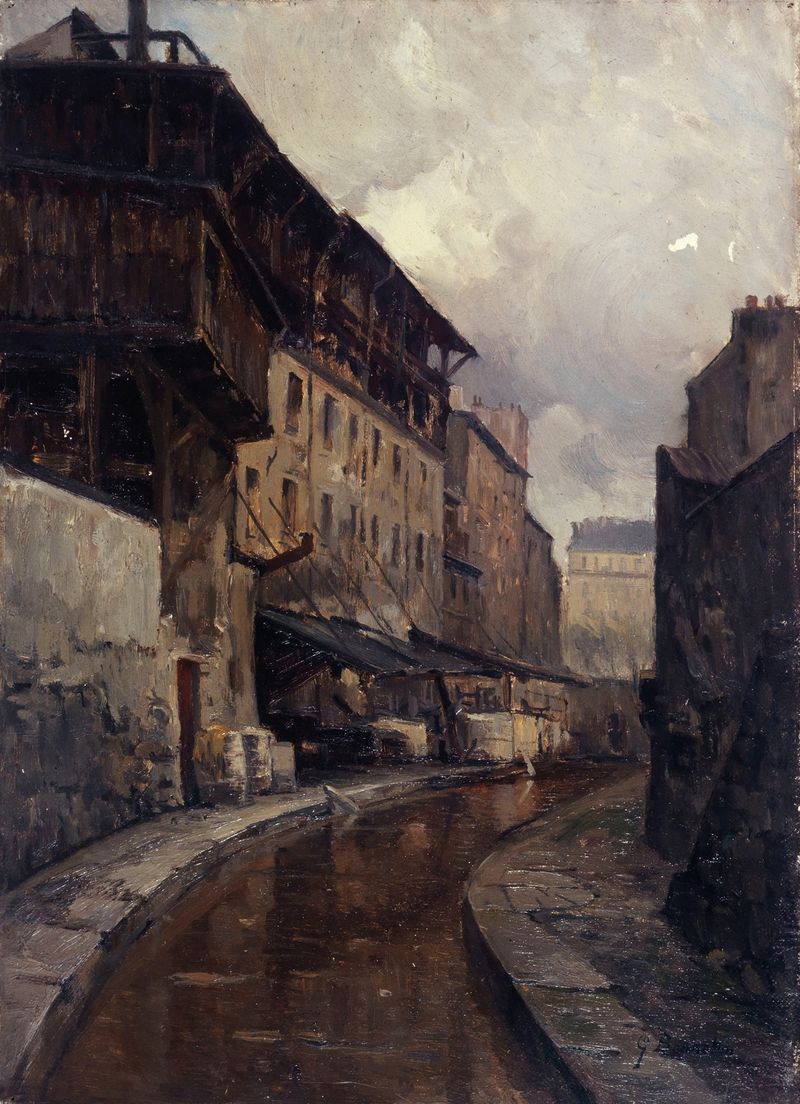
La Bièvre, rue de Valence
Germain Eugène Bonneton

La Bièvre, entre la rue Pascal et la rue Broca
Germain Eugène Bonneton

Entrée du passage Moret, rue des Cordelières
Germain Eugène Bonneton

La rue du Haut-Pavé vers la place Maubert (inondations de 1910)
Germain Eugène Bonneton
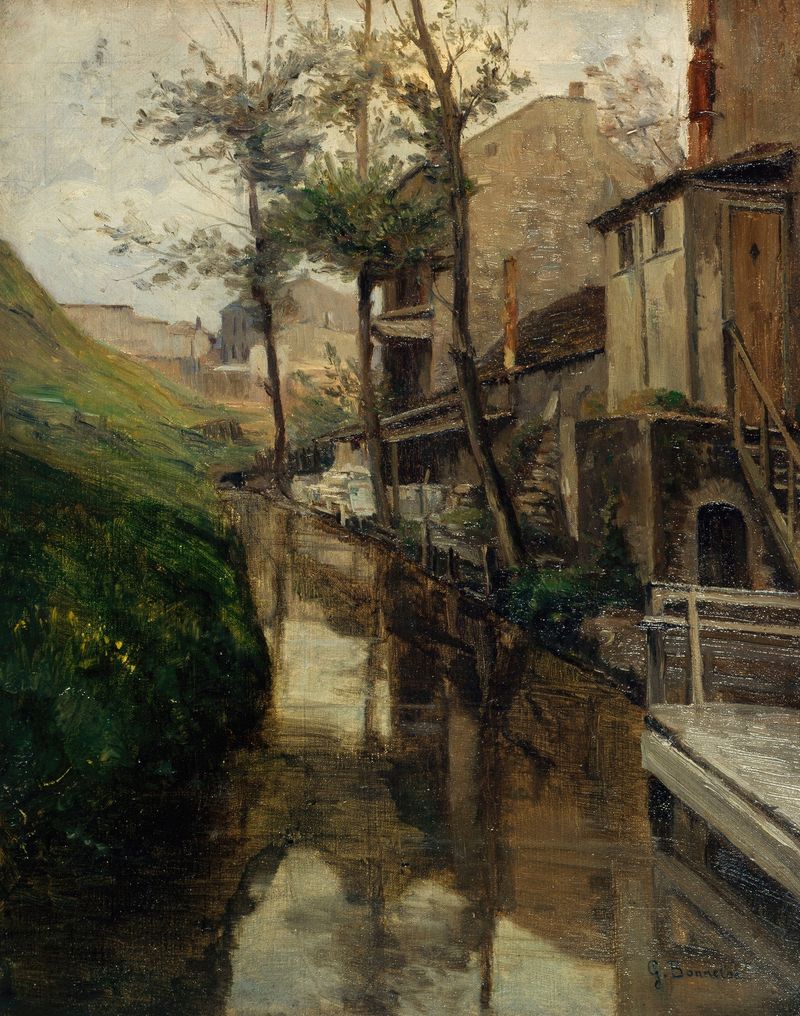
La Bièvre, rue Vulpian
Germain Eugène Bonneton
Le quai Montebello (inondations de 1910)
Germain Eugène Bonneton
La rue Maître-Albert (inondations de 1910)
Germain Eugène Bonneton

Bras gauche de la Bièvre, boulevard Arago
Germain Eugène Bonneton





