
La rue Maître-Albert (inondations de 1910) — History & Facts
How does one capture the tempestuous dance of water and streets when nature declares its dominion? In La rue Maître-Albert (inondations de 1910), the tumult of an urban flood reveals a visceral obsession not just with nature's wrath, but with the resilience of those caught in its grip. Focus on the left side of the canvas, where swirling waves of water rage against the cobblestones. Notice how the artist employs a palette of deep blues and muted grays, contrasting starkly with the soft, pale hues of buildings in the background. The rhythmic brushstrokes convey a sense of movement, guiding your gaze through the scene, emphasizing the chaos while capturing moments of stillness amongst the turmoil.
Each figure caught in the flood appears almost suspended, as if time is both racing and halting under the weight of the floodwaters. Upon closer inspection, small details evoke deeper meanings—the expressions of the people, a blend of determination and despair, hint at the broader struggles of life against nature. The looming buildings, steadfast yet vulnerable, mirror the resilience of the human spirit, caught between destruction and survival. This tension between order and chaos is palpable, reminding viewers of their own vulnerabilities in the face of uncontrollable forces. In 1910, Bonneton painted this piece amidst a tumultuous period for Paris, as the Seine rose and flooded neighborhoods.
The artist, influenced by the Impressionist movement, aimed to depict not only the physical reality of the floods but the emotional impact on the city’s inhabitants. The artwork captures a moment in time when nature's power collided with human existence, leaving a lasting mark on the history of the city and the artist's legacy.
More Artworks by Germain Eugène Bonneton
Browse all →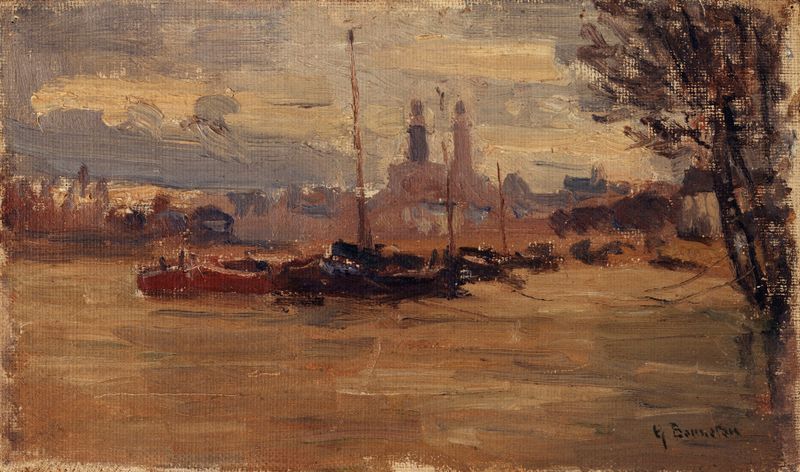
La Seine au pont des Invalides (inondations de 1910)
Germain Eugène Bonneton
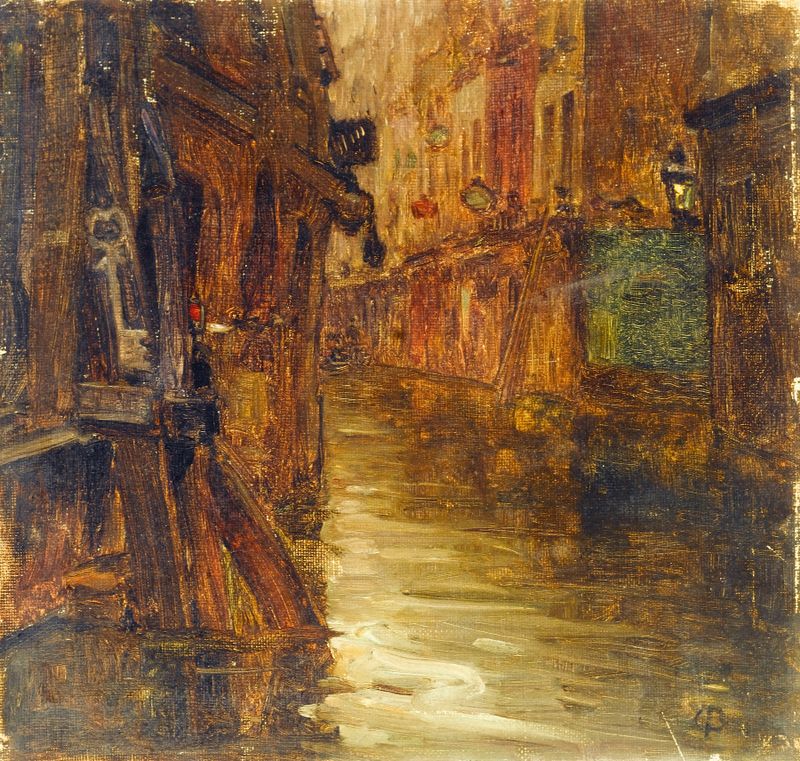
La rue de Bièvre, vue du boulevard Saint-Germain (inondations de 1910)
Germain Eugène Bonneton
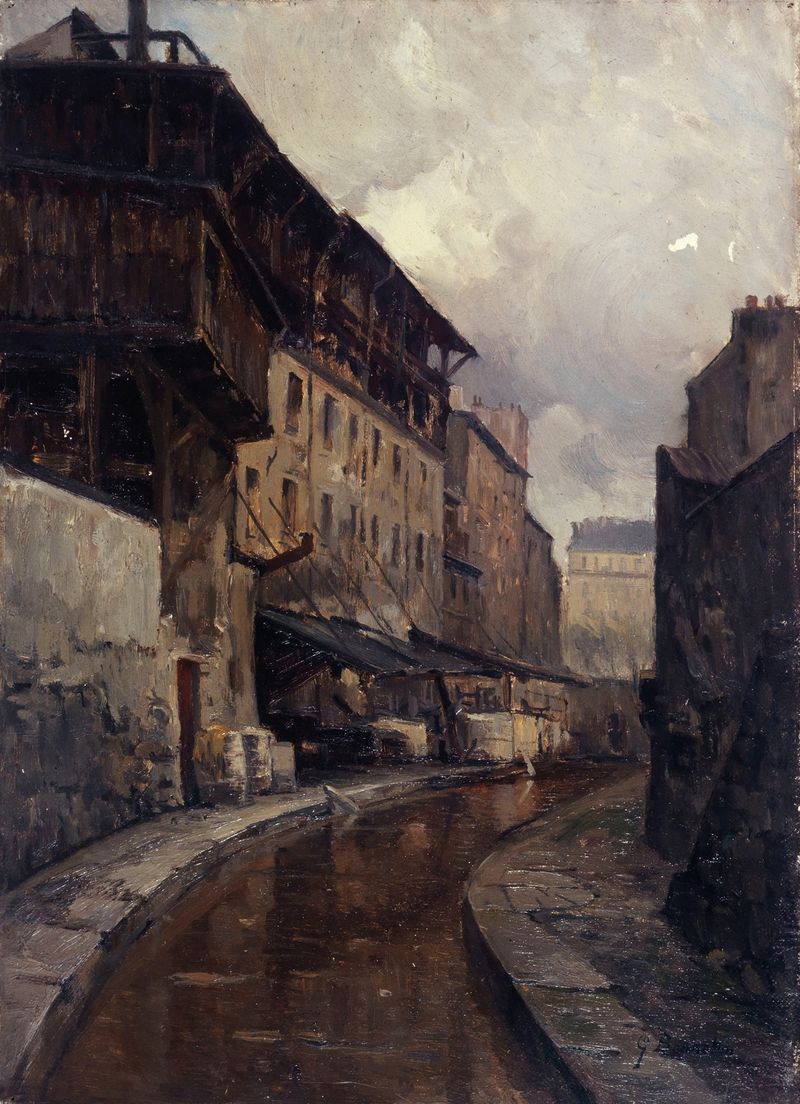
La Bièvre, rue de Valence
Germain Eugène Bonneton

La Bièvre, entre la rue Pascal et la rue Broca
Germain Eugène Bonneton

Entrée du passage Moret, rue des Cordelières
Germain Eugène Bonneton
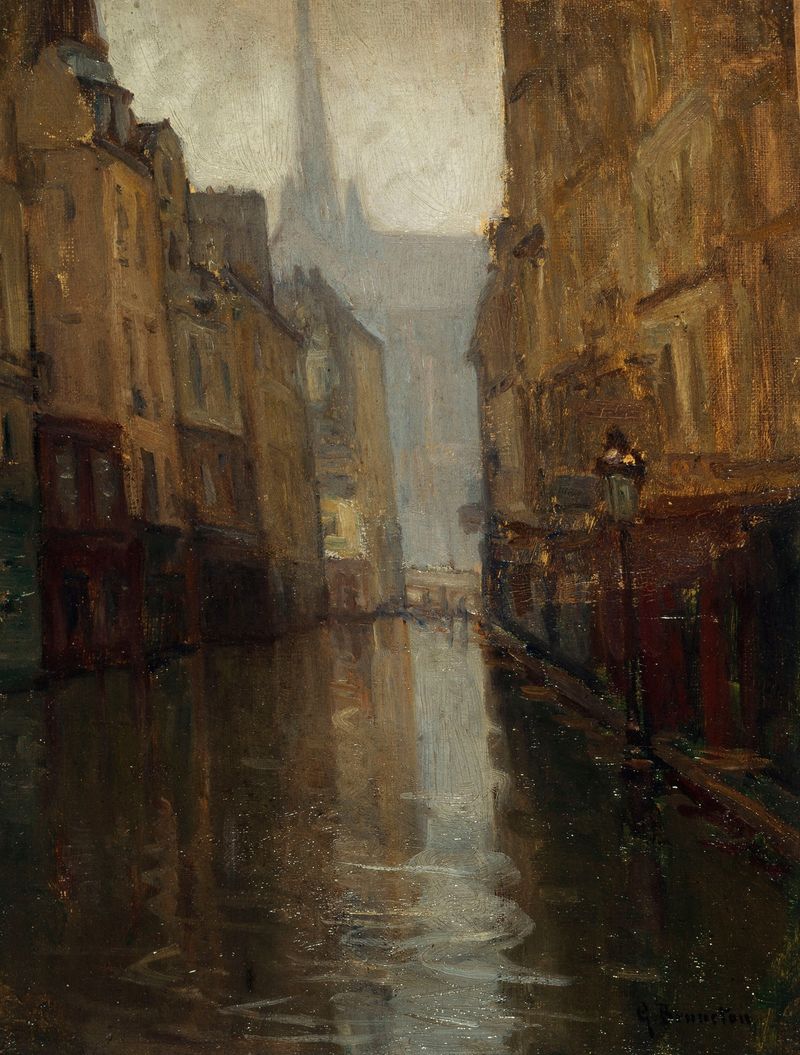
La rue du Haut-Pavé vers le quai de Montebello (inondations de 1910)
Germain Eugène Bonneton

La rue du Haut-Pavé vers la place Maubert (inondations de 1910)
Germain Eugène Bonneton
La Bièvre, rue Vulpian
Germain Eugène Bonneton
Le quai Montebello (inondations de 1910)
Germain Eugène Bonneton

Bras gauche de la Bièvre, boulevard Arago
Germain Eugène Bonneton





