
La Rue Notre Dame And The Quai Duquesne — History & Facts
In the quiet interplay of light and shadow, divinity finds its voice within the mundane. The simple street scene captures more than just architecture; it whispers the sacredness of everyday life, where the ordinary becomes extraordinary under the artist's gaze. Focus on the foreground where the cobblestones stretch like a pathway to revelation. Sickert’s brushwork is loose yet deliberate, inviting you to trace the rhythm of the streets.
Look to the left and notice how the soft light caresses the facades, revealing textures and colors that breathe life into the buildings. The palette of muted earth tones hints at a timelessness, while the subtle contrast between warm sunlight and cool shadows creates an inviting depth that draws the viewer in. In this urban tableau, contrasts abound. The quietude of the scene belies the vibrant pulse of life just beyond the frame.
Figures, perhaps visitors or locals, appear almost as shadows themselves—elusive, their stories left to the imagination. The juxtaposition of the robust architecture against the fleeting human presence speaks to a divine permanence amidst the transience of life, capturing a moment that is simultaneously still and full of potential. In 1902, Sickert painted this work while living in London, where he was deeply involved in the burgeoning modernist movement. At that time, he was exploring the intersection of Impressionism and a more raw, honest representation of urban life.
His choice to depict a quiet street scene reflects not only his personal contemplations but also a broader artistic shift, as artists began to find beauty and significance in the overlooked corners of daily existence.
More Artworks by Walter Richard Sickert
Browse all →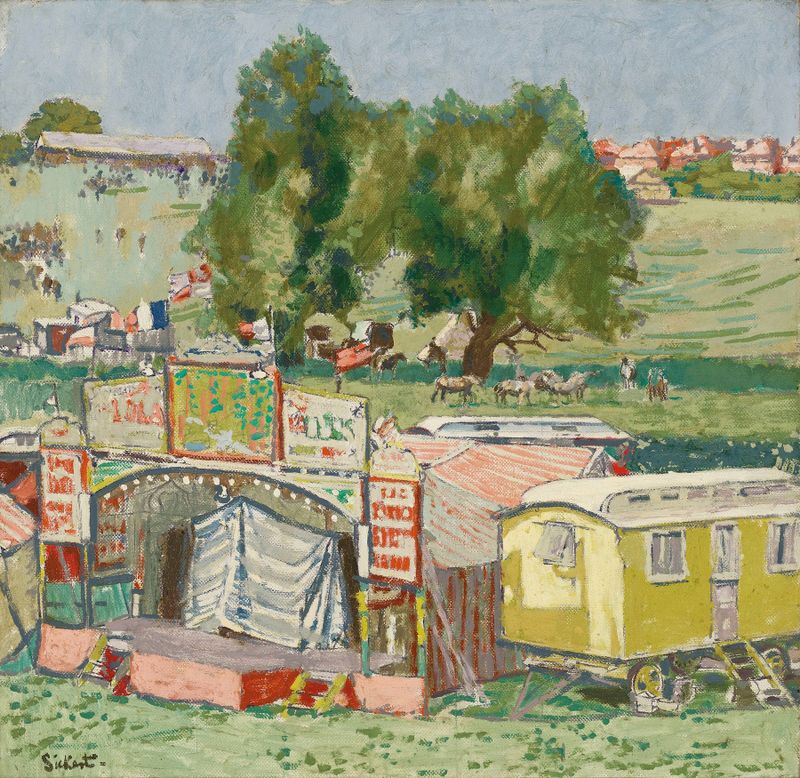
Barnet Fair
Walter Richard Sickert
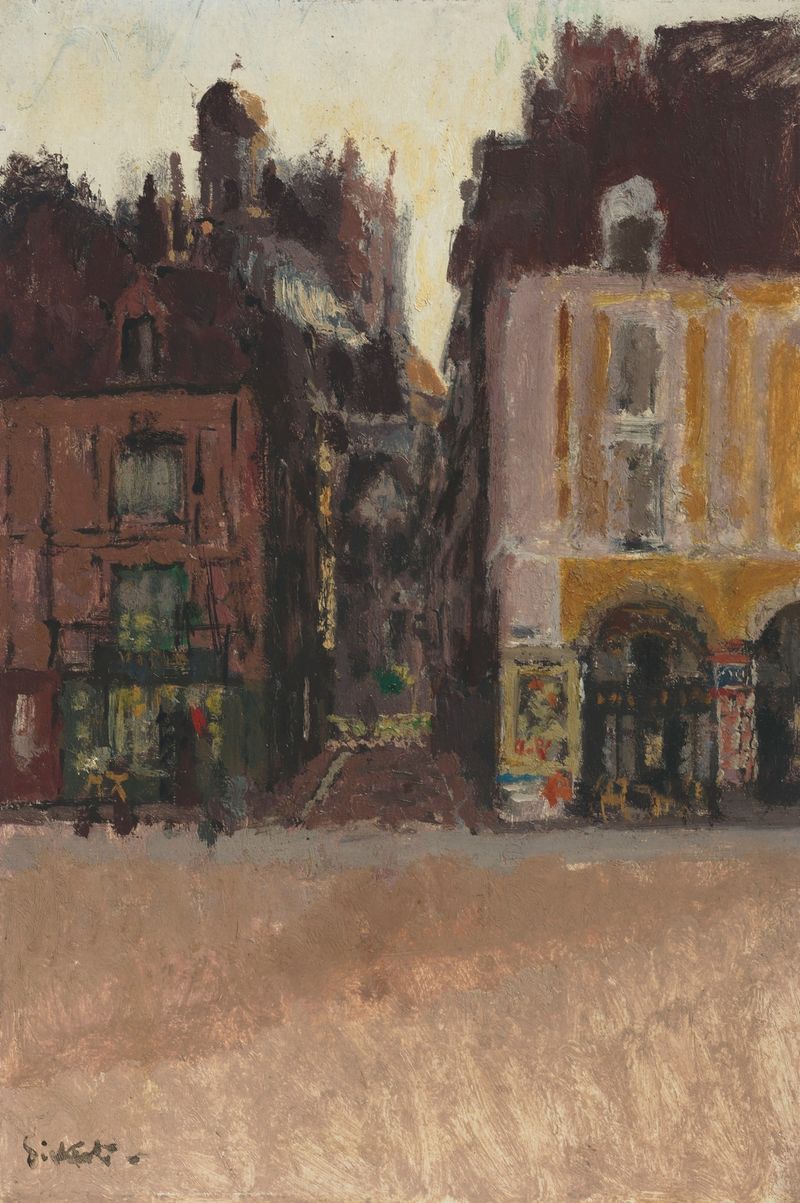
La Rue Notre Dame and the Quai Duquesne, Dieppe
Walter Richard Sickert

Street Scene
Walter Richard Sickert

Lansdown Crescent, Bath
Walter Richard Sickert

Belmont, Lansdown Road, Bath
Walter Richard Sickert

St Jacques, Dieppe
Walter Richard Sickert

Venice, La Salute
Walter Richard Sickert
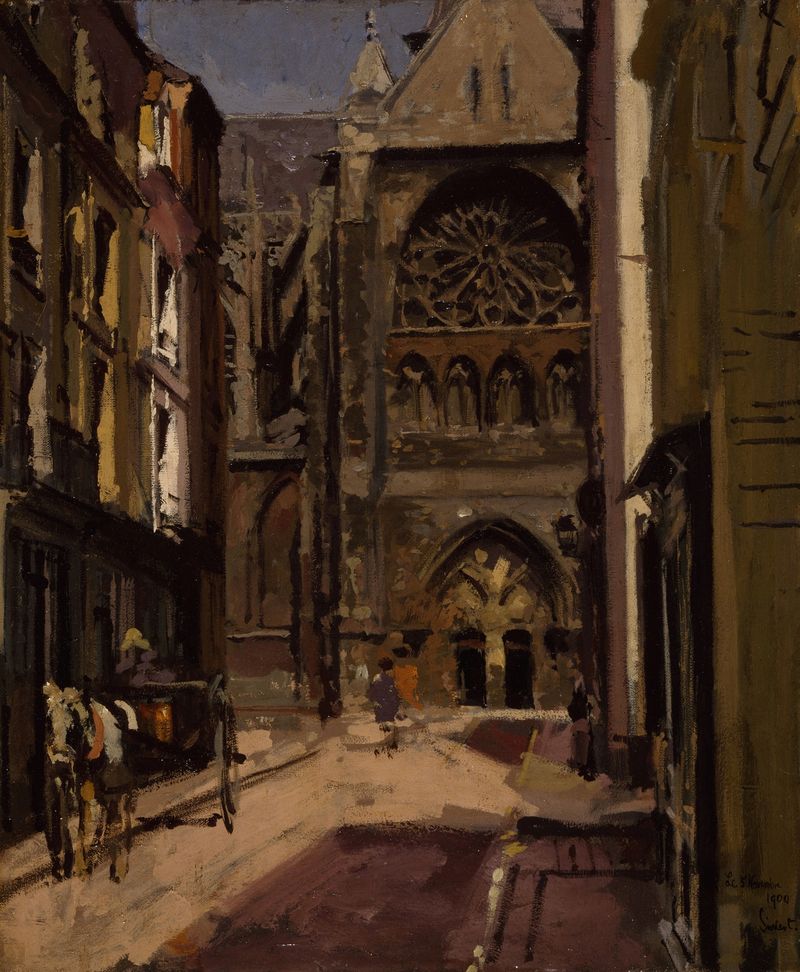
La Rue Pecquet, Dieppe, France
Walter Richard Sickert

Le Quai Henri IV
Walter Richard Sickert

Venetian Canal
Walter Richard Sickert
More Architecture Art
Browse all →
The statue of Liberty
Frédéric Auguste Bartholdi

View of Houses in Delft, Known as ‘The Little Street’
Johannes Vermeer

View of Houses in Delft, Known as ‘The Little Street’
Johannes Vermeer

The Cathedral in Rouen. The portal, Grey Weather
Claude Monet

The yellow house
Vincent van Gogh

The Church in Auvers-sur-Oise, View from the Chevet
Vincent van Gogh