
Lansdown Crescent, Bath — History & Facts
Is this a mirror — or a memory? In Lansdown Crescent, Bath, the line between reality and illusion blurs, inviting viewers to traverse the layers of perception that dwell within its frames. Focus on the vivid interplay of light and shadow that dances across the arching façades of the crescent. The muted palette, dominated by warm ochres and cool blues, draws the eye along the gentle curves of the buildings. Notice how the perspective pulls you deeper into the scene, creating a rhythmic flow that echoes the quiet elegance of Bath’s architecture.
Each brushstroke contributes to the sense of place, blending the tangible with the ethereal. Yet, beneath its surface beauty lies a complex emotional landscape. The empty streets evoke a sense of solitude, hinting at memories of lives once lived here. The juxtaposition of light filtering through the architecture suggests both warmth and melancholy, reminding us of the passage of time.
What stories lie hidden in the shadows? The painting captures not just a location, but the very essence of longing, as if the crescent itself whispers tales of the past. In the years 1917-18, Walter Richard Sickert found himself navigating the turmoil of a world at war, while also grappling with his own artistic evolution. Living in England, he was deeply influenced by both Impressionism and the changing emotional landscape of society. This period marked a significant transition in his work, where he began to explore urban solitude and the essence of memory, culminating in pieces like this, merging the real with the imagined in his pursuit of capturing life’s fleeting moments.
More Artworks by Walter Richard Sickert
Browse all →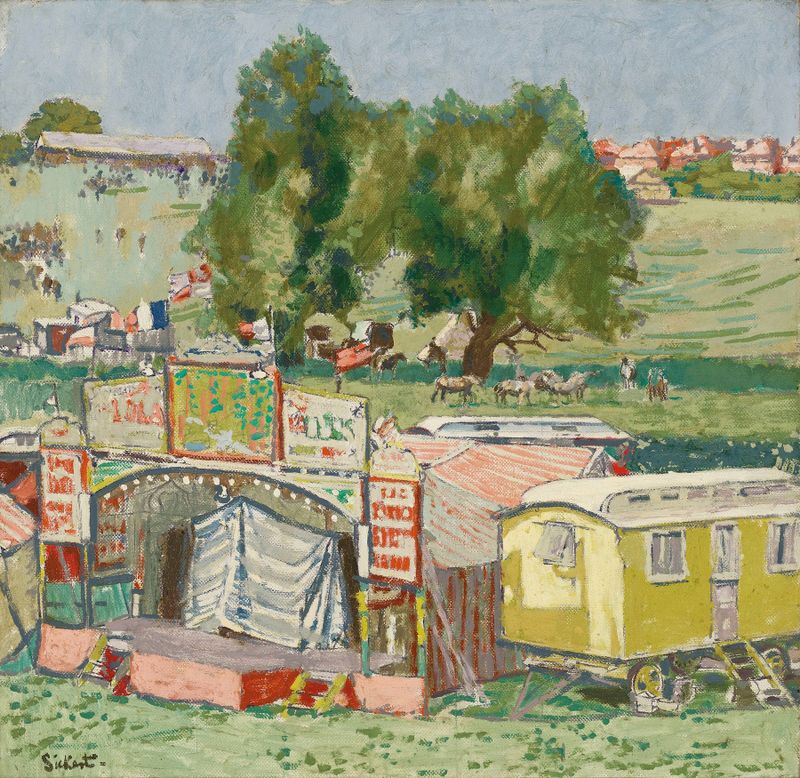
Barnet Fair
Walter Richard Sickert
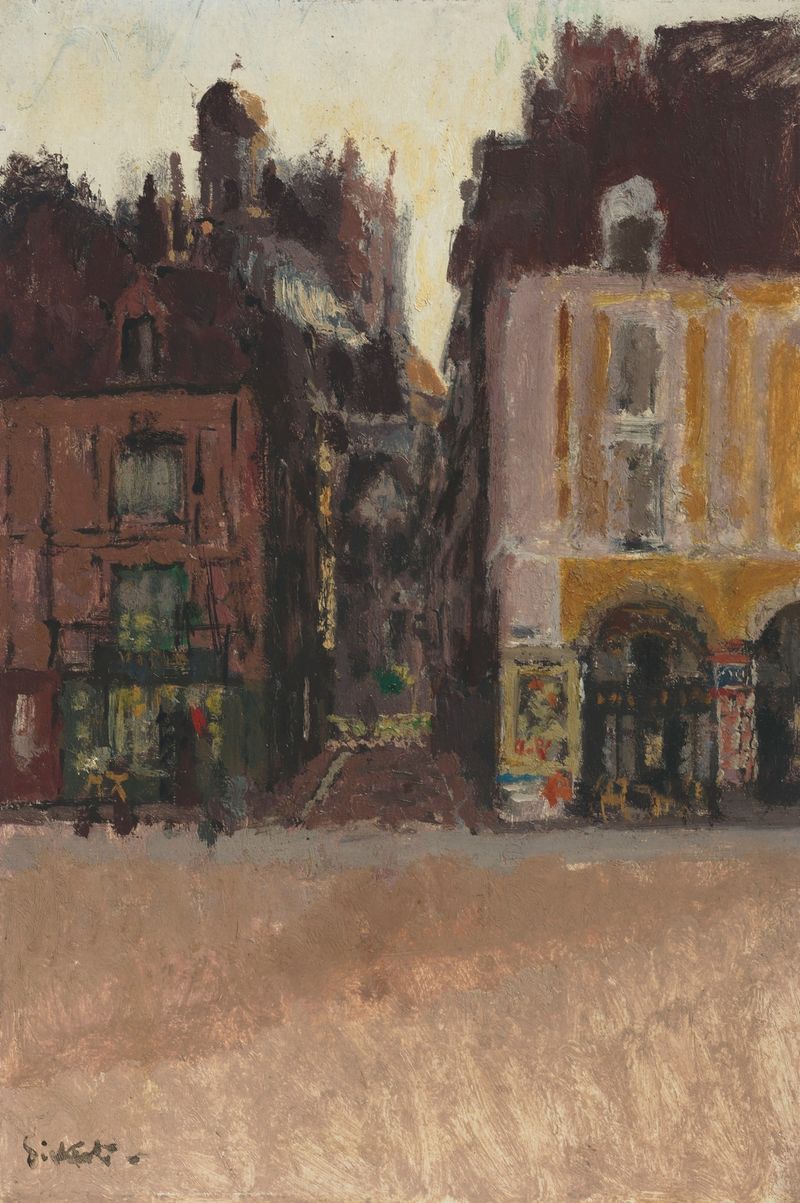
La Rue Notre Dame and the Quai Duquesne, Dieppe
Walter Richard Sickert

Street Scene
Walter Richard Sickert

Belmont, Lansdown Road, Bath
Walter Richard Sickert

St Jacques, Dieppe
Walter Richard Sickert

Venice, La Salute
Walter Richard Sickert
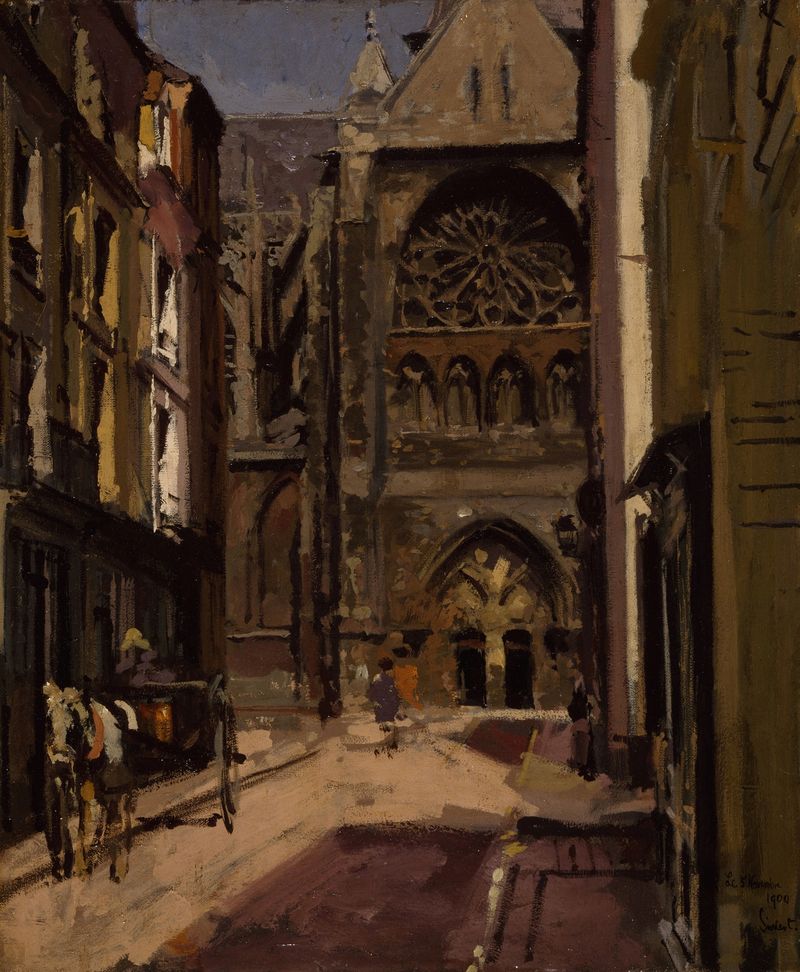
La Rue Pecquet, Dieppe, France
Walter Richard Sickert

Le Quai Henri IV
Walter Richard Sickert

Venetian Canal
Walter Richard Sickert

La Rue Pecquet, Dieppe
Walter Richard Sickert
More Architecture Art
Browse all →
The statue of Liberty
Frédéric Auguste Bartholdi

View of Houses in Delft, Known as ‘The Little Street’
Johannes Vermeer

View of Houses in Delft, Known as ‘The Little Street’
Johannes Vermeer

The Cathedral in Rouen. The portal, Grey Weather
Claude Monet

The yellow house
Vincent van Gogh

The Church in Auvers-sur-Oise, View from the Chevet
Vincent van Gogh