
St Jacques, Dieppe — History & Facts
Is this a mirror — or a memory? In St Jacques, Dieppe, the canvas becomes a vessel for introspection, where the weight of loss resonates profoundly through the interplay of color and form. Look to the center of the composition, where the stark, weathered church stands against a muted sky. The subdued palette of blues and grays envelops the scene, while hints of ochre and sienna breathe life into the building’s intricate details. Notice how Sickert captures the texture of the stonework, allowing it to exude a sense of history and the passage of time, while the brushwork remains loose yet deliberate, evoking a quiet yet suspended moment that invites contemplation. As you explore the painting further, consider the shadows cast upon the church's façade, hinting at underlying sorrow and the passage of time.
The absence of figures amplifies the feeling of solitude, suggesting that the building itself holds the weight of memories and untold stories. Here, grief lingers in the air, a palpable presence that intertwines with the architecture, transforming the scene into an echo of the past. In the early years of the 20th century, Sickert painted this piece while immersed in his fascination with the urban landscapes of France. During this period, he sought to capture the essence of place, reflecting his experiences and observations in a world on the brink of modernity.
The painting emerges from a time when artists began to explore emotional depth and social themes, marking a significant shift in the artistic narrative of their era.
More Artworks by Walter Richard Sickert
Browse all →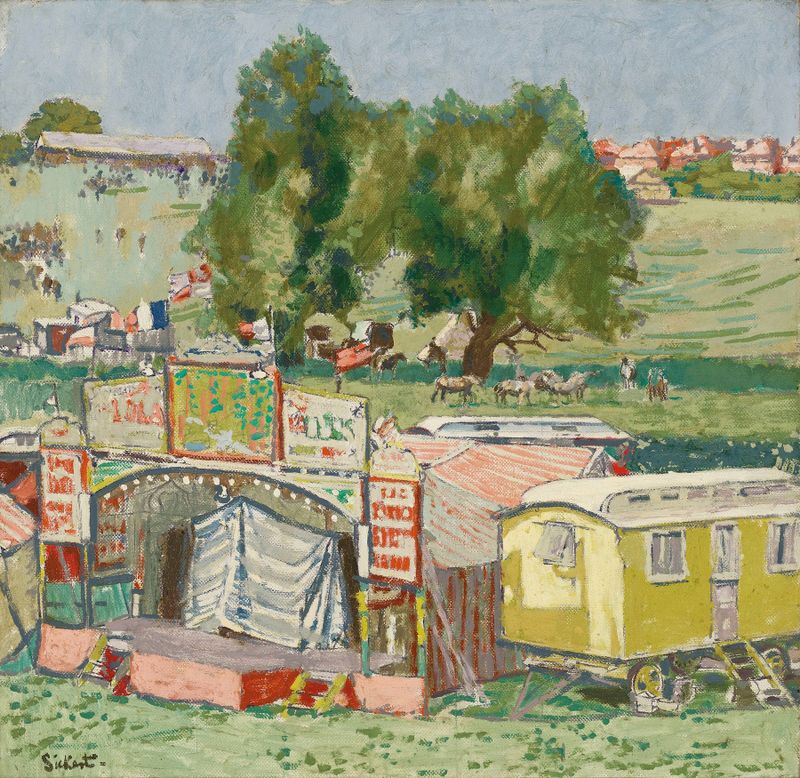
Barnet Fair
Walter Richard Sickert
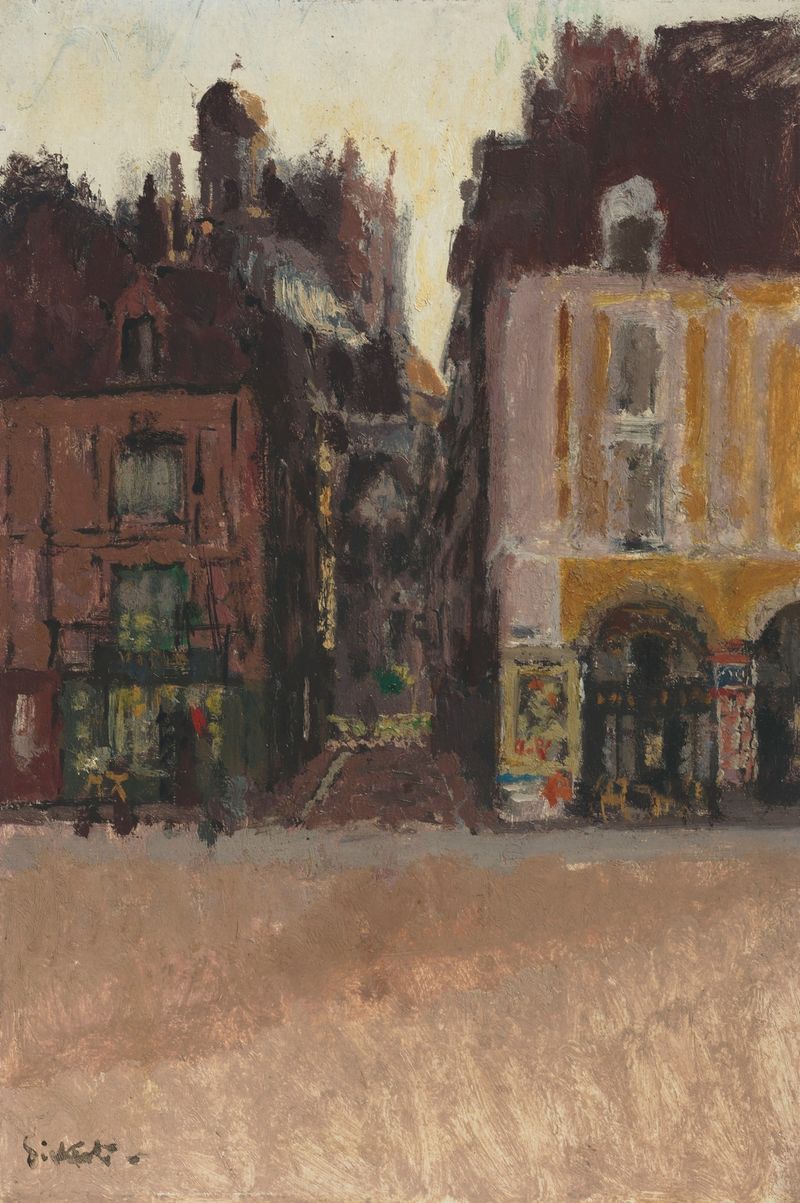
La Rue Notre Dame and the Quai Duquesne, Dieppe
Walter Richard Sickert

Street Scene
Walter Richard Sickert

Lansdown Crescent, Bath
Walter Richard Sickert

Belmont, Lansdown Road, Bath
Walter Richard Sickert

Venice, La Salute
Walter Richard Sickert
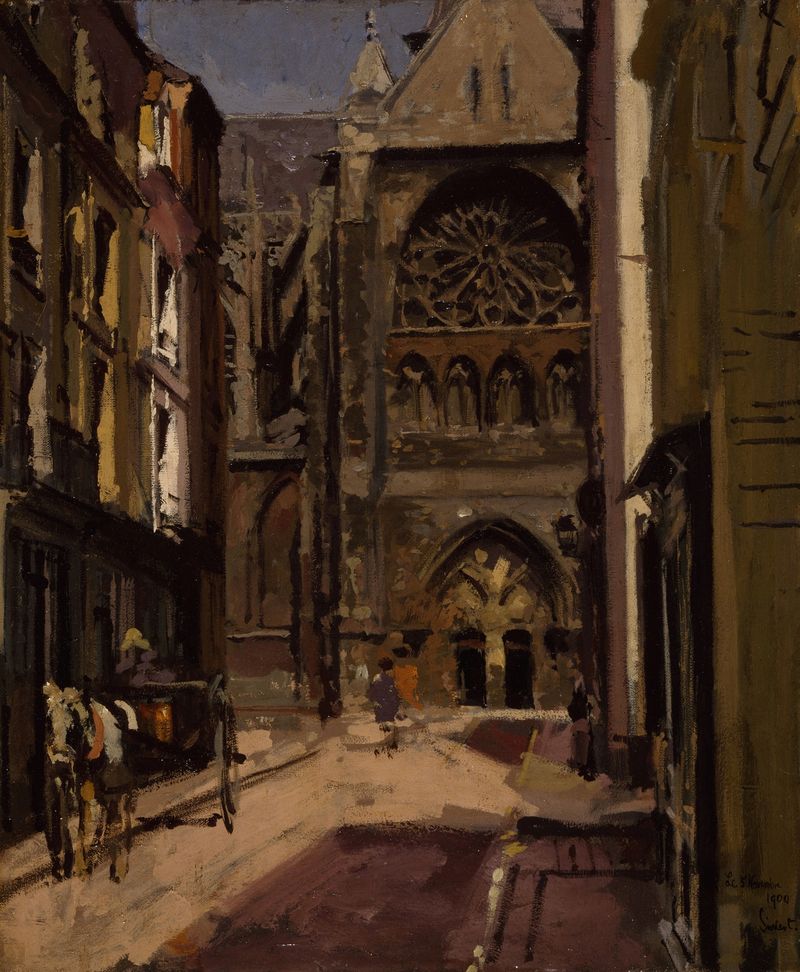
La Rue Pecquet, Dieppe, France
Walter Richard Sickert

Le Quai Henri IV
Walter Richard Sickert

Venetian Canal
Walter Richard Sickert

La Rue Pecquet, Dieppe
Walter Richard Sickert





