
La Rue Notre Dame and the Quai Duquesne, Dieppe — History & Facts
Who listens when art speaks of silence? In the stillness of La Rue Notre Dame and the Quai Duquesne, Dieppe, we find ourselves caught in an eloquent dialogue between the mundane and the profound, where every brushstroke resonates with the whispers of the past. Look to the left at the soft, smoky blues and grays that envelop the buildings, their weathered facades almost breathing with history. Notice how the light dances over the cobblestone street, casting elongated shadows that seem to narrate the lives that have traversed this once-bustling thoroughfare. The composition, balanced yet asymmetrical, draws the eye toward the distant church steeple, a silent sentinel above the everyday chaos of life below. Delve deeper into the emotional undertones of this scene, where the warm, earthy tones contrast sharply with the coolness of the shadows, creating an atmosphere imbued with nostalgia and longing.
The solitary figures, almost ghostlike in their stillness, evoke a sense of introspection, suggesting the weight of untold stories and unfulfilled dreams. It’s as if time itself is frozen, inviting viewers to ponder the essence of existence within this tranquil yet charged locale. Walter Richard Sickert painted this piece between 1899 and 1901 while residing in Dieppe, a period marked by his exploration of the interplay between light and shadow. Influenced by the Impressionist movement, Sickert sought to capture not just the physicality of the scene but the emotional essence of urban life.
This artwork reflects his unique approach to composition and color, capturing a fleeting moment in a changing world, as he grappled with his own artistic identity amidst the shifting tides of contemporary art.
More Artworks by Walter Richard Sickert
Browse all →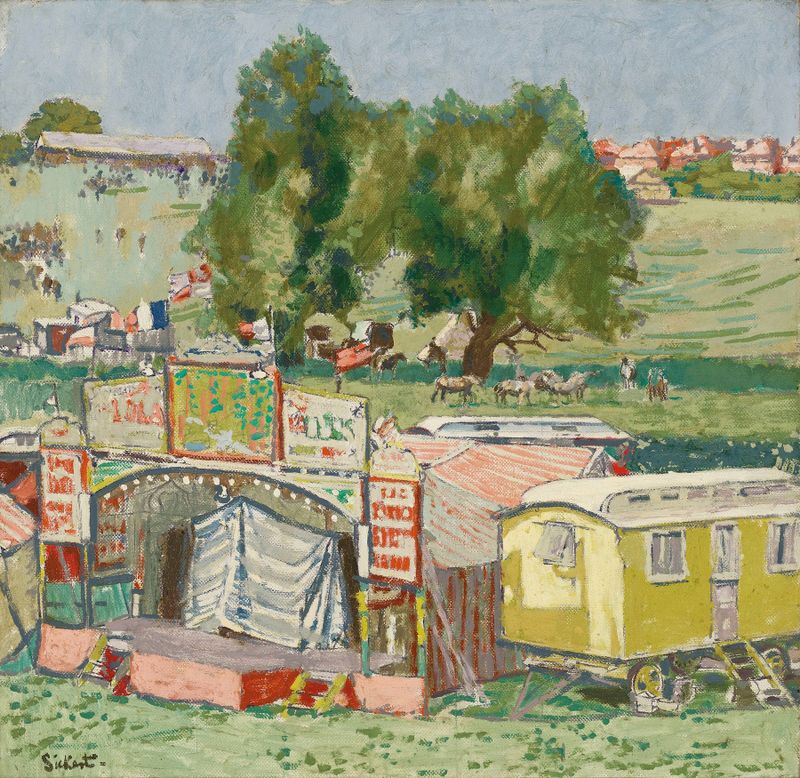
Barnet Fair
Walter Richard Sickert

Street Scene
Walter Richard Sickert

Lansdown Crescent, Bath
Walter Richard Sickert

Belmont, Lansdown Road, Bath
Walter Richard Sickert

St Jacques, Dieppe
Walter Richard Sickert

Venice, La Salute
Walter Richard Sickert
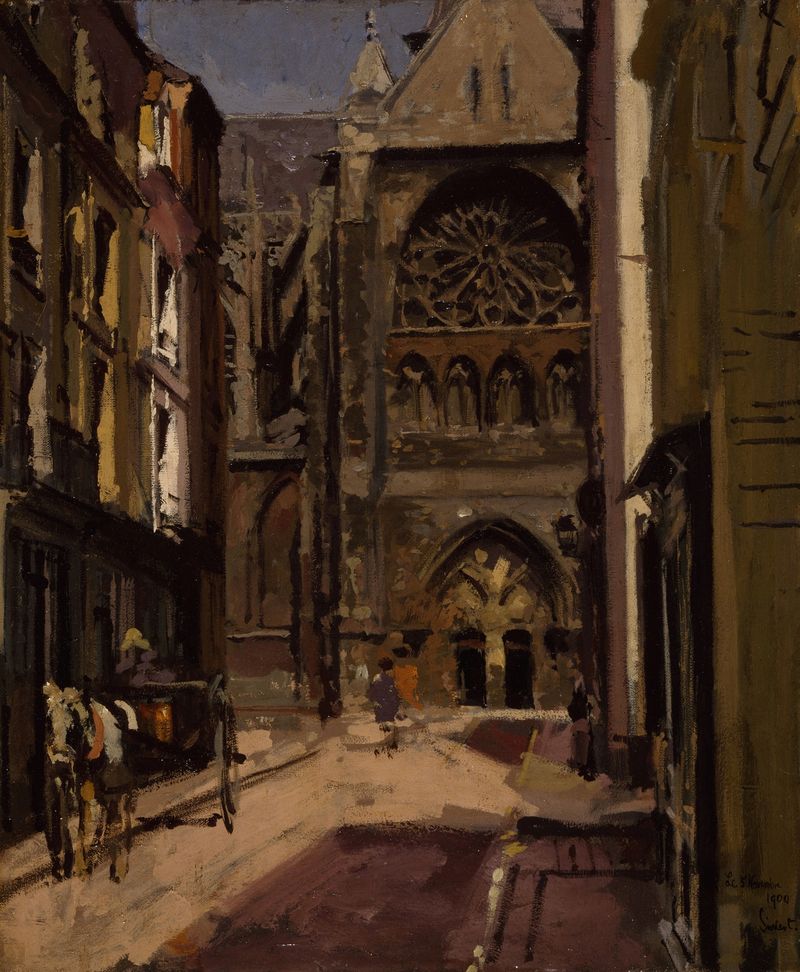
La Rue Pecquet, Dieppe, France
Walter Richard Sickert

Le Quai Henri IV
Walter Richard Sickert

Venetian Canal
Walter Richard Sickert

La Rue Pecquet, Dieppe
Walter Richard Sickert





