
La Rue Notre Dame and the Quai Duquesne — History & Facts
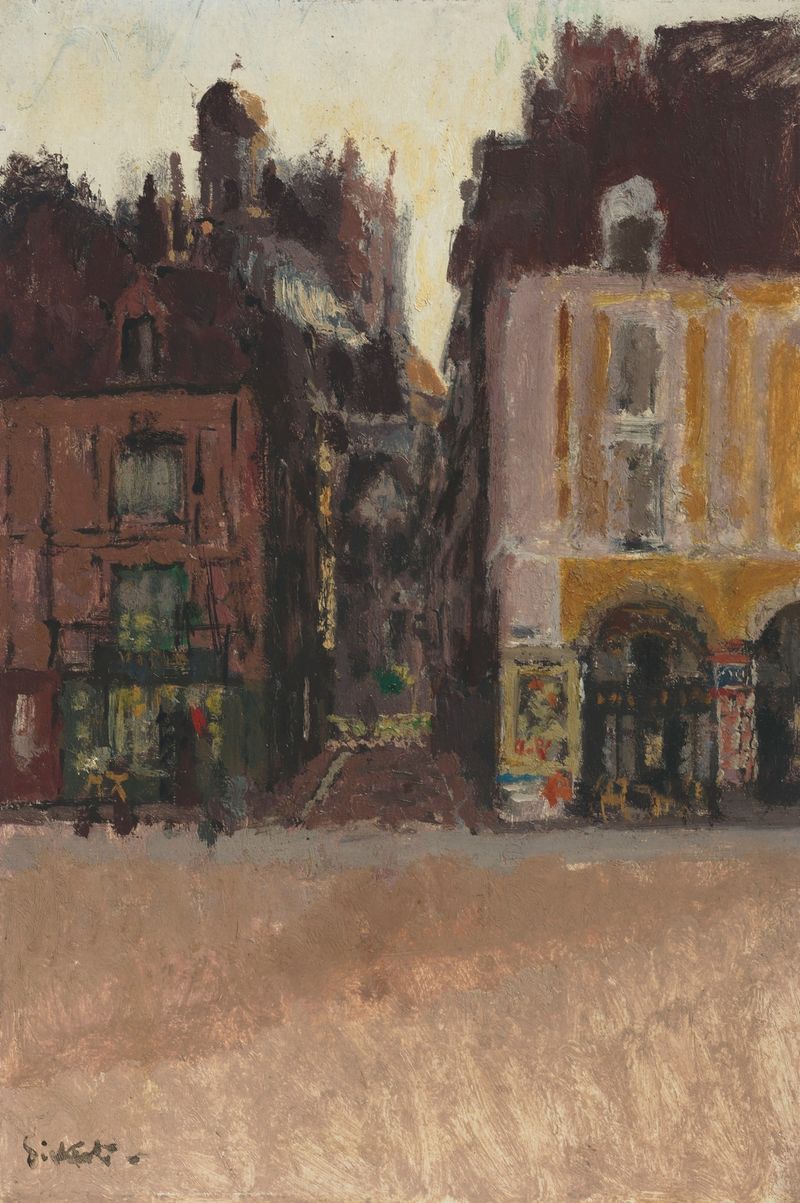
Where does light end, and longing begin? In La Rue Notre Dame and the Quai Duquesne, an intersection of vibrancy and madness blurs the boundaries between the seen and the felt. Look to the left at the warm glow radiating from the buildings, where the ochre and deep umber hues create a sense of unease amidst the everyday. The composition draws your eye along the street, leading you down the direction of life unfolding, while the figures appear almost ghostly in their moments of motion. Notice how shadows cling to the corners, evoking a weight that contrasts with the flickering light, illustrating the tension between the mundane and the profound. Hidden within the bustling scene lies a duality of emotion.
The juxtaposition of soft light against darker recesses symbolizes the lingering madness within urban life — a reflection of the chaotic energy coursing through the streets. Each figure, either rushing or standing still, embodies a moment caught between desire and despair. The delicate brushwork and layered textures invite contemplation, revealing how quickly joy can yield to sorrow in the vibrant heart of the city. In 1899, Sickert was immersed in the bohemian culture of Paris, a time when Impressionism was evolving into new forms of expression.
Living in a city alive with artistic discourse, he captured the essence of modern life, addressing themes of isolation and community in his work. This period marked a significant turning point for him, as he sought to convey the raw sensations of urban existence, blending reality and emotion with every stroke of his brush.
More Artworks by Walter Richard Sickert
Browse all →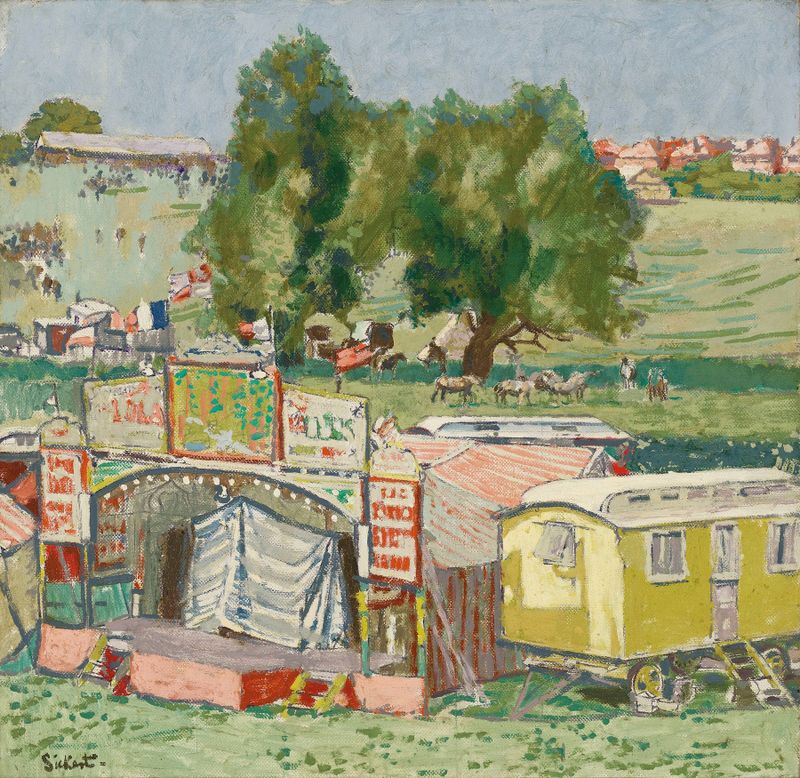
Barnet Fair
Walter Richard Sickert
La Rue Notre Dame and the Quai Duquesne, Dieppe
Walter Richard Sickert

Street Scene
Walter Richard Sickert

Lansdown Crescent, Bath
Walter Richard Sickert

Belmont, Lansdown Road, Bath
Walter Richard Sickert

St Jacques, Dieppe
Walter Richard Sickert

Venice, La Salute
Walter Richard Sickert
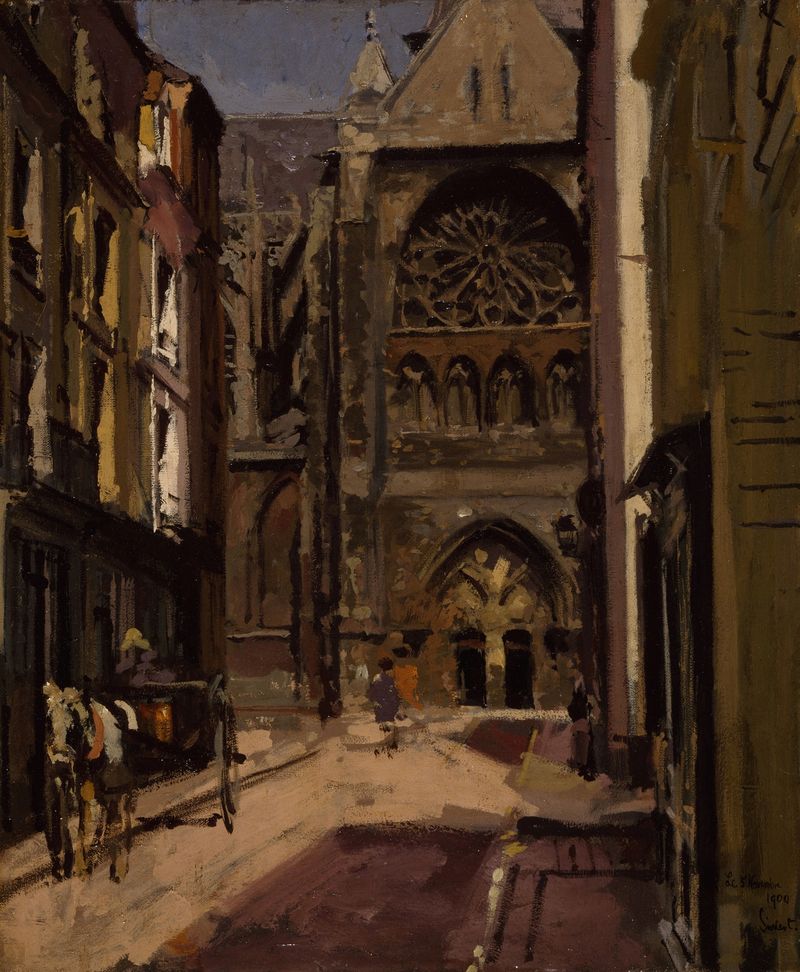
La Rue Pecquet, Dieppe, France
Walter Richard Sickert

Le Quai Henri IV
Walter Richard Sickert

Venetian Canal
Walter Richard Sickert





