
La Rue Pecquet, Dieppe — History & Facts
Did the painter know this moment would outlive them? In a transient world, art captures life’s fleeting essence, allowing us to revisit places and times long past. Look to the left at the narrow street, La Rue Pecquet, where gently sloping rooftops invite you to wander through the cobblestone path. Notice how the interplay of light and shadow dances upon the facades, illuminating subtle hues of ochre and grey. The brushwork is loose yet deliberate, each stroke breathing life into the scene, drawing your eyes along the street that seems to beckon with the promise of undiscovered stories waiting to unfold. Beneath the surface, an emotional tension emerges from the juxtaposition of stillness and movement.
The figures, painted with a quiet spontaneity, seem both anchored in their moment and engaged in their own narratives. The soft yet contrasting colors reflect a sense of rebirth; this isn't merely a street but a lifeline connecting the past with an ongoing present, suggesting that every pedestrian carries their own history, weaving a collective tapestry of life that transcends time. Created in Dieppe between 1908 and 1909, Sickert’s work emerged during a transformative period in the art world, as Post-Impressionism began to take hold. The artist, a key figure among the Camden Town Group, sought to explore urban life with a fresh perspective, capturing everyday scenes infused with emotional depth.
This painting stands as a testament to his fascination with the ordinary, elevating it to a narrative steeped in communal rebirth and reflection.
More Artworks by Walter Richard Sickert
Browse all →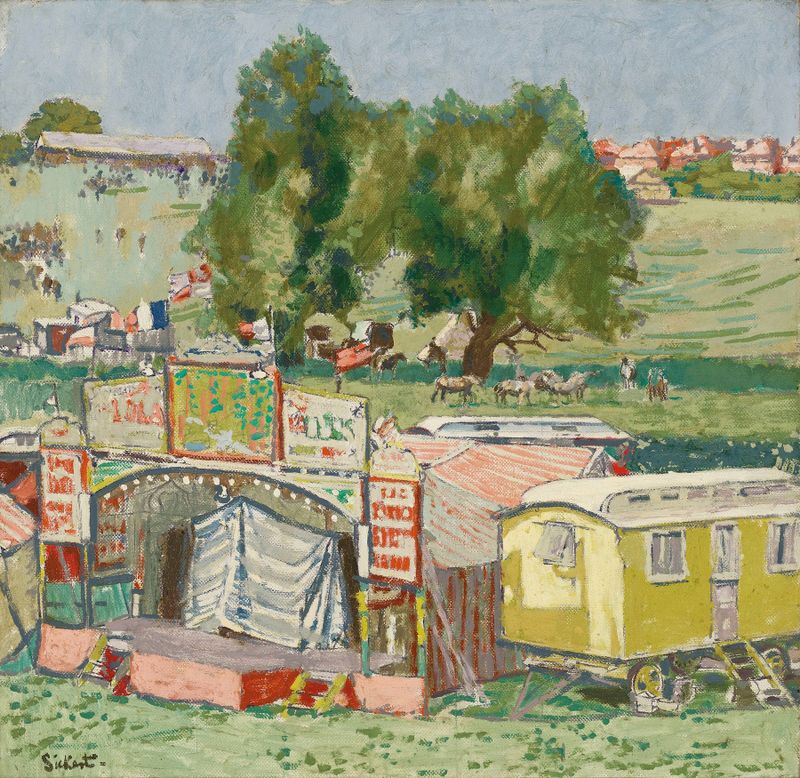
Barnet Fair
Walter Richard Sickert
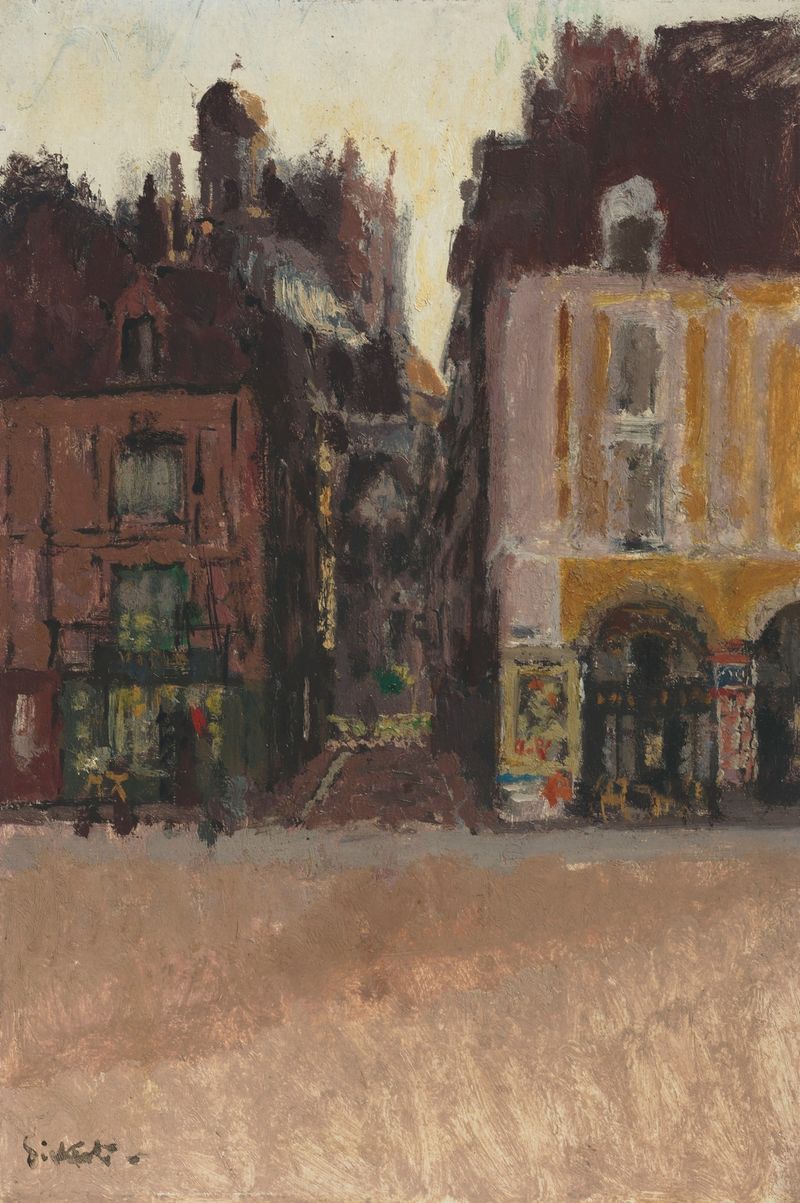
La Rue Notre Dame and the Quai Duquesne, Dieppe
Walter Richard Sickert

Street Scene
Walter Richard Sickert

Lansdown Crescent, Bath
Walter Richard Sickert

Belmont, Lansdown Road, Bath
Walter Richard Sickert

St Jacques, Dieppe
Walter Richard Sickert

Venice, La Salute
Walter Richard Sickert
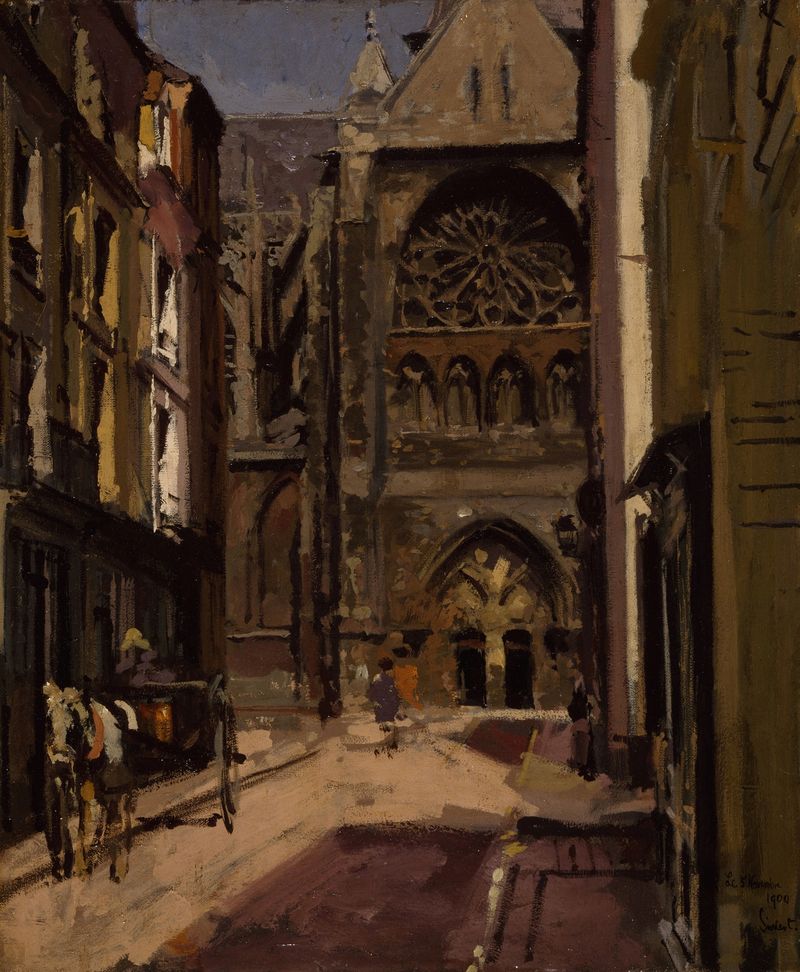
La Rue Pecquet, Dieppe, France
Walter Richard Sickert

Le Quai Henri IV
Walter Richard Sickert

Venetian Canal
Walter Richard Sickert





