
La Salute, Effet De Matin — History & Facts
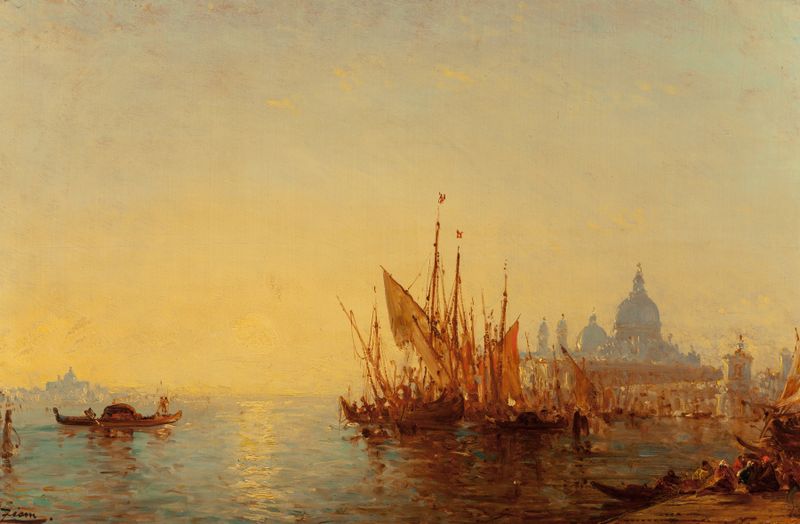
In this stillness, reflections ripple through time, revealing a world that breathes as softly as a whisper. Look to the center of the composition where the ethereal silhouette of La Salute rises majestically against a gentle dawn. The delicate interplay of warm pinks and cool blues captures the early morning light, with the soft luminescence gradually illuminating the church’s ornate façade. Notice how the light shimmers on the water’s surface, creating a kaleidoscope of color that draws your gaze across the tranquil canal, beckoning you to explore every crevice of the scene. Embedded within this serene landscape are tensions between movement and stillness.
The quiet water reflects not only the architecture but also the ephemeral nature of time, suggesting that beauty is fleeting. The boats, barely discernible, hint at life beyond the canvas, while the calmness of the scene invites contemplation on what lies beneath the surface. This duality creates a sense of longing, as viewers grapple with the dichotomy of permanence in artistry against the impermanence of life. Félix Ziem painted this evocative work between 1880 and 1890, during his time in Venice, a city that deeply influenced his artistic expression.
This era found Ziem embracing a blend of Impressionism and Romanticism, capturing the interplay of light and reflection that would define his later works. At a time when Europe was wrestling with modernity, Ziem's fascination with atmospheric effects and his focus on the sublime beauty of nature offered a poignant counter-narrative to the rapid changes surrounding him.
More Artworks by Félix Ziem
Browse all →
Venise
Félix Ziem
Coucher De Soleil À Venise
Félix Ziem
Constantinople
Félix Ziem
La place Saint-Marc, inondation de 1863
Félix Ziem
Bacino di San Marco
Félix Ziem
Canal Grande
Félix Ziem
Le Palais Du Doge, Venise
Félix Ziem
Vue d’Italie; la vieille porte
Félix Ziem
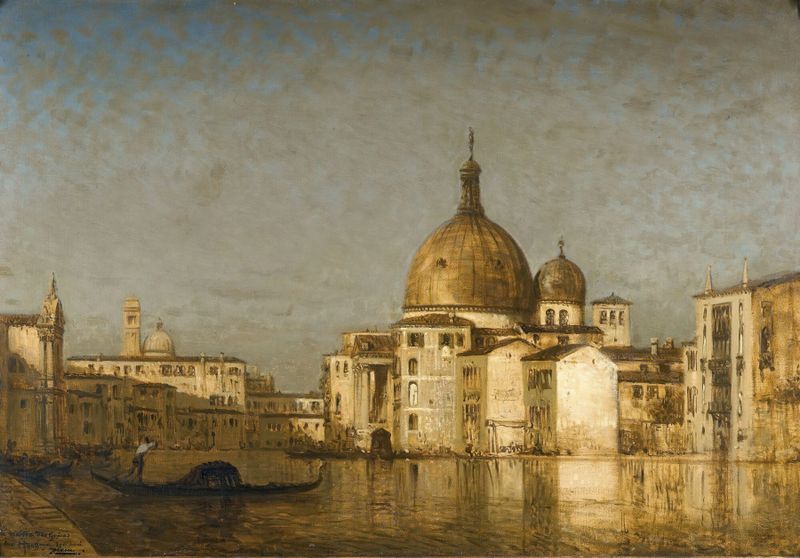
San Simeone Piccolo Au-Delà Du Grand Canal, Venis
Félix Ziem
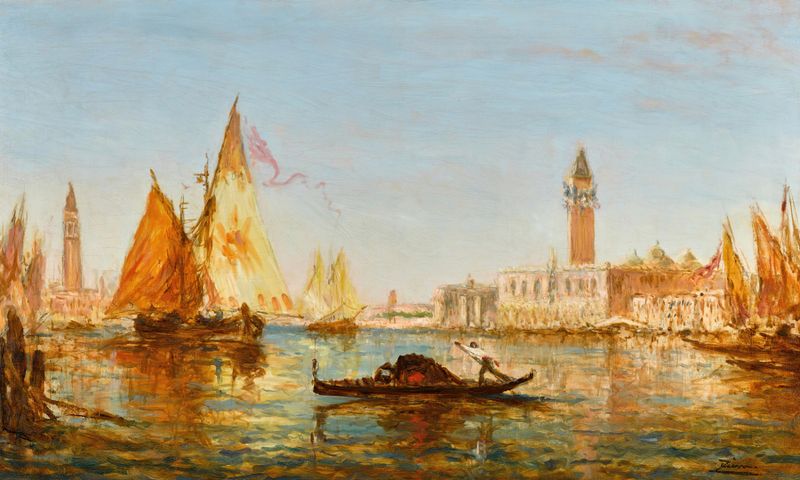
Venise, gondole et voiliers devant le Palais des doges et San Giorgio Maggiore
Félix Ziem





