
La Seine et le Pont des Arts, en janvier 1848 — History & Facts
Can paint confess what words never could? In La Seine et le Pont des Arts, en janvier 1848, the cold yet vivid scene speaks volumes of truth, capturing the essence of a moment steeped in emotion. Look to the foreground where the Seine shimmers with the soft blues and grays of winter. Notice how the delicate brushwork creates a sense of movement in the water, bringing it to life under a muted sky. The bridge, arching majestically above, draws your gaze upward, its intricate architecture juxtaposed against the calmness of the river below.
Shadows play across both elements, hinting at the fleeting nature of time and experience, while the figures scattered throughout the scene stand still, wrapped in their own thoughts. The contrast between the stillness of the bridge and the flowing water serves as a metaphor for the passage of time and the changes that the year 1848 would soon bring. Each figure, seemingly lost in their own world, reflects a broader collective unease; the forthcoming political turbulence is palpable beneath the surface. The muted palette evokes a somber mood, but the subtle hints of warmer hues suggest a glimmer of hope, capturing the duality of despair and optimism present in that era. Jean-Jacques Champin painted this piece in the midst of significant upheaval in France, during a time when the February Revolution was about to ignite.
Living in Paris, he was part of a vibrant artistic community responding to social change, yet this painting stands apart as a contemplative snapshot of life on the Seine, rather than a direct statement on fleeting political matters.
More Artworks by Jean-Jacques Champin
Browse all →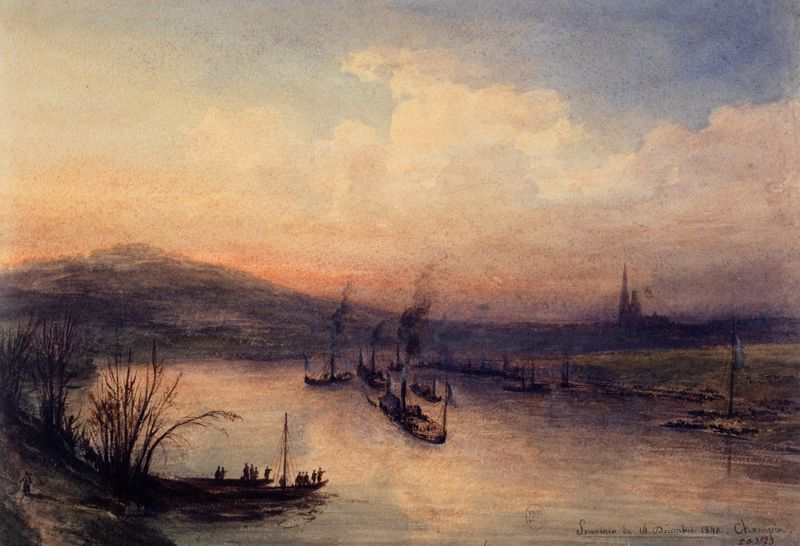
Le retour des cendres de Napoléon Ier, 1840, la Seine près de Saint-Denis
Jean-Jacques Champin
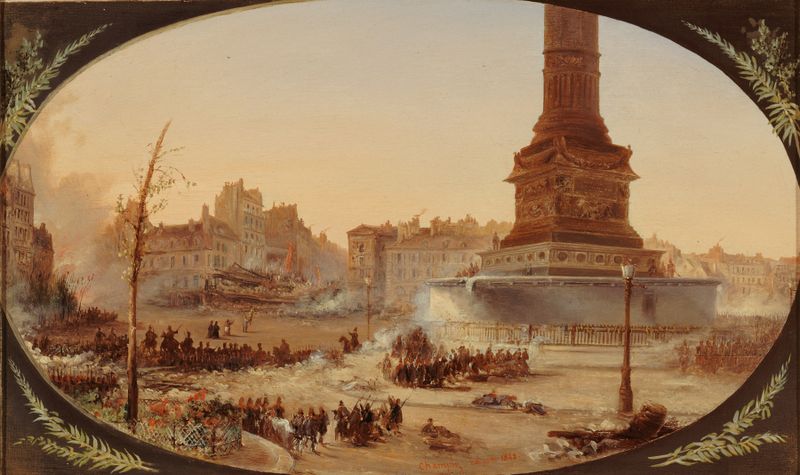
La Place de la Bastille et la Barricade de l’entrée du faubourg Saint-Antoine, le 25 juin 1848
Jean-Jacques Champin
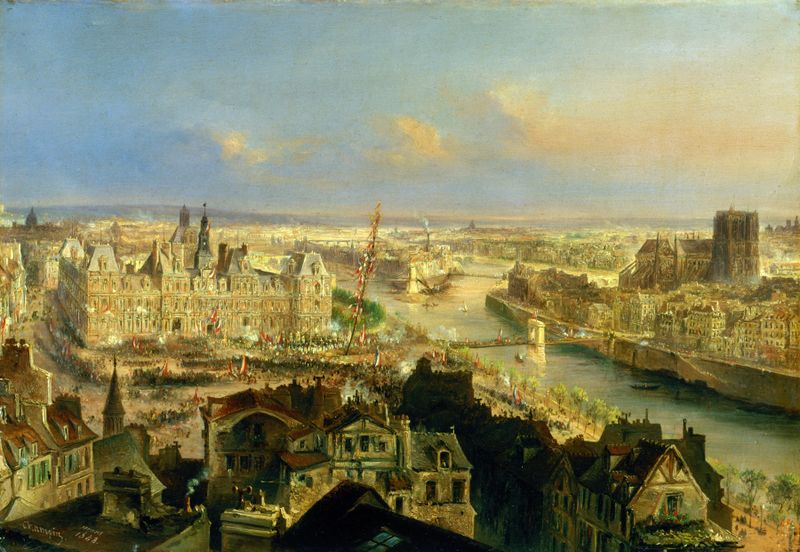
Plantation d’un arbre de la Liberté, devant l’hôtel de Ville, le 24 mars 1848
Jean-Jacques Champin
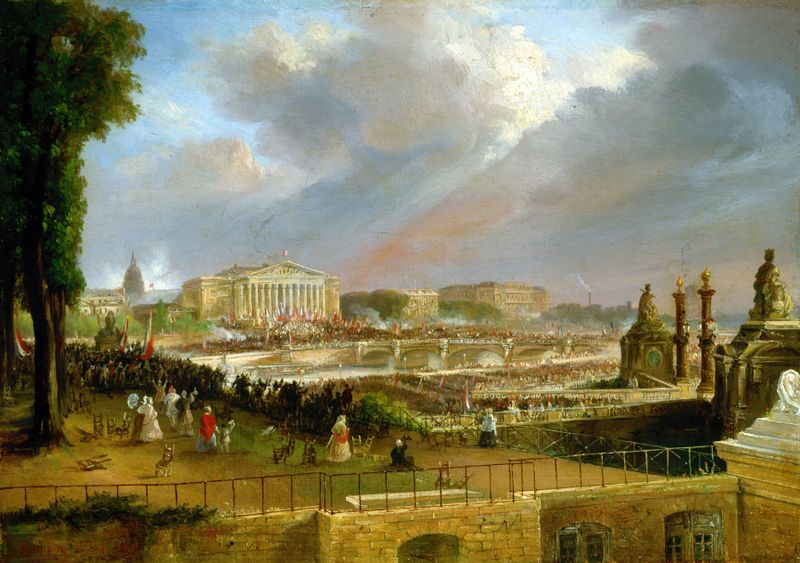
Proclamation de la République sur le portique de la Chambre des députés, le 4 mai 1848
Jean-Jacques Champin





