
La sente des pouilleux — History & Facts
In the fleeting nature of existence, we find a mirror reflecting our own mortality and fragility. Focus on the gentle slopes of the path winding through a rural landscape, where muted greens and browns harmonize in a soft embrace. The light dances across the scene, highlighting the delicate strokes of the artist's brush, creating a rhythmic balance that draws your eye from the foreground to the distant horizon. Notice how the figures, though small and seemingly insignificant against the vastness of the landscape, embody life’s tenacity amidst the quiet decay. There’s a poignant contrast between the vibrancy of nature and the somber reminder of human transience.
The figures laboring on the path suggest a connection to the earth, yet their frailty hints at the inevitable passage of time. The trees, which stand tall and enduring, seem to witness this struggle, offering a silent testament to life’s ephemeral beauty. Pissarro encapsulates a moment that feels both intimate and expansive, inviting introspection on our place within the grand cycle of existence. In 1882, while residing in Éragny-sur-Epte, Camille Pissarro painted this work during a period marked by artistic experimentation and the rise of Impressionism.
The movement challenged conventional representation, emphasizing light and everyday subjects. As he navigated personal and political upheavals, Pissarro’s focus on rural life captured not only the charm of the countryside but also the deeper themes of mortality and continuity.
More Artworks by Camille Pissarro
Browse all →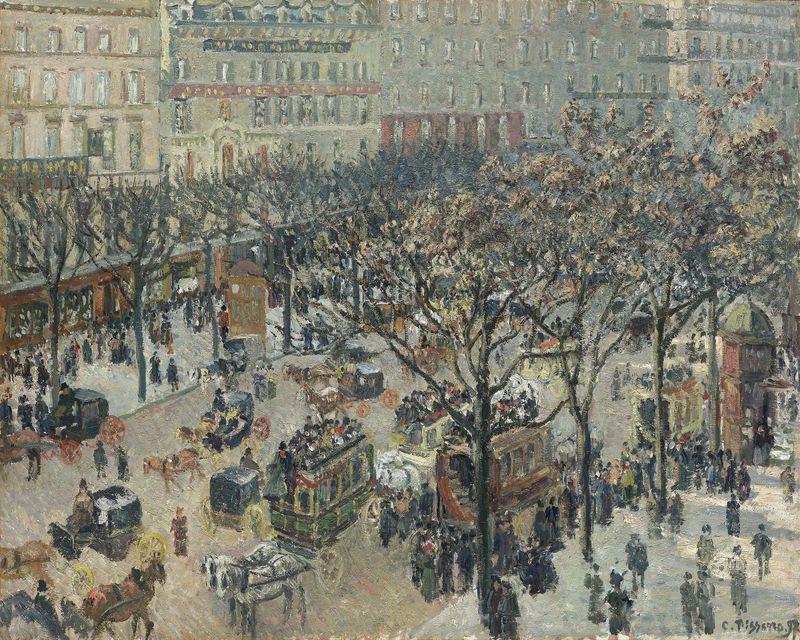
Boulevard des Italiens,Morning_Sunlight
Camille Pissarro
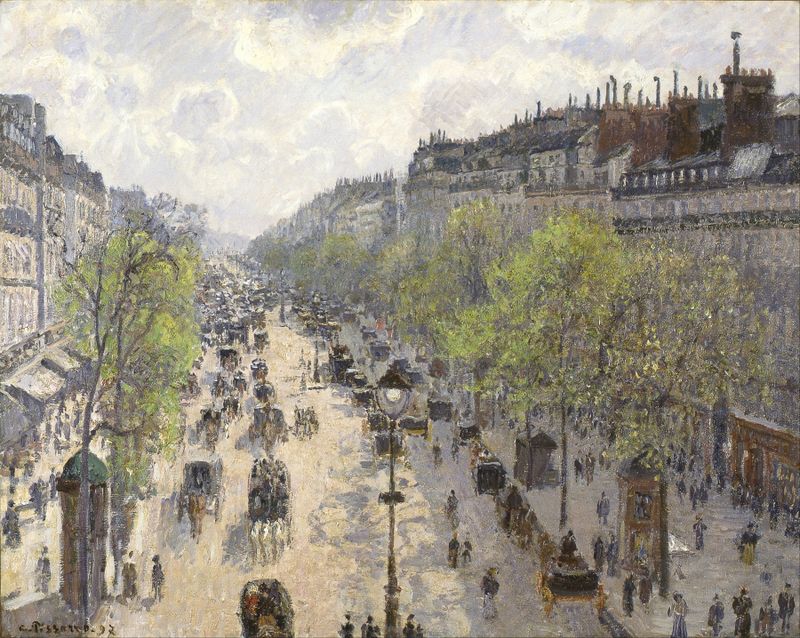
Boulevard Montmartre, Spring
Camille Pissarro
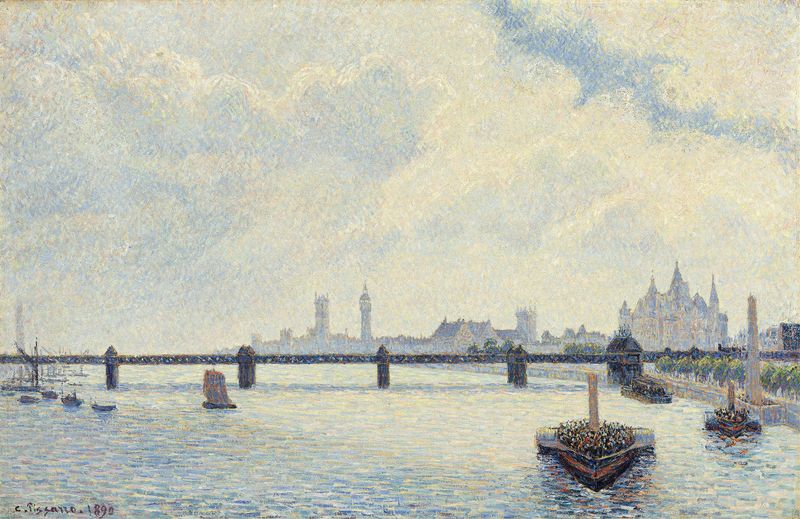
Charing Cross Bridge,London
Camille Pissarro
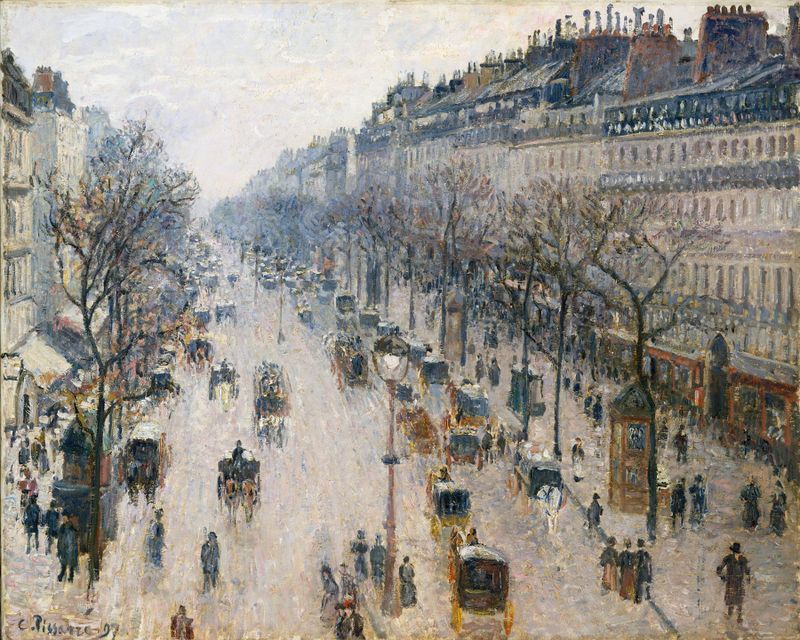
The Boulevard Montmartre on a Winter Morning
Camille Pissarro
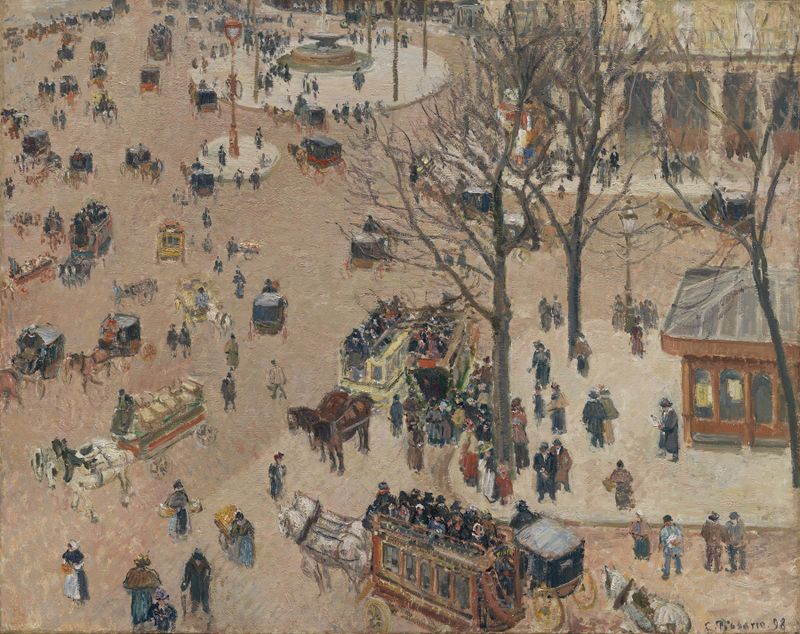
La Place du Théâtre Français
Camille Pissarro

Rue Saint-Lazare, Paris
Camille Pissarro
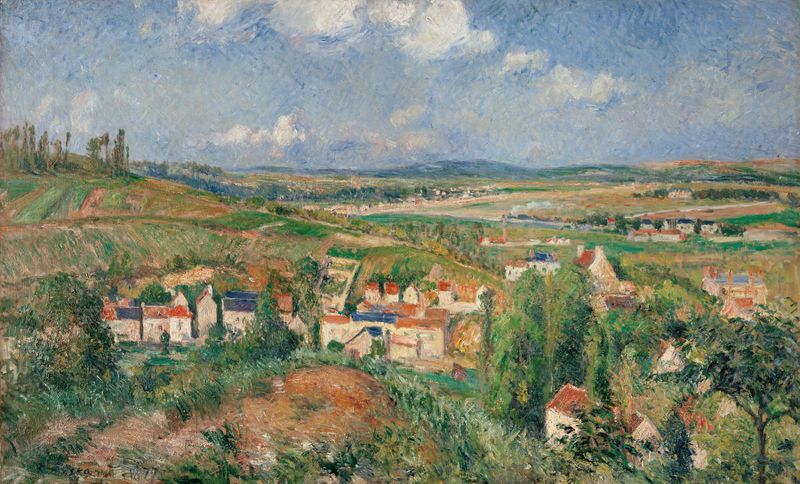
L’hermitage En Été, Pontoise
Camille Pissarro

Place du Theatre Francais,Fog Effect
Camille Pissarro
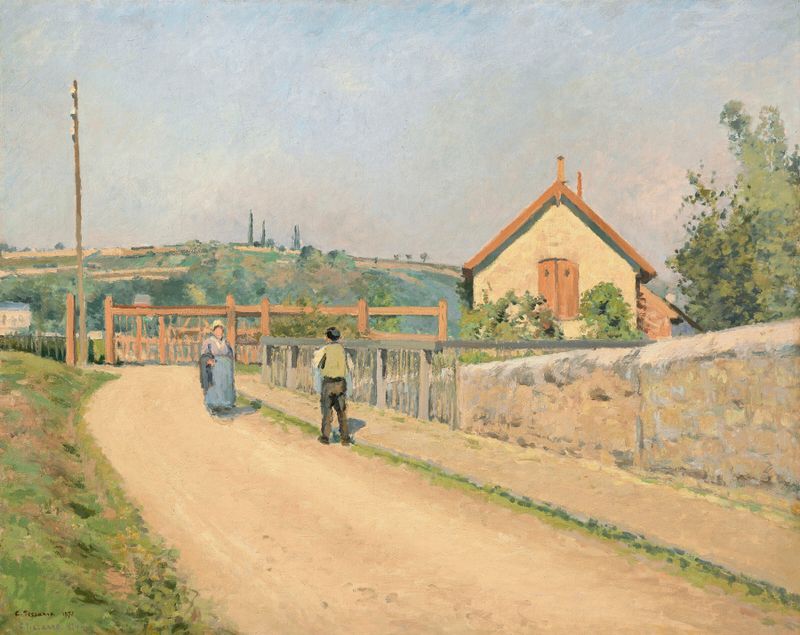
La barrière du chemin de fer, aux Pâtis près Pontoise
Camille Pissarro
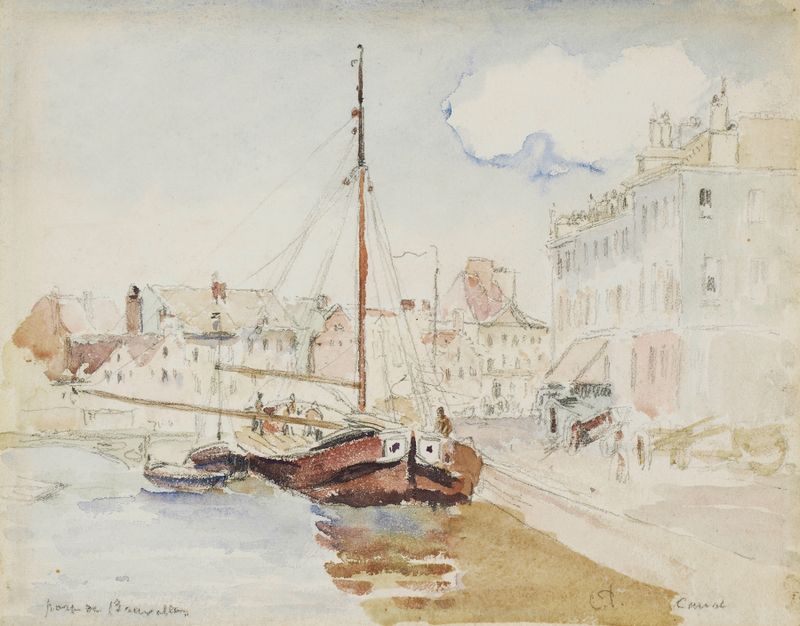
Port de Bruxelles
Camille Pissarro





