Ladies by a Gazebo — History & Facts
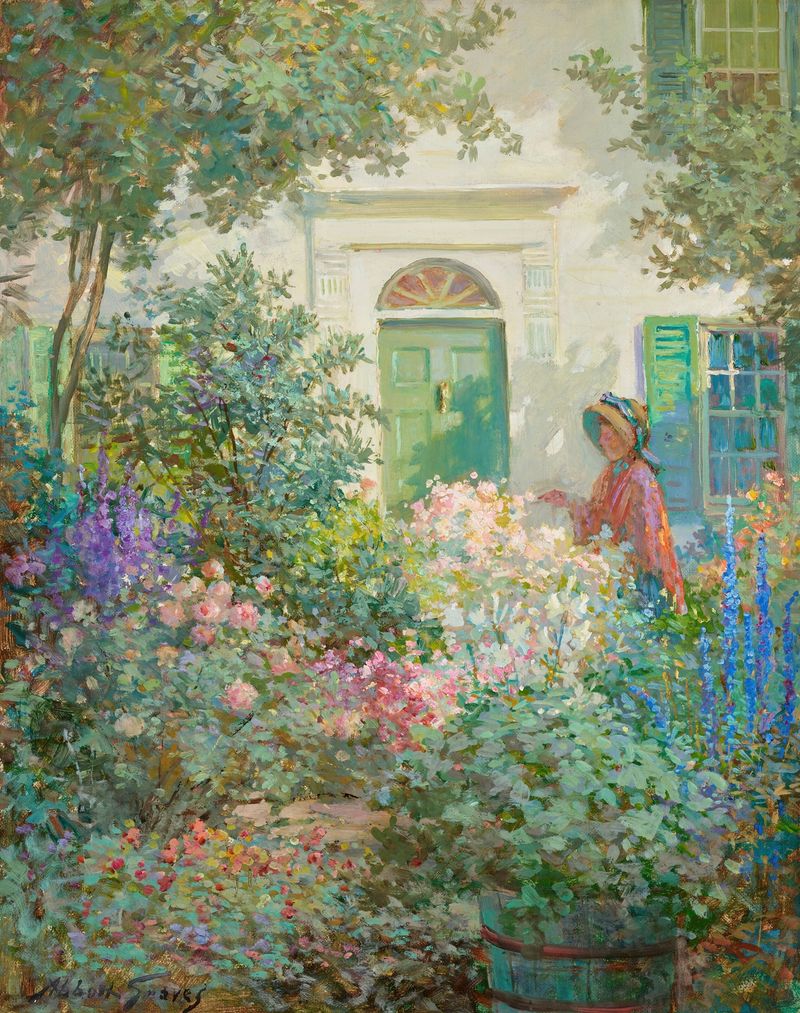
In the quietude of Ladies by a Gazebo, the act of transformation is palpable, capturing a fleeting moment that speaks to the resilience of memory and the passage of time. Each brushstroke invites the viewer to pause and reflect on the ephemeral nature of beauty and connection. Look to the left at the elegant gazebo, its arched structure framed by soft foliage that sways gently in the breeze. The figures before it, clad in delicate gowns, are engaged in quiet conversation, their presence harmonizing with the scenery.
Notice how the dappled light filters through the trees, illuminating their faces and casting intricate shadows on the ground, creating a vibrant interplay of light and color that draws the eye inward. Beyond the surface charm lies a deeper tension in the juxtaposition of youth and the inevitable passage of time. The gazebo, a symbol of leisure and retreat, contrasts with the sense of urgency in the ladies' animated gestures—are they recalling memories, or perhaps planning future encounters? Each detail, from the delicate embroidery on their dresses to the way they lean toward one another, suggests an intimacy that is both celebratory and poignant, inviting contemplation of what is cherished and what may soon be lost. Created during the late 19th century, when Abbott Fuller Graves was immersed in the American Impressionist movement, this piece reflects a period of artistic exploration and a shift toward capturing the subtleties of light and atmosphere. Working predominantly in Massachusetts, Graves sought to convey the beauty of everyday moments, steering art toward a more personal and emotive narrative, mirroring the sociocultural transformations of his time.