New England Doorway — History & Facts
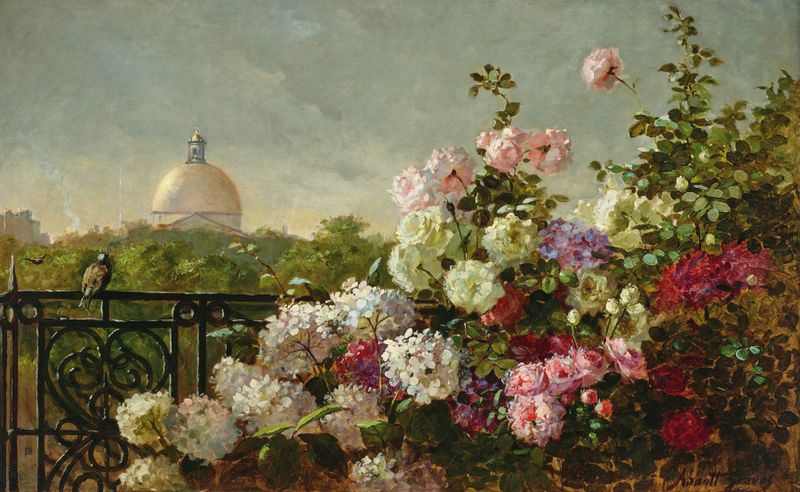
In the stillness of a moment, we find echoes of what once was, interwoven with a longing for what may never return. Begin by absorbing the gentle balance of hues that beckon you in. Look to the vibrant greens of the foliage, which embrace the weathered doorway, a testament to time's passing. Notice how the light dances softly upon the textured wood, illuminating the doorframe as if inviting you to step through into the memories held within.
The contrast between the vibrant exterior and the muted interior hints at untold stories and lost connections. A sense of loss permeates this work, reflected in the doorway’s stillness, where the threshold seems to separate two worlds: the lively outside brimming with life and the quiet sanctuary behind. The doorway stands ajar, suggesting a reluctance to fully embrace the outside, echoing the emotional tension felt in moments of nostalgia. Each brushstroke, a whisper of the past, and every shadow, a reminder of absence, deepens the viewer’s connection to the unvoiced stories that linger just beyond sight. During the time this piece was created, Abbott Fuller Graves was immersed in the burgeoning American art scene, exploring the nuances of Impressionism.
Though the exact date remains unknown, his works often reflected the changing landscapes of New England, capturing moments of beauty and solitude. It was a period characterized by personal exploration and a push against conventional boundaries, positioning him as a notable figure in American painting.