Lagoon of the Guayaquil River, Ecuador — History & Facts
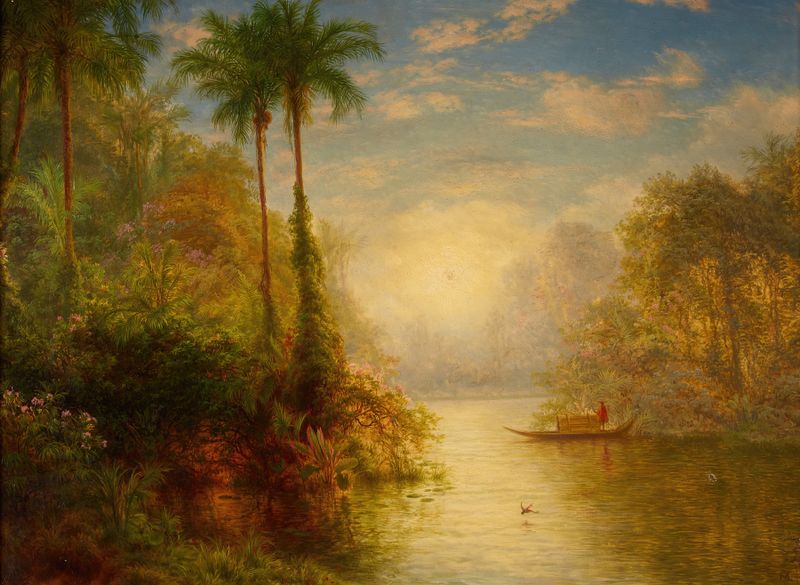
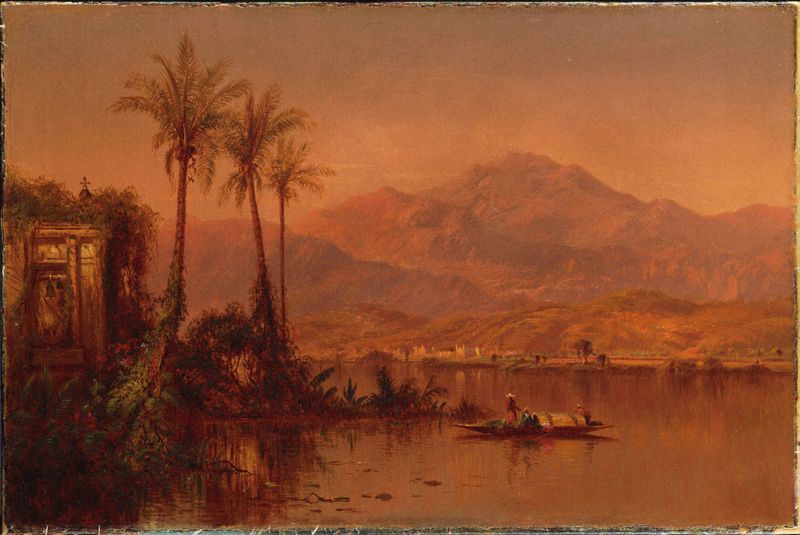
Can paint confess what words never could? In the languid blues and muted greens of Lagoon of the Guayaquil River, Ecuador, a silent tragedy lingers, echoing the grief of a world both lost and found. Look to the foreground, where the river shimmers under a blanket of soft light, inviting yet foreboding. The brushwork is delicate, almost whispering as it defines the contours of the landscape—a tranquil lagoon embraced by looming trees. The hazy horizon blurs into a gradient of cerulean and emerald, suggesting an ethereal embrace between earth and sky.
Each stroke breathes life into the serene yet melancholic scene, allowing the viewer to feel the weight of the atmosphere. Beneath the surface beauty lies the tension of solitude and longing. The stillness of the water reflects an emotional depth that resonates with the viewer's own experiences of loss. The juxtaposition of the vibrant foliage against the subdued water hints at the delicate balance between life and decay, capturing a fleeting moment that transcends time.
The painting speaks of nature's resilience, yet the underlying whispers of sorrow remind us of impermanence—a quiet acceptance of what has been. Created in 1863, during a period of exploration and transition in the art world, Mignot painted this piece while living in the United States, having returned from a journey through South America. His works from this time reflect not only his fascination with the landscapes of Ecuador but also a personal journey through loss, as he grappled with the passing of loved ones. Amidst the broader currents of Romanticism, Mignot's art stands as a testament to the emotional landscapes we navigate, inviting us to confront our own depths of grief and beauty.