View of the Cordilleras, near Cotopaxi — History & Facts
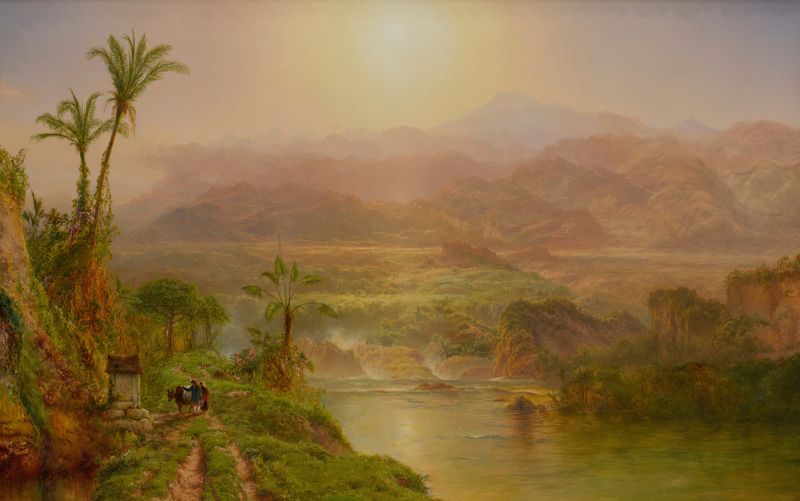
Where does light end, and longing begin? In the interplay of sun-kissed peaks and shadowed valleys, View of the Cordilleras, near Cotopaxi invites us to contemplate time's relentless passage through nature's stillness. Look to the horizon, where the towering Andes rise majestically; their snow-capped summits catch the sunlight, radiating warmth amidst the cool blues and greens of the forested foothills. Notice the intricate brushwork that captures the texture of foliage, each stroke breathing life into the lush landscape. The composition is thoughtfully balanced — the sharp crags contrast with the soft, rolling hills, leading the eye through a natural pathway that whispers of exploration and adventure. Beneath the picturesque scenery lies a tension between permanence and impermanence.
The mountains, eternal and unyielding, stand as witnesses to fleeting moments — clouds drifting lazily across the sky, evoking a sense of time slipping away. The dappled light creates an interplay of shadow and illumination, suggesting that even the most constant elements of nature are subject to change. This dialogue between light and darkness enhances the emotional resonance of the piece, as it reflects both the beauty of the present and the bittersweet nature of memory. During the years 1857-59, the artist found himself in a period of exploration and experimentation, working primarily in the United States while drawing inspiration from his travels.
The Romantic movement was at its peak, and artists were increasingly interested in portraying landscapes that elicited emotional responses. Mignot’s choice to depict the majestic Cordilleras reflects not only his personal journey but also the broader fascination of the time with the sublime beauty of nature.