South American Scene — History & Facts
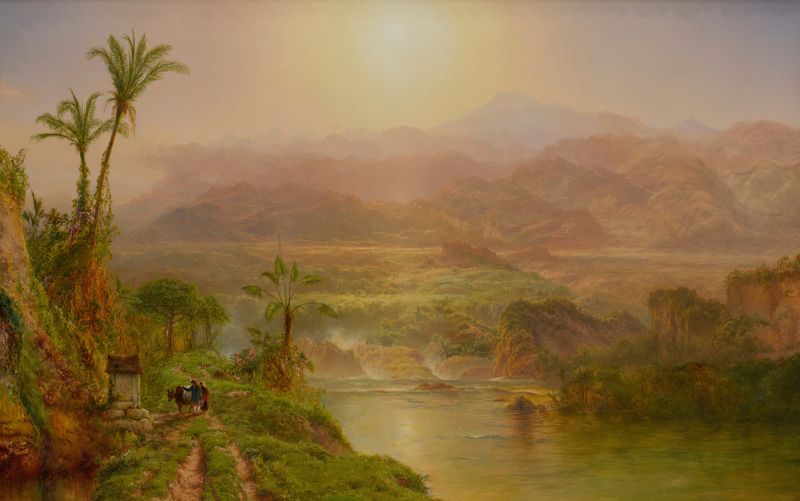
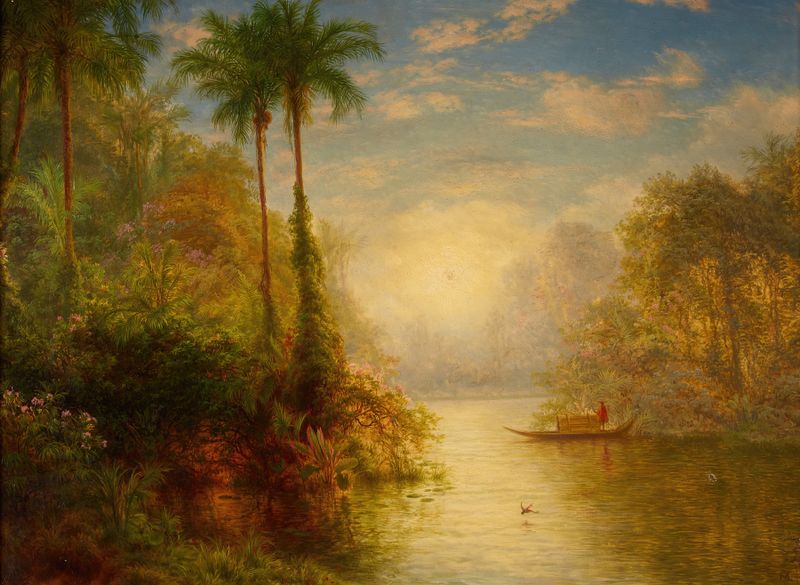
In the stillness of this vibrant landscape, the fear of uncertainty looms like a shadow over the lush valleys and towering mountains. The colors evoke a sense of longing, capturing moments of beauty intertwined with the invisible tension of the unknown. Focus first on the bold strokes of green that seize the foreground, where the dense vegetation hints at the vibrancy of life yet carries the weight of foreboding. Notice how the artist employs deep blues and warm earth tones to create contrast, drawing the eye up towards the hazy horizon, where a distant sun casts a gentle glow.
The interplay of light and shadow transforms the scene into a realm both inviting and formidable, inviting contemplation on what lies beyond. Beneath the breathtaking facade, a deeper narrative unfolds. The juxtaposition of rich flora against stark cliffs speaks to the duality of creation and destruction, a constant dance where beauty and danger coexist. The swirling clouds above, darkening and ominous, evoke the fear of approaching storms—both literal and metaphysical—reminding us that tranquility is often fragile, teetering on the edge of chaos. Created in 1862, during a time when the artist was exploring themes of American landscapes, this piece reflects Mignot's engagement with the natural world and its inherent uncertainties.
Living in New York City amidst a burgeoning art scene, he incorporated influences from both American Romanticism and European styles. This work captures not only the beauty of South America but also hints at the tumultuous emotions that such landscapes can provoke, resonating with the cultural shifts of the era.