
Landscape — History & Facts
Is this a mirror — or a memory? Within its colors lies a madness that dances between the tangible and the imagined, urging us to question our perception of reality. Look to the horizon, where the sky meets the earth in a riot of blue and gold. The brushstrokes are bold yet tender, each stroke revealing the artist’s hand as it caresses the canvas, bringing life to the landscape. Notice how the light spills delicately over the undulating hills, creating shadows that shift and breathe with the passage of time.
The vibrant greens and earthy browns pulse with an energy that invites the viewer deeper into the scene, evoking a sense of nostalgia entwined with freedom. Beyond the vivid colors lies a haunting whisper of emotion. The gentle interplay of light and shadow suggests a fleeting moment suspended in time, captured yet ephemeral. Each blade of grass and fluttering leaf seems to carry the weight of memories half-remembered—echoes of laughter and quiet solitude.
This tension between vibrancy and stillness reflects the complexity of human experience, where moments of joy are often tinged with a quiet madness of longing. In 1899, Theodore Clement Steele was immersed in the American Impressionist movement, painting in the rolling landscapes of Indiana. This period marked a shift in his focus toward more vibrant colors and emotive brushwork, influenced by his studies in Europe. As he sought to capture the essence of the natural world, he grappled with the emotional undercurrents that define human experience, ultimately creating a work that resonates with both beauty and complexity.
More Artworks by Theodore Clement Steele
Browse all →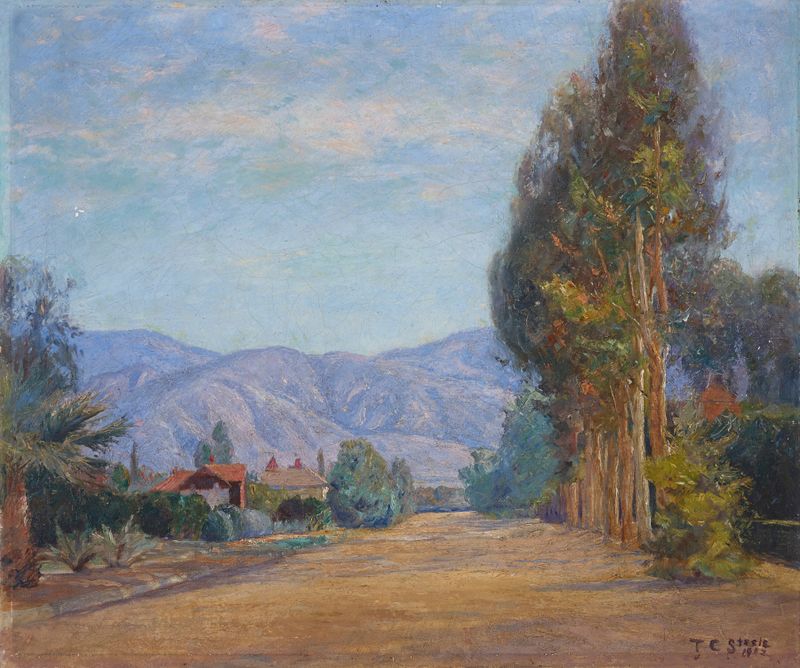
Hills Near Redlands, California
Theodore Clement Steele

Pleasant Run
Theodore Clement Steele
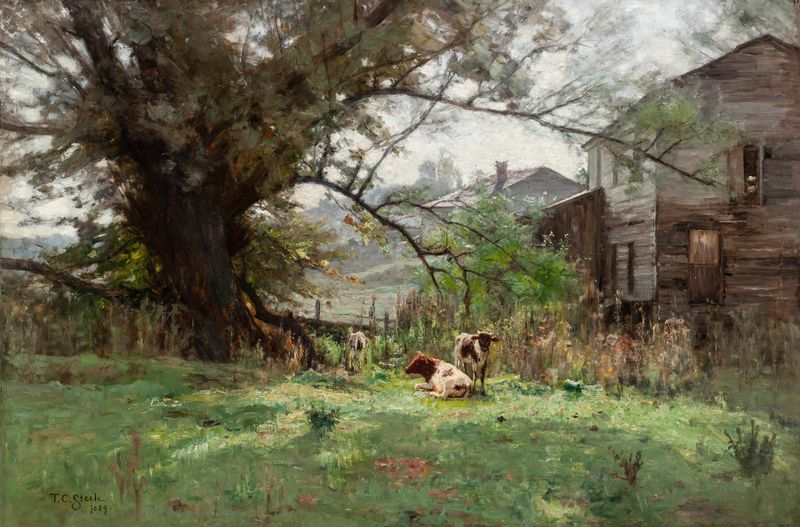
Morning–Old Schofield’s Mill
Theodore Clement Steele

On the Road to Belmont
Theodore Clement Steele
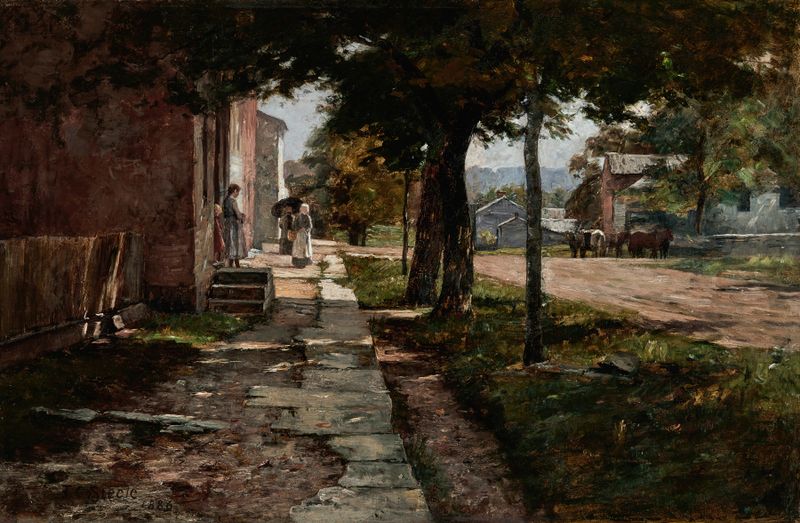
Street in Vernon
Theodore Clement Steele

Washington Street, Indianapolis at Dusk
Theodore Clement Steele
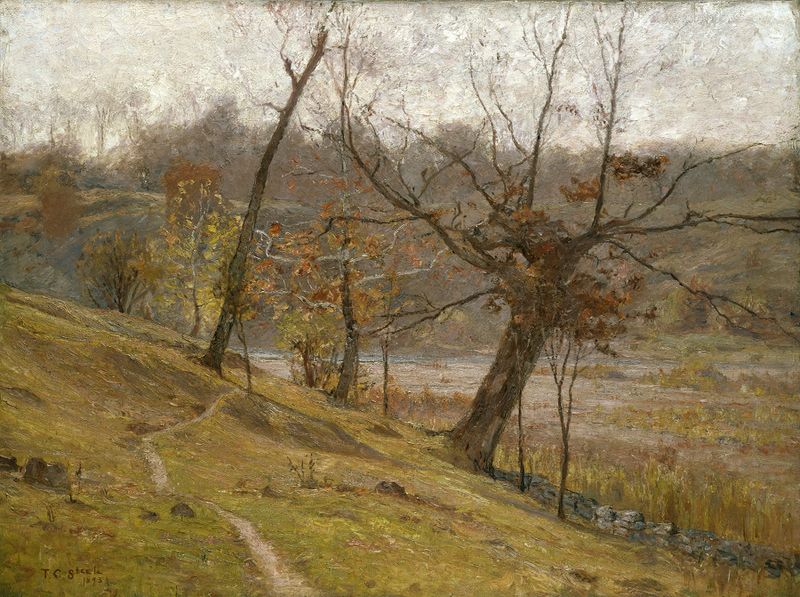
The Bloom of the Grape
Theodore Clement Steele
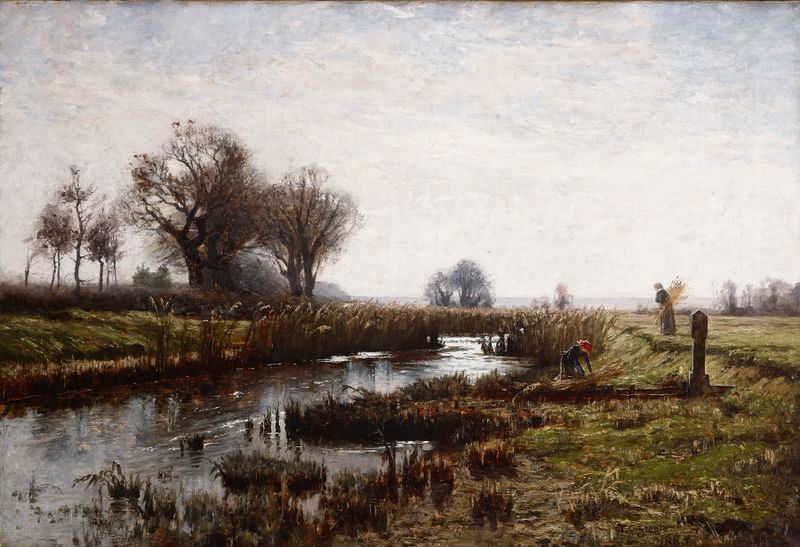
Late Afternoon, Dachau Moor
Theodore Clement Steele

Oaks of Vernon
Theodore Clement Steele





