
On the Road to Belmont — History & Facts
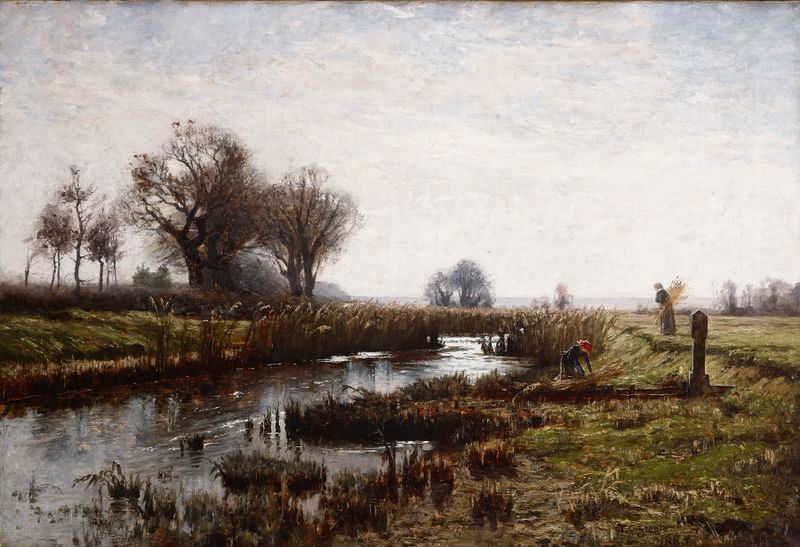
Is this a mirror — or a memory? In On the Road to Belmont, the landscape stretches like a forgotten dream, a pathway that seems to beckon and haunt all at once. Focus on the winding road at the center, capturing the viewer's eye as it leads into the distance. Notice how the soft brushstrokes create a sense of movement, each stroke a whisper of the journey that lies ahead. The earthy tones of green and brown cradle the horizon, while the dappled light filters through the trees, evoking the feeling of an early morning.
The composition is both inviting and unsettling, as if it holds secrets waiting to be uncovered. A sense of loss permeates the scene, hinted at in the barren trees that line the road, their twisted branches reaching out like ghostly fingers. The interplay of shadow and light suggests not just a physical journey, but an emotional one filled with longing and nostalgia. The quiet stillness of the landscape amplifies the weight of what has been left behind, inviting contemplation of the past and the choices that shape our paths. In 1910, Theodore Clement Steele painted this evocative piece during a transformative period in American art, as the Impressionist movement began to influence many artists.
Based in Indiana, Steele was exploring the complexities of light and color, striving to capture the essence of the American landscape while grappling with his own experiences of loss and transition. This work reflects not only his technical prowess but also the deep emotional currents running through his life and times.
More Artworks by Theodore Clement Steele
Browse all →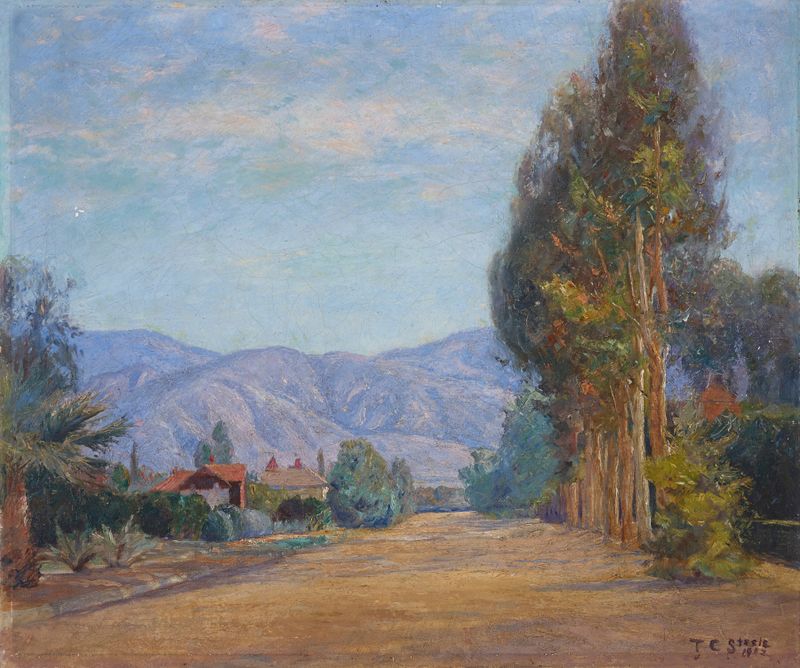
Hills Near Redlands, California
Theodore Clement Steele

Pleasant Run
Theodore Clement Steele
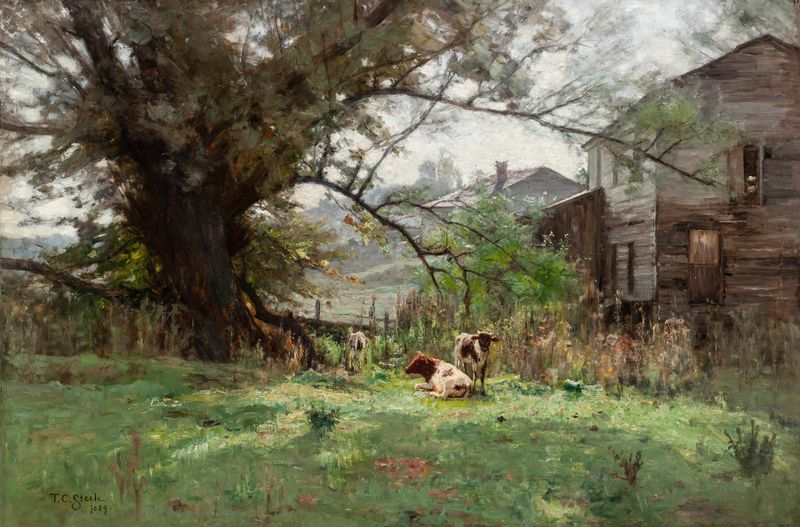
Morning–Old Schofield’s Mill
Theodore Clement Steele
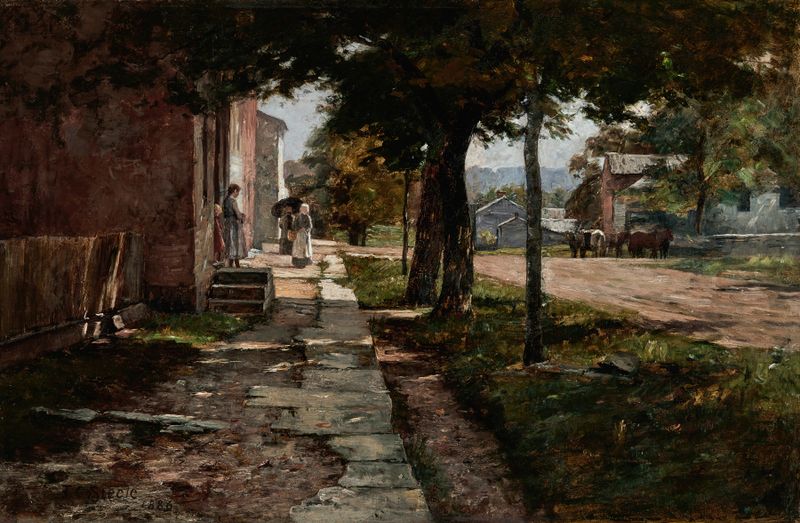
Street in Vernon
Theodore Clement Steele

Washington Street, Indianapolis at Dusk
Theodore Clement Steele
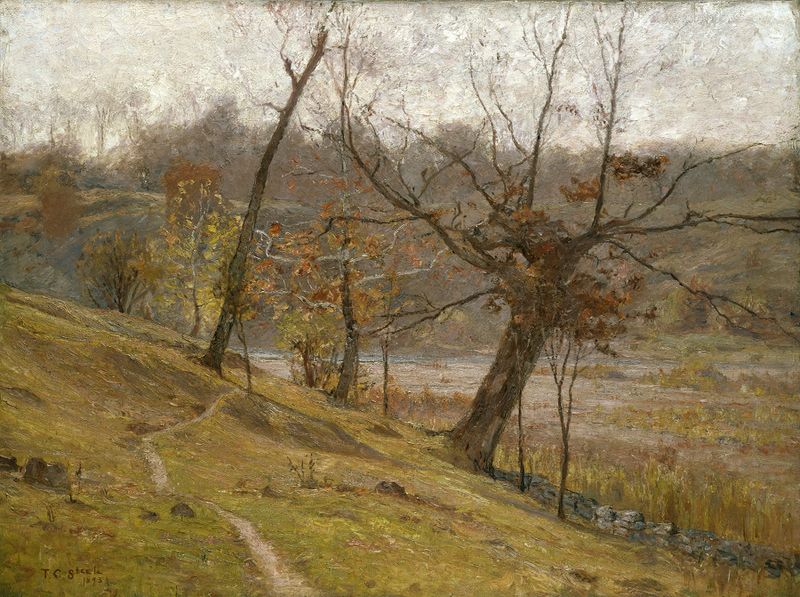
The Bloom of the Grape
Theodore Clement Steele

Landscape
Theodore Clement Steele
Late Afternoon, Dachau Moor
Theodore Clement Steele

Oaks of Vernon
Theodore Clement Steele





