
Pleasant Run — History & Facts
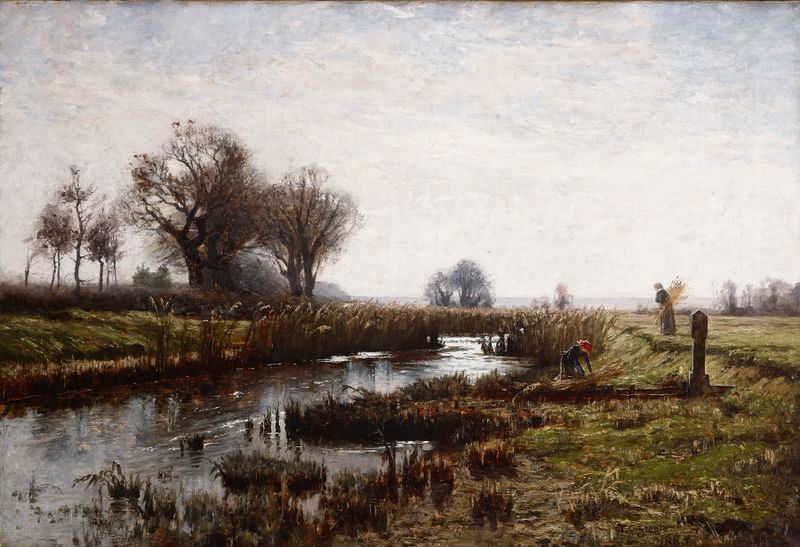
Could a single brushstroke hold eternity? In Pleasant Run, the essence of desire flows through the landscape, whispering secrets of nature’s beauty and the longing for connection that resides within us all. Look to the foreground, where the gentle curve of a stream beckons with its shimmering surface. The artist’s masterful technique captures the interplay of light and water; notice how the sun dances upon the ripples, creating a symphony of blues and greens that envelops the viewer. As your gaze travels upward, the lush foliage frames the scene, while the sky above transitions from a soft blue to hints of golden warmth, harmonizing the entire composition. Beneath the serene surface, emotional contrasts emerge.
The vibrant colors evoke a sense of hope and rejuvenation, inviting us to explore the natural world and our place within it. Yet, the serene setting also hints at a deeper yearning—a desire for peace, harmony, and perhaps a return to simpler times. This duality speaks to the human experience, where beauty and longing coalesce in an eternal dance. In 1885, Theodore Clement Steele painted this piece in Indiana, during a period marked by his exploration of plein air techniques.
As part of the Hoosier Group, he was immersed in a growing American art scene that sought to capture the unique landscapes of the Midwest. This work reflects his commitment to portraying the natural world with a fresh perspective, embodying both personal and collective aspirations in the pursuit of beauty.
More Artworks by Theodore Clement Steele
Browse all →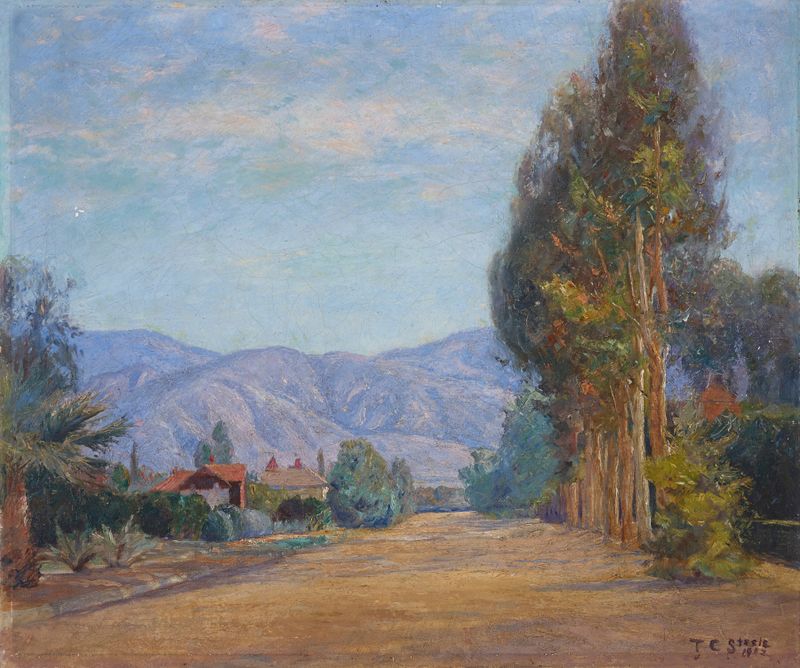
Hills Near Redlands, California
Theodore Clement Steele
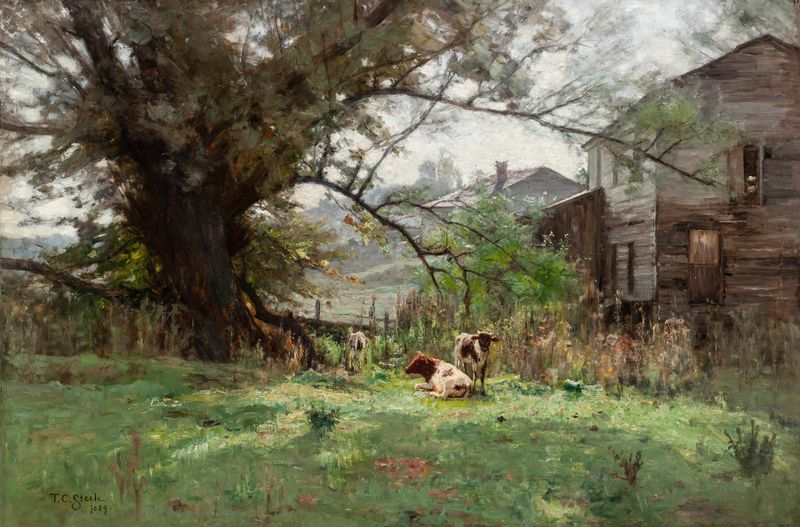
Morning–Old Schofield’s Mill
Theodore Clement Steele

On the Road to Belmont
Theodore Clement Steele
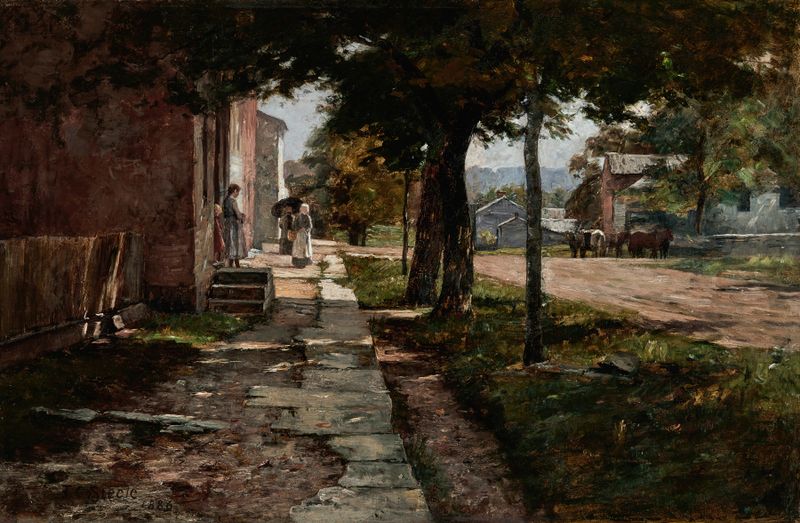
Street in Vernon
Theodore Clement Steele

Washington Street, Indianapolis at Dusk
Theodore Clement Steele
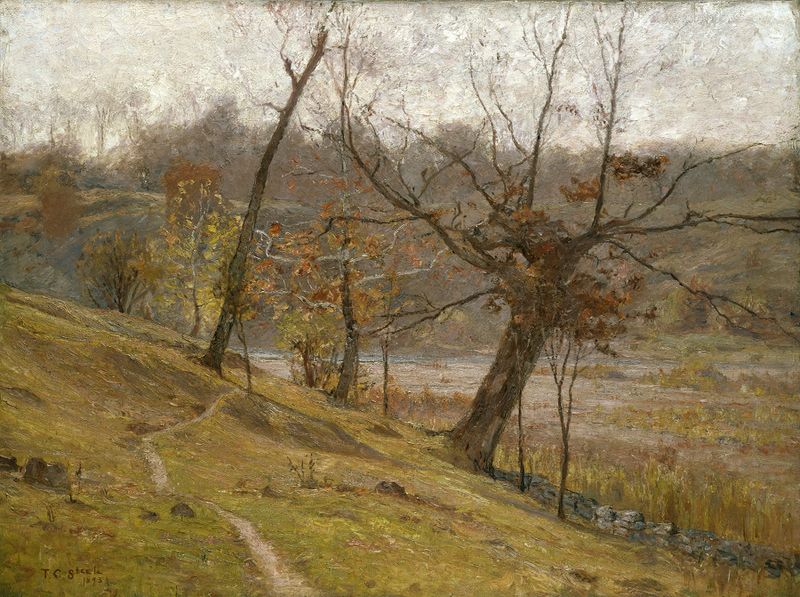
The Bloom of the Grape
Theodore Clement Steele

Landscape
Theodore Clement Steele
Late Afternoon, Dachau Moor
Theodore Clement Steele

Oaks of Vernon
Theodore Clement Steele





