
Landscape — History & Facts
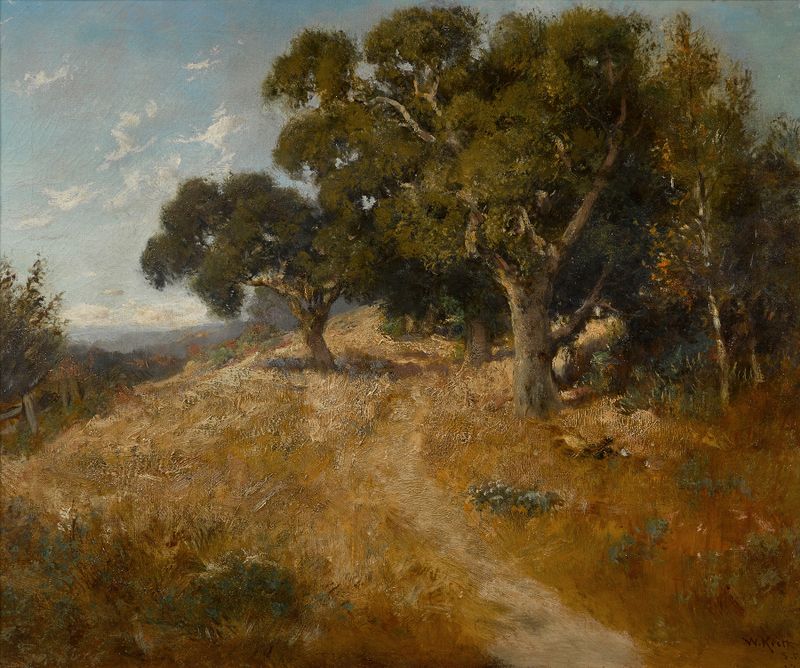
In a world where the ephemeral reigns, landscapes become our anchors, whispering of the past, yet hinting at the inevitable fade of memory. Look to the foreground of the canvas, where thick, verdant trees stand sentinel against a backdrop of rolling hills. The delicate interplay of light and shadow draws the eye, revealing a palette of rich greens and soft earth tones. Notice how the sunlight dapples through the leaves, casting fleeting patterns on the ground, and creating a serene yet poignant atmosphere that invites contemplation. In the distance, the mountains rise majestically, their ethereal presence evoking a sense of both awe and nostalgia.
The soft fog that clings to their peaks speaks of the impermanence of beauty, while the foreground’s lush growth contrasts with the barren rock above. This duality of life and desolation captures the tension between nature’s fleeting moments and the profound weight of time, reminding us of our own transient existence. William Keith created this painting during a transformative period in his life, between 1868 and 1900. As he worked in California, he was deeply influenced by the American Romanticism movement, which sought to celebrate nature’s grandeur.
This was a time of personal reflection for Keith, as he grappled with loss and change, both in his life and the broader context of an evolving art world that celebrated the sublime beauty of the natural landscape amidst the encroaching modern age.
More Artworks by William Keith
Browse all →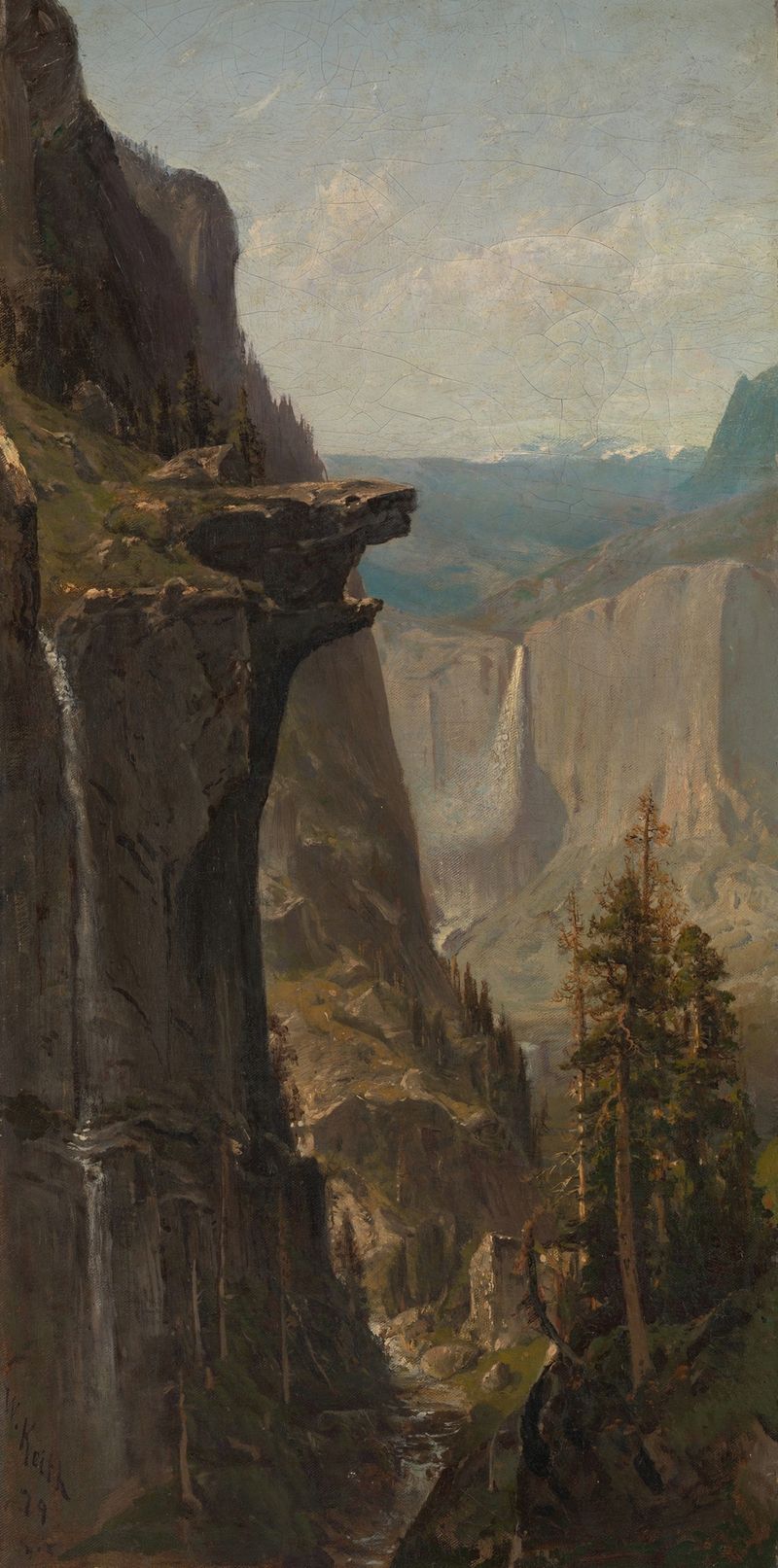
Yosemite Falls, from Glacier Point
William Keith

Half Dome, Yosemite
William Keith
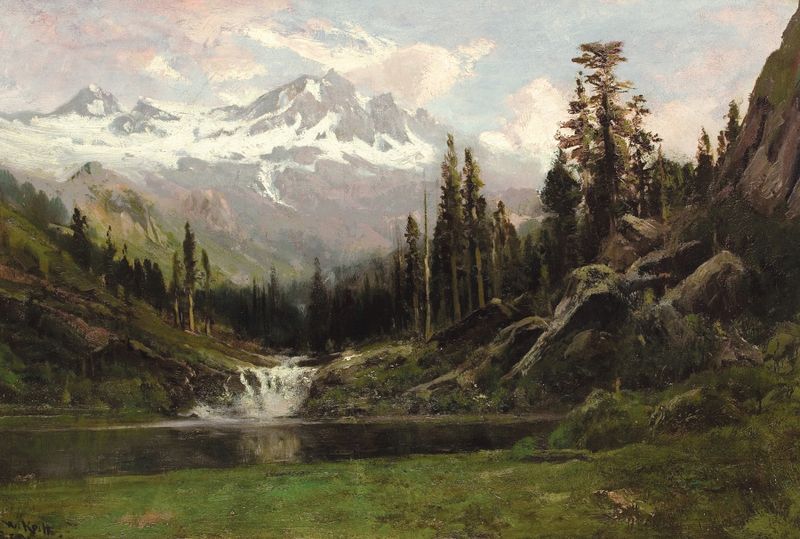
View of Mount Shasta
William Keith
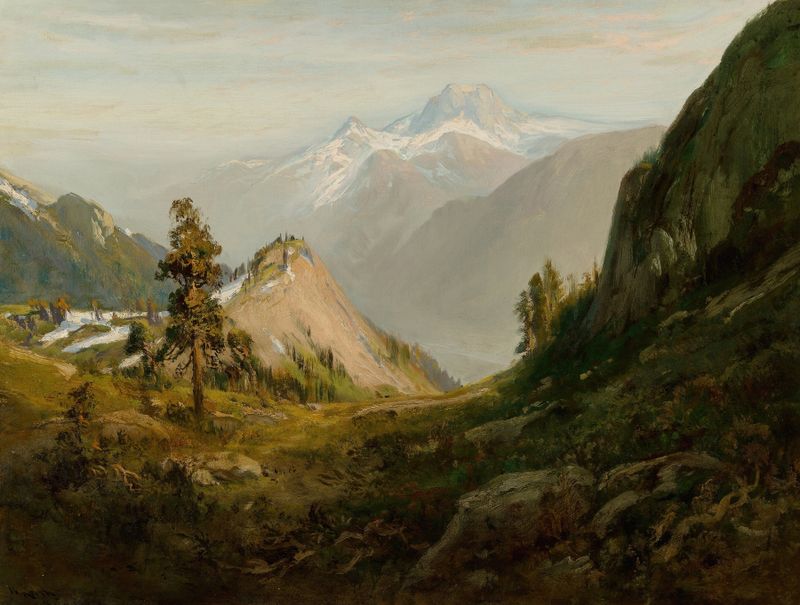
Where Gold was Found in California
William Keith

Mount Tamalpais from the North West
William Keith

Yosemite Valley
William Keith
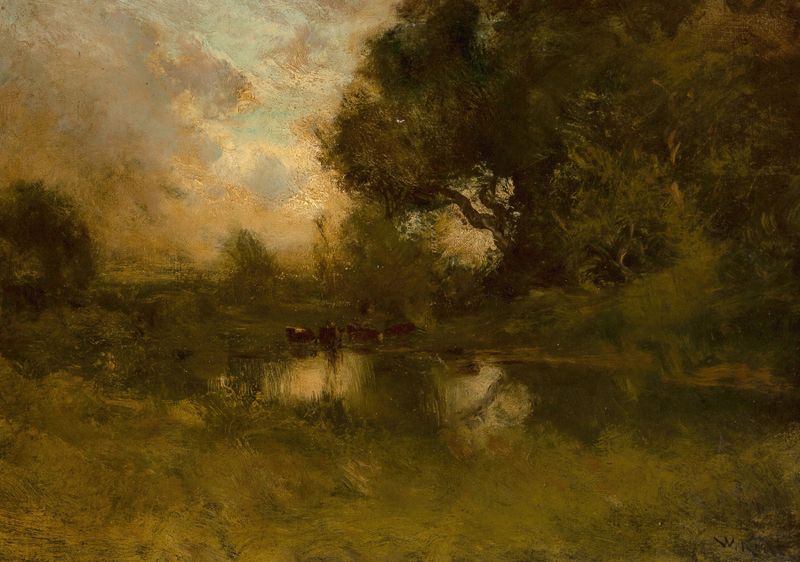
Napa Creek
William Keith
Path through California oaks
William Keith

Landscape
William Keith

Landscape Painting
William Keith





