Landscape — History & Facts
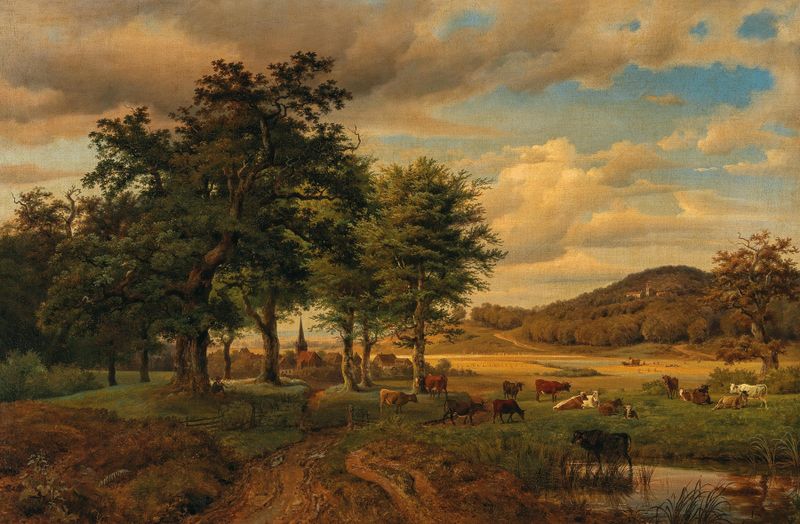
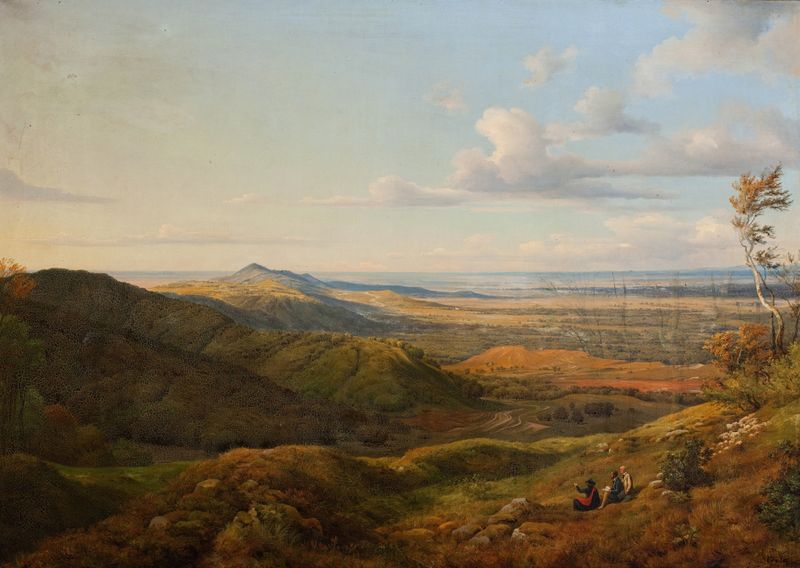
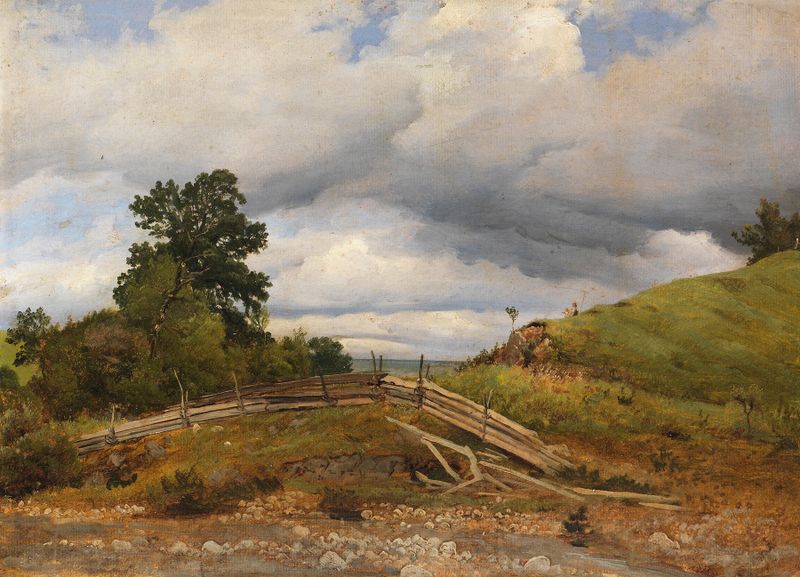
Did the painter know this moment would outlive them? The passage of time is more than mere nostalgia; it is an echo of existence preserved on canvas. Focus on the gentle undulation of hills, where soft greens blend into warm ochres, inviting you deeper into the landscape. Notice how the sky transitions from a delicate blue to golden hues, suggesting the day's tender farewell. The brushstrokes are fluid yet purposeful, creating a rhythmic flow that guides the eye across the moody terrain.
Each stroke captures not only the physicality of the land but also the essence of a fleeting moment, whispering secrets of seasons past. Hidden within the painted tranquility lies a subtle tension between the permanence of nature and the impermanence of human life. The solitary tree, though sturdy, appears vulnerable against the vast sky, hinting at the fragility of existence amid the timelessness of the landscape. Each blade of grass and each cloud carry a weight of history and memory, inviting contemplation on what has come before and what remains. Crola created this work during a period where Romantic ideals flourished in the art world, likely in the mid-19th century.
As one of the lesser-known figures of his time, he sought to capture the essence of beauty in nature, reflecting the era's fascination with the sublime. While his life remains obscured by the passage of time, the landscapes he painted continue to resonate, offering a serene escape into the heart of existence itself.