
Landscape — History & Facts
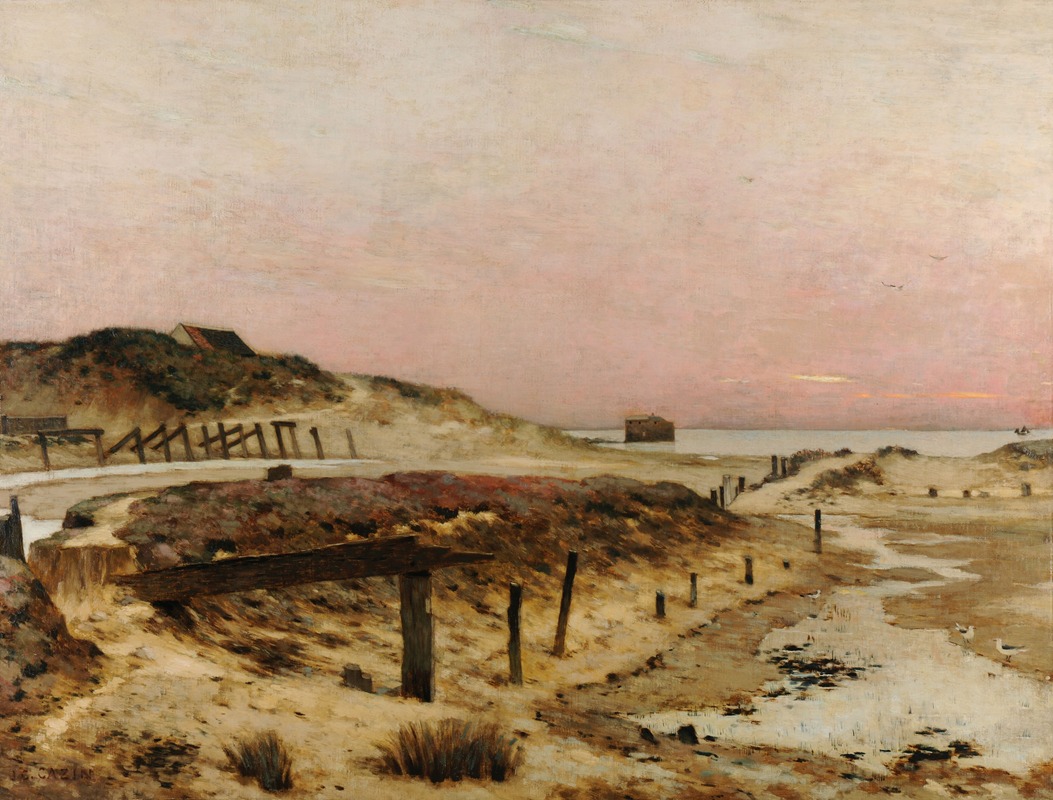
In the quiet embrace of nature, destiny unfolds in layers of light and shade, revealing the nuanced complexities of existence. Look to the left at the gentle undulations of the hills, painted in soft greens and muted browns, inviting you to wander through their tranquility. Notice how the light falls upon the canvas, illuminating patches of wildflowers that punctuate the ground like whispers of joy amidst the stillness. The artist’s delicate brushwork captures the essence of the moment, merging natural beauty with an ethereal quality, as if the landscape breathes in tandem with the viewer's own heart. Delve deeper into the composition, and you’ll find contrasts that speak volumes.
The shimmering sky, a blend of soft blues and warm oranges, hints at the impending twilight, a metaphor for transition and the passage of time. The interplay between shadow and light evokes a sense of introspection, allowing the viewer to ponder their own place within the vastness of nature. In this serene setting, life and stillness coexist, revealing the delicate balance of destiny that weaves through every moment. Cazin painted this piece around 1895, during a time when he was deeply engaged with the Impressionist movement.
Living in France, he sought to capture the fleeting qualities of light in his landscapes, reflecting the changing ideals of art at the turn of the century. This period marked a shift away from traditional representation, as artists like him embraced a more emotive and subjective approach to nature, emphasizing the personal experience embedded within their work.
More Artworks by Jean Charles Cazin
Browse all →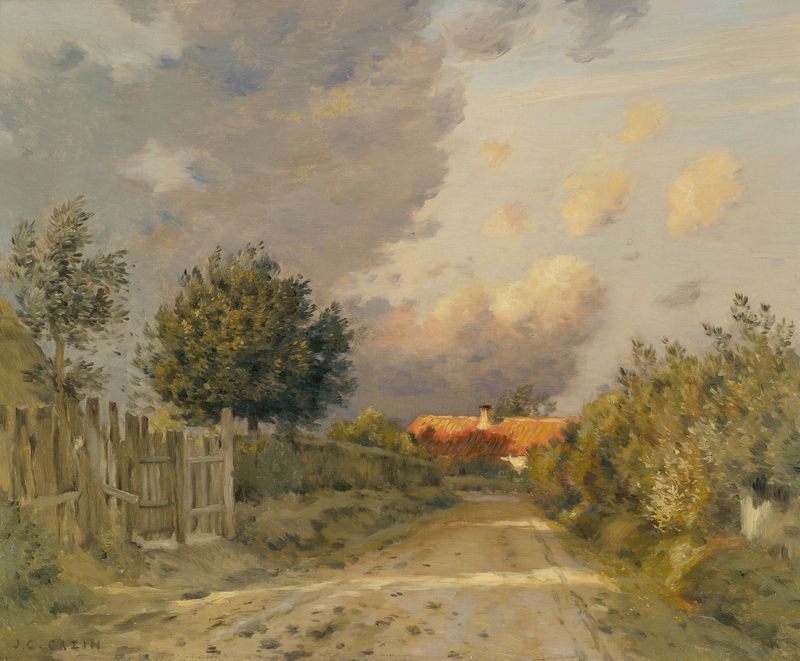
Early Evening In The French Countryside
Jean Charles Cazin
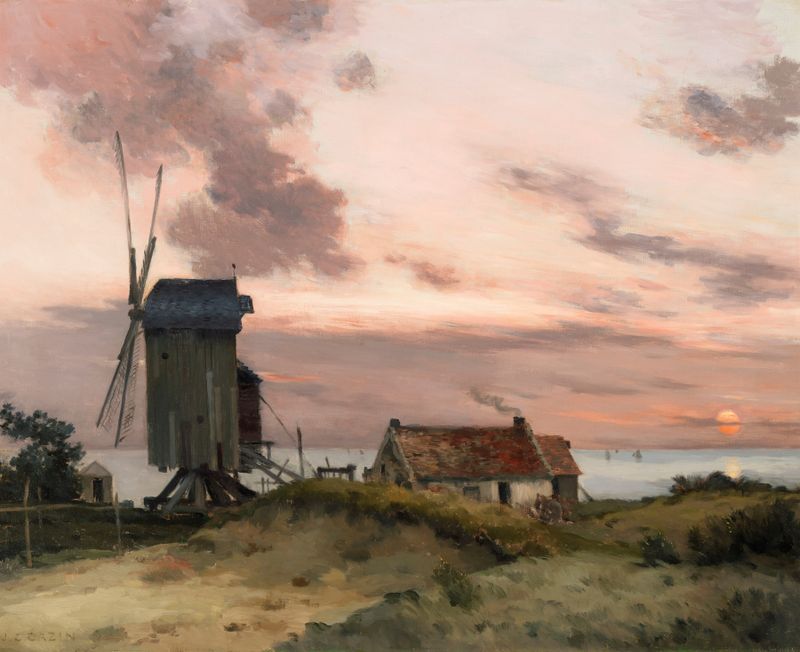
Windmill on a Beach
Jean Charles Cazin
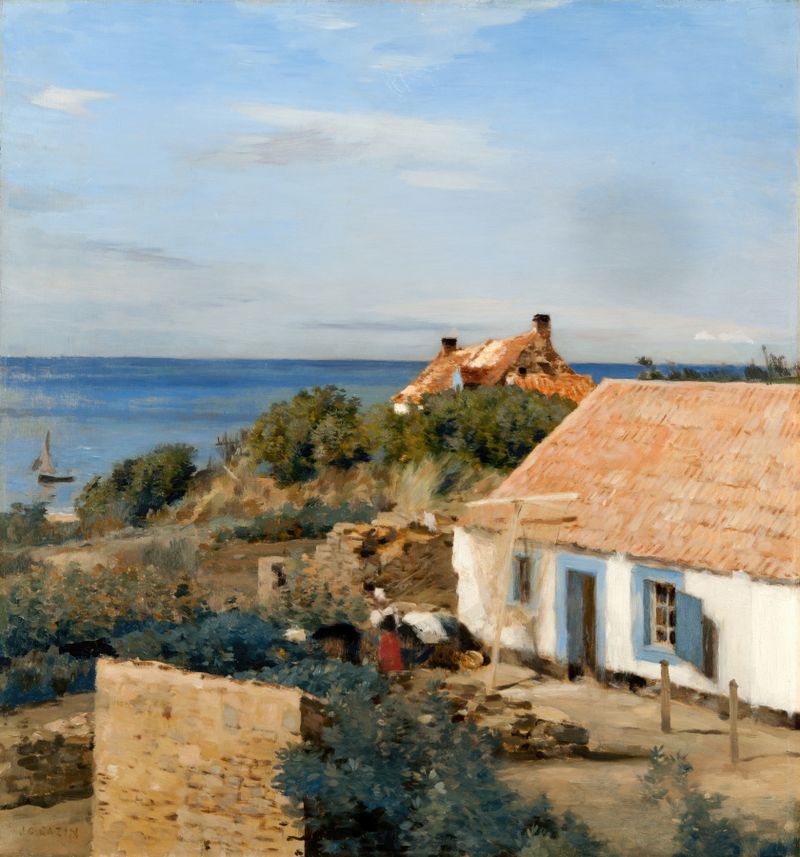
French Landscape
Jean Charles Cazin
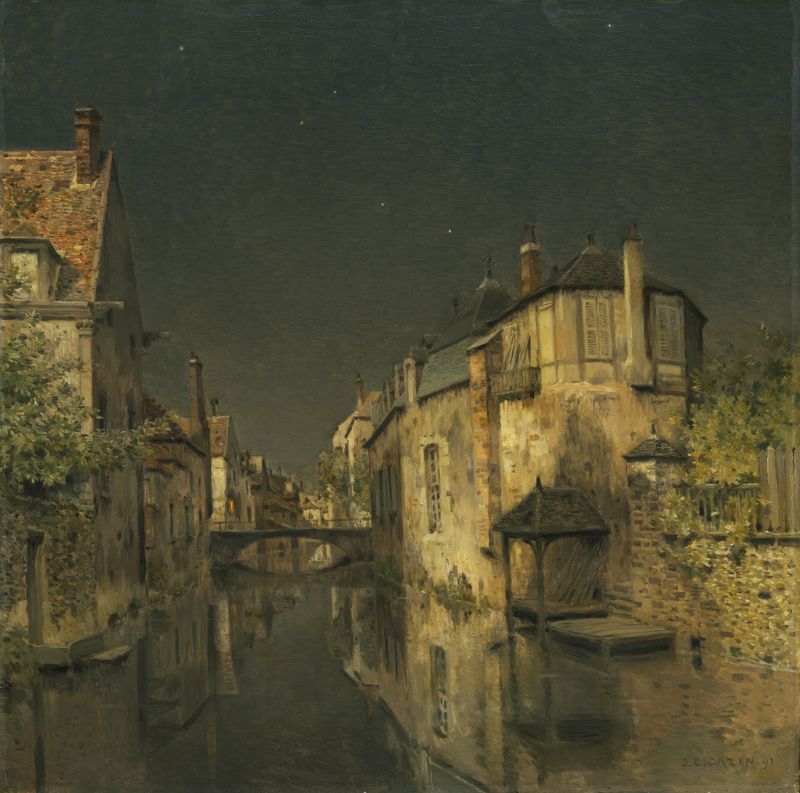
Midnight
Jean Charles Cazin

Tobias and the Angel
Jean Charles Cazin

October Day
Jean Charles Cazin

Paysage au clair de lune
Jean Charles Cazin
Rest on the Flight into Egypt
Jean Charles Cazin
Cottage in the Dunes
Jean Charles Cazin

The Boatyard
Jean Charles Cazin





