Landscape — History & Facts
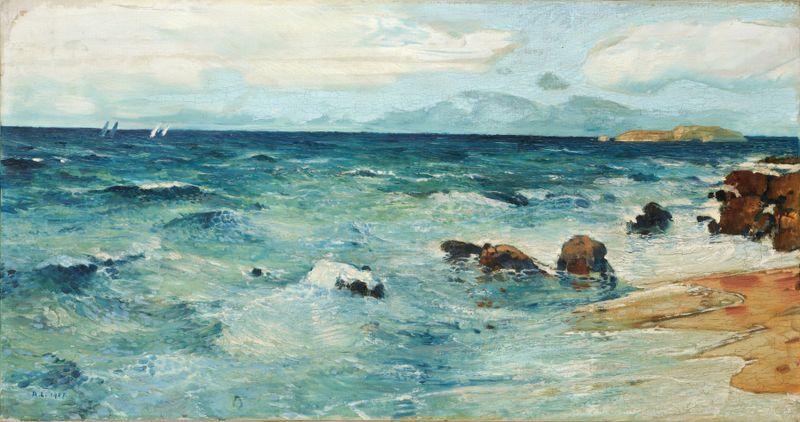
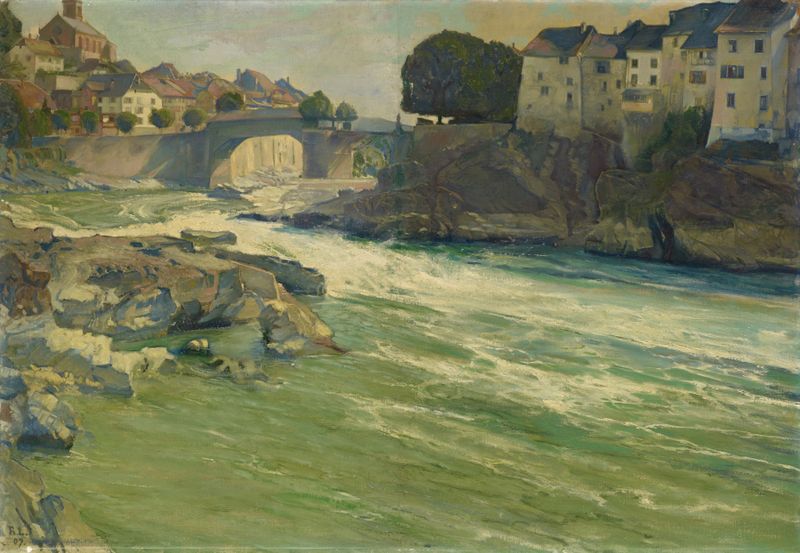
Is this a mirror — or a memory? In Landscape, the boundary between reality and dreams blurs, inviting the viewer to reflect on the nature of existence and destiny itself. Look to the horizon, where deep blues blend seamlessly into gentle greens, forming a serene backdrop that captivates the eye. The composition, wide and sprawling, draws you in, encouraging exploration of the details. Notice how the clouds, rendered with delicate brushstrokes, suggest a soft, almost ethereal quality, hinting at an impending change.
The subtle play of light and shadow across the landscape gives it a sense of depth, as if the land breathes, alive with potential. Within the stillness lies a profound tension: the tranquility of the natural world juxtaposed with the viewer’s own inner reflections. The winding path in the foreground beckons, symbolizing the journey of life, while hints of impending weather loom overhead, suggesting the unpredictability of fate. Each element in the painting resonates with emotional weight, inviting contemplation of time, memory, and the choices that shape our destinies. In 1898, Rudolf Löw was immersed in the rich cultural currents of the late 19th century, where the rise of impressionism and symbolism influenced his work.
Painted in his native Germany, this period marked a moment of transition in art, moving towards exploring the interplay between nature and human experience. Löw’s Landscape encapsulates these themes, reflecting both personal introspection and broader artistic movements of his time.