Marine — History & Facts
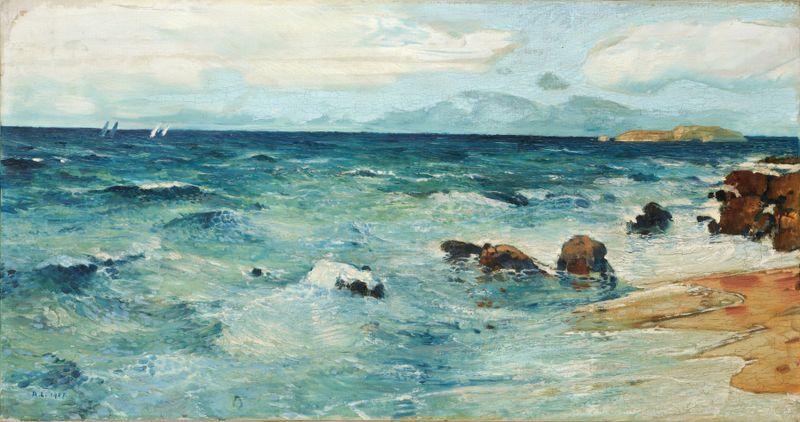
What secret hides in the quiet of the canvas? Beneath layers of shadow and light, a world stirs, inviting the viewer to listen closely to its whispers. Focus first on the deep azure background that envelops the scene, suggesting both depth and the vastness of the ocean. Notice how the artist uses contrasting shades to create a rhythmic dance between light and shadow, guiding your gaze across the canvas. The soft, textured brush strokes evoke movement, reminiscent of waves gently lapping against a distant shore, while hints of gold shimmer as if caressed by the sun. Delve deeper into the contrasts presented in this work.
The interplay of shadow not only suggests hidden depths beneath the surface but also evokes a sense of mystery and introspection. The quietude of the scene hints at the weight of unspoken thoughts, inviting contemplation on themes of isolation and connection, perhaps reflecting the artist's inner world. This silent dialogue between shadow and light becomes a metaphor for the complexities of human emotion, tucked away yet palpable. Created in 1911, this piece reflects a transformative period for Rudolf Löw, who was then immersed in the evolving dynamics of early 20th-century art.
Working in Vienna, he was influenced by the burgeoning expressionist movement, which sought to convey emotion through color and form. The early 1900s marked a time of exploration and innovation in artistic expression, a backdrop that would shape the profound subtleties found within this canvas.