Coastal Landscape — History & Facts
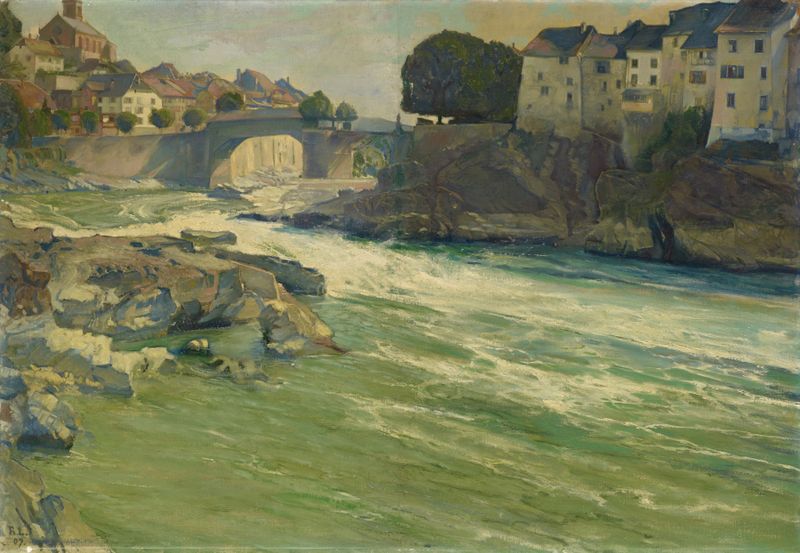
In moments of quiet reflection, one may ponder the legacy left behind by those who dared to capture the world in hues and tones, revealing the essence of our existence. Look to the horizon, where the vivid blues of the sea merge seamlessly with the soft pastels of a fading sky. The brushstrokes dance with a gentle rhythm, guiding your gaze from the rocky foreground to the tranquil waters beyond. Notice how the sunlight captures the undulations of the waves, illuminating the delicate textures that hint at both serenity and turbulence.
The colors, chosen with care, convey a palpable atmosphere, inviting you to wander through this coastal sanctuary. Yet, within this serene landscape lies a tension that speaks volumes. The jagged rocks in the foreground symbolize resilience, a contrast to the fluidity of the ocean, representing life's unpredictable nature. The subtle play of light and shadow evokes a sense of nostalgia, suggesting that while beauty can be ephemeral, it is also a canvas for deeper truth.
Each stroke whispers stories of time, evoking emotions that resonate beyond mere aesthetics. In 1907, Rudolf Löw painted this work during a period of artistic exploration and innovation. Living in a time when the art world was shifting towards modernism, Löw sought to capture the raw beauty of nature, influenced by the naturalist movement. His approach signifies a desire to forge a legacy that blends impressionistic techniques with the emerging symbols of modern art, leaving an indelible mark on the landscape genre.