Landscape — History & Facts
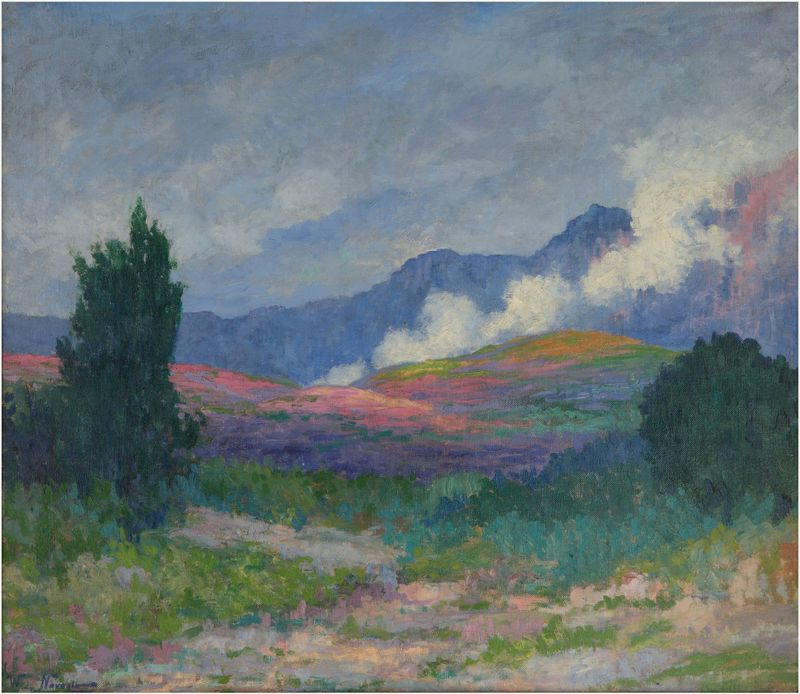
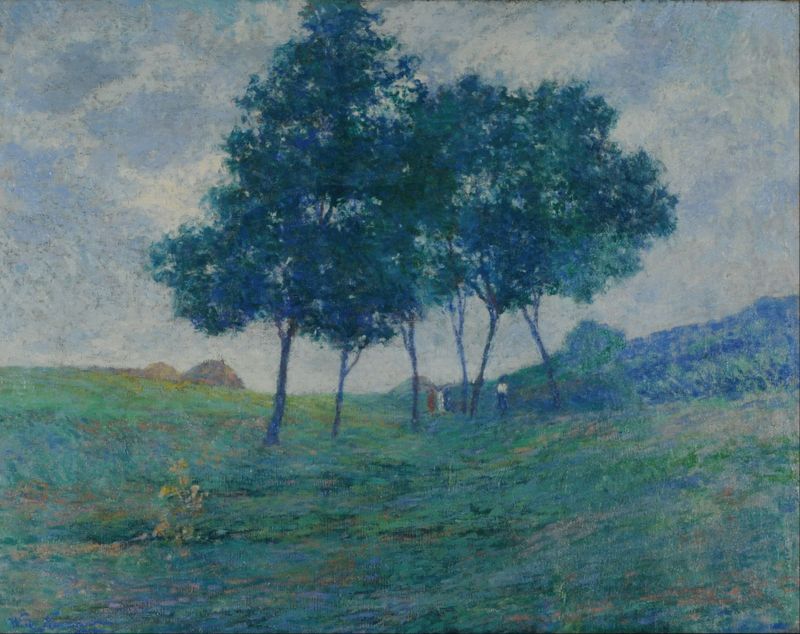
When did color learn to lie? In a world where every hue resonates with emotion, it becomes essential to question the authenticity behind the brushstrokes. Look to the center where an expansive field stretches under a vast, muted sky. The soft, almost somber palette of greens and browns draws the eye, evoking a sense of stillness and emptiness. Delicate brushwork renders the landscape in a way that feels both familiar and disquieting, as if it holds secrets just beneath its surface.
Notice how the light interacts with the painting, casting a pallor that seems to drain the vibrancy from the scene, inviting contemplation rather than joy. As you explore further, small details emerge. A solitary tree stands to the left, its gnarled branches reaching outward like the hands of a forgotten soul, yearning for connection. The horizon blurs seamlessly, creating a contrast between the tangible ground and the ethereal sky, suggesting a world that exists somewhere between reality and illusion.
This tension encapsulates a deep emotional resonance, evoking the profound solitude that can accompany beauty and stillness. Created during a time when abstraction began to challenge representation, the artist painted this landscape amid a search for identity within the art world. With influences from both traditional and modern techniques, he explored the boundary between existence and perception. The absence of a precise date only adds to the mystery, reflecting an artist still in the throes of self-discovery, capturing the essence of an in-between world that resonates with viewers long after they depart.