Landscape — History & Facts
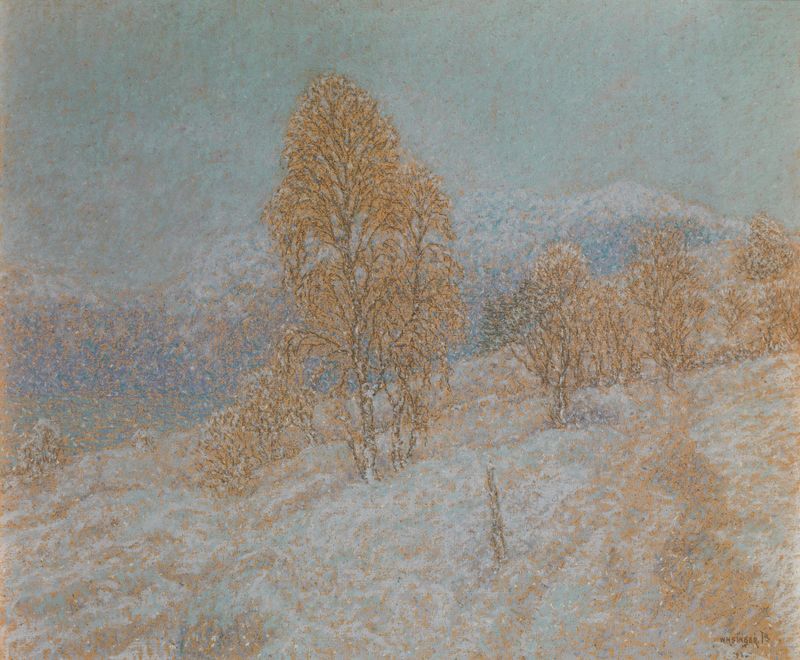
What if silence could speak through light? In the stillness of a landscape, where every shade whispers its own story, the viewer is invited to listen to the secrets of nature. Look to the left at the gentle curve of the horizon, where soft greens blend seamlessly into muted blues. The artist employs a palette of serene colors that evoke tranquility, while dappled sunlight filters through the clouds, casting delicate reflections on the water’s surface. Notice how the composition draws the eye inward, creating a sense of depth as the land stretches before you, inviting exploration and contemplation. In this scene, the interplay between light and shadow forms an emotional tapestry.
The tranquil water reflects the sky's shifting hues, suggesting a fleeting moment caught between the seen and the unseen. There’s a tension between the stillness of the landscape and the dynamic movement of the light, reflecting the constant changes in nature. This duality highlights both the permanence of the land and the ephemerality of the moment, encouraging a deeper connection with the viewer's own contemplation of time. During the period when this work was created, the artist was deeply engaged in the Impressionist movement, a time when artists began to focus on capturing the essence of a moment rather than its precise details.
Based in the United States, Singer immersed himself in a world rapidly evolving with industrial change, yet he chose to depict the serene beauty of untouched nature, reflecting a yearning for solace amid the chaos of modern life.