
Landscape — History & Facts
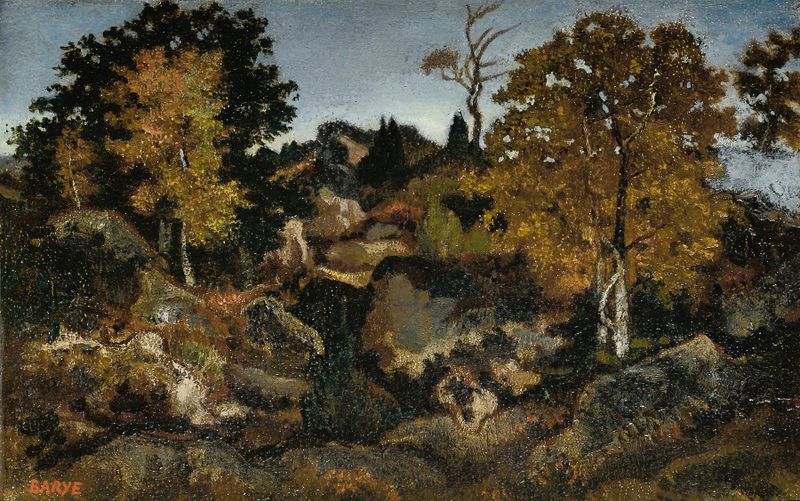
In the stillness of nature, innocence finds its voice through delicate brushstrokes and vibrant hues. Here, the quiet expanse of a landscape whispers the secrets of the earth, beckoning us to listen closely. Look to the horizon, where soft blues and greens converge, hinting at a tranquil sky meeting fertile fields. The gentle gradient of colors draws the eye, guiding us through the composition’s serene depth.
Notice how the light dances upon the foliage, illuminating each leaf with a golden touch, creating an interplay between shadow and brightness that infuses the scene with life. The careful arrangement of elements evokes a sense of harmony, inviting contemplation. Yet beneath this idyllic surface lies a deeper tension — the contrast between the stillness of the land and the ephemeral nature of innocence itself. The idyllic beauty evokes nostalgia for a time that feels both timeless and fleeting, reminding us of our own transience.
Small details, such as the distant figures barely noticeable in the background, speak to our place within nature, hinting at human presence while maintaining the landscape's grandeur and isolation. Created during a period of significant artistic evolution, this piece emerged between 1823 and 1875. At that time, Barye was immersed in the vibrant world of Romanticism, a movement that embraced emotion and individualism. His exploration of natural forms reflected a growing desire to connect humanity with the environment, marking his contribution to a transformative era in art history that would influence generations to come.
More Artworks by Antoine-Louis Barye
Browse all →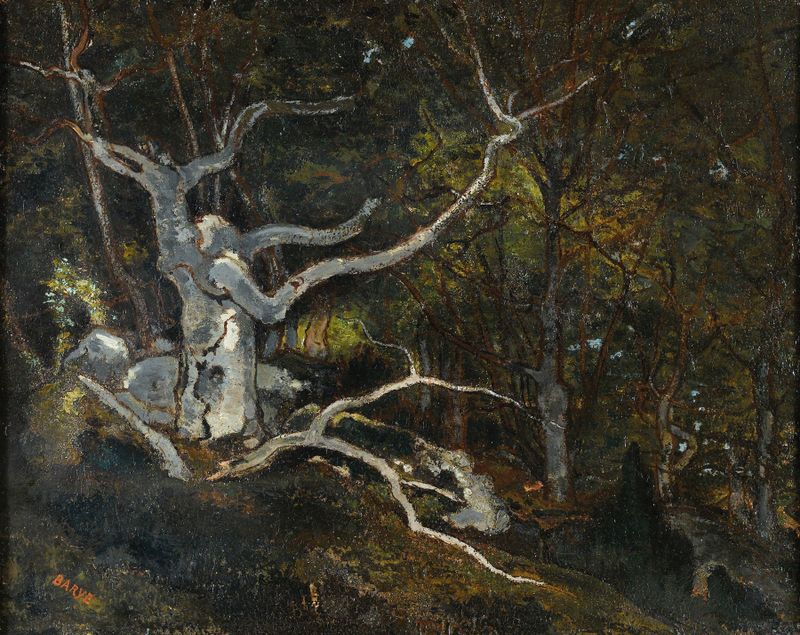
Forest Of Fontainebleau, The ‘reine Blanche’
Antoine-Louis Barye

Intérieur de la forêt de Fontainebleau
Antoine-Louis Barye

A Doe Lying
Antoine-Louis Barye

Chemin sableux en forêt de Fontainebleau
Antoine-Louis Barye

Rocks In Fontainebleau Forest
Antoine-Louis Barye
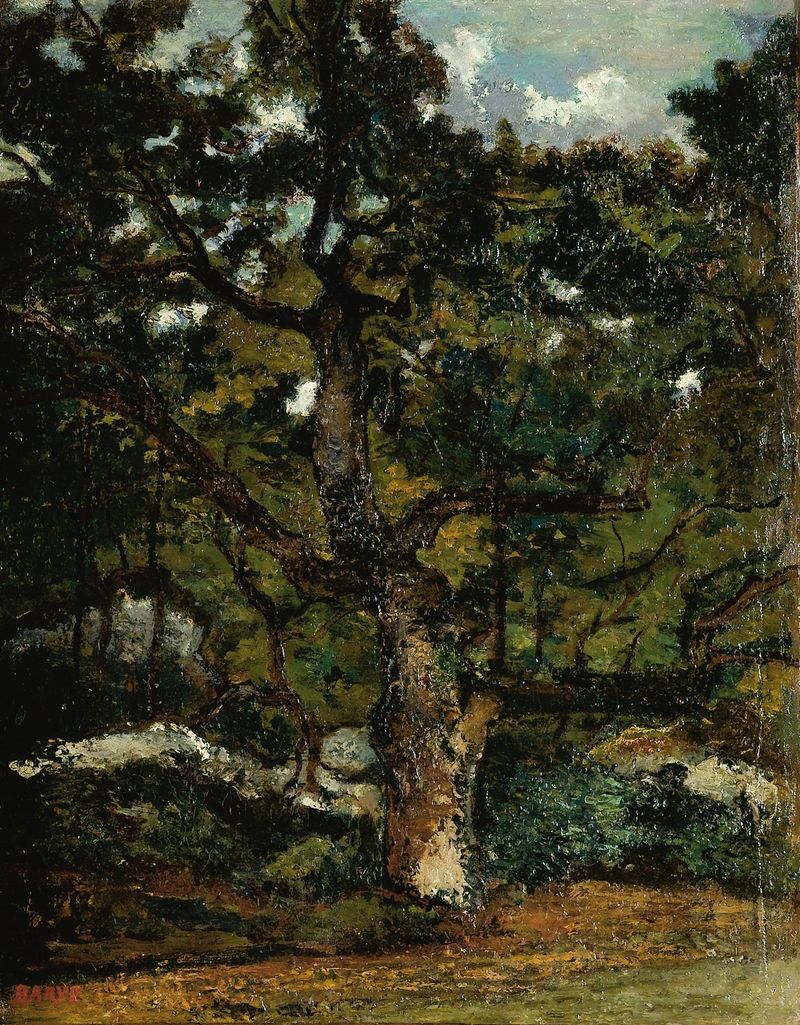
View Of The Fontainebleau Forest
Antoine-Louis Barye
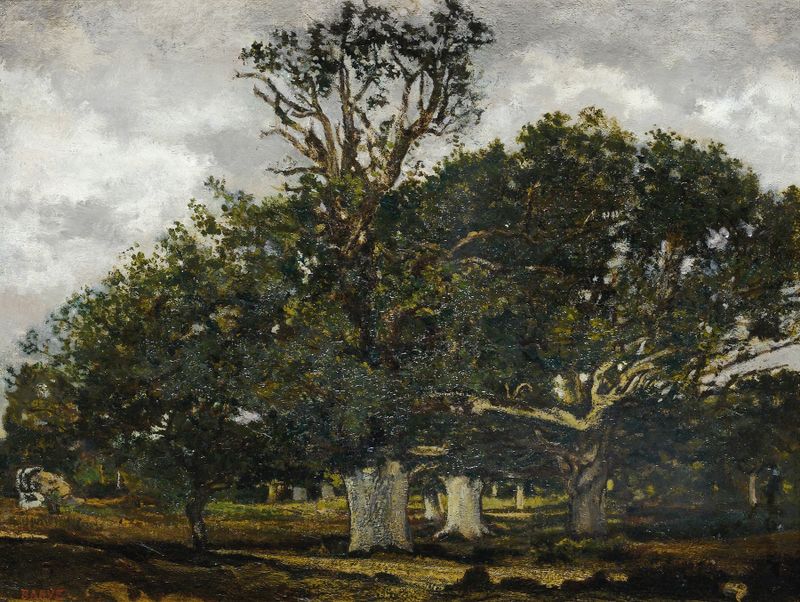
‘jean De Paris’ In Fontainebleau Forest
Antoine-Louis Barye
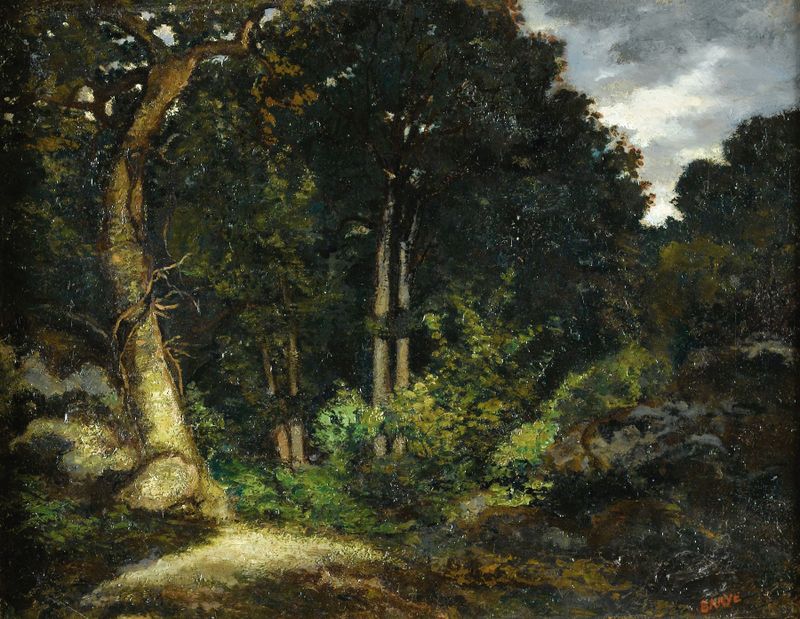
View Of Fontainebleau Forest
Antoine-Louis Barye
Rocks In Fontainebleau
Antoine-Louis Barye

Forest Of Fontainebleau
Antoine-Louis Barye





