
Landscape — History & Facts
This profound realization lays the foundation for understanding the emotional depths captured in the vast expanse of a serene landscape. Focus first on the horizon, where soft hues of blue and gold meld gracefully, inviting the viewer's eye to dance between the sky and the earth. Notice how the gentle brushstrokes create a sense of movement, echoing the whispers of wind rustling through the treetops. The foreground is a symphony of greens and browns, each stroke steeped in a quiet ecstasy, illuminating the life that thrives beneath the canopy of trees framing the scene. In this tranquil vista, one can discern an interplay of light and shadow that evokes feelings of longing and introspection.
The subtle playfulness of the light suggests the fleeting nature of joy, while the stillness of the water reflects a deeper, more contemplative silence. Each detail, from the ripples on the water’s surface to the distant mountains, tells a story of harmony, yet hints at an underlying tension between the vibrancy of life and the inevitability of time. During the years from 1800 to 1843, Georges Michel painted this piece amidst the romantic ideals sweeping through Europe, a period marked by a renewed appreciation for nature. Living in France, Michel found himself influenced by fellow artists who sought to transcend traditional boundaries, delving into emotions and the sublime beauty of the natural world.
This work encapsulates his exploration of both the visible and the invisible, bridging the gap between the earthly and the ethereal.
More Artworks by Georges Michel
Browse all →
The Approaching Storm
Georges Michel

Landschap met zandweg
Georges Michel

Landschaft bei Paris
Georges Michel
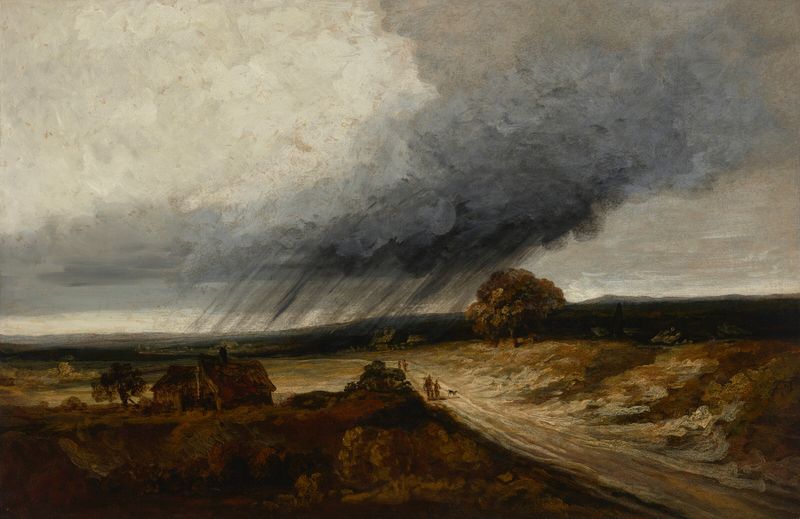
The Approaching Storm
Georges Michel

Landschap met overtrekkende bui
Georges Michel
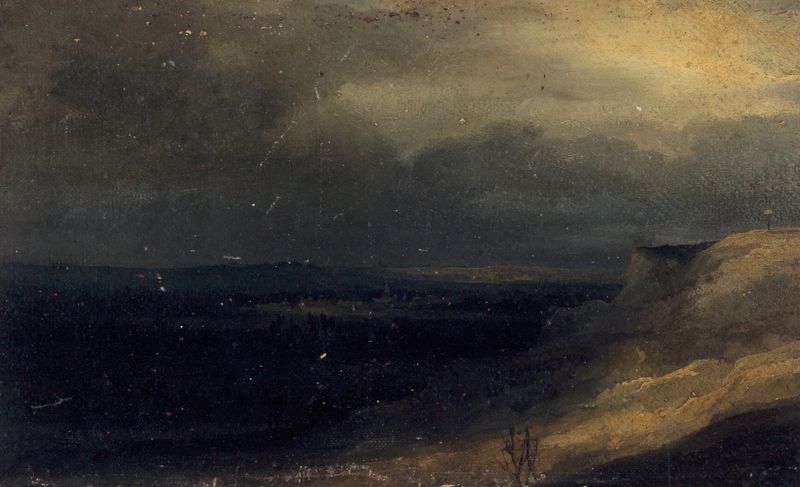
Vue présumée de Montmartre.
Georges Michel

Landschap met figuren en vee
Georges Michel

Approaching Storm
Georges Michel
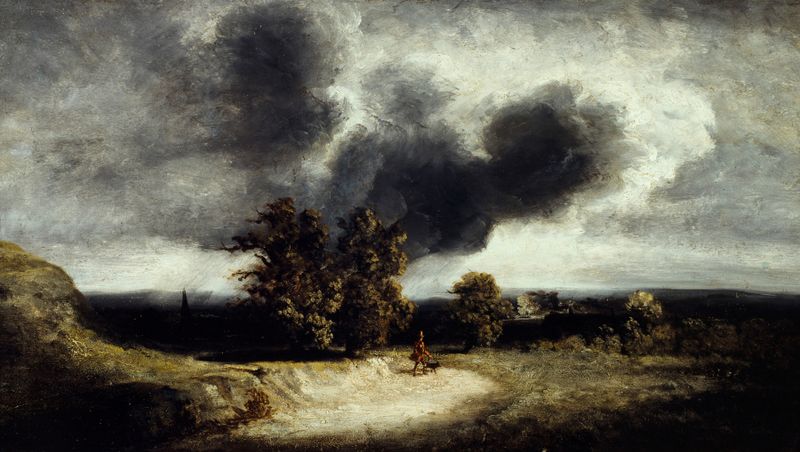
Paysage des environs de Paris.
Georges Michel

Gezicht op de Dome des Invalides uit de Champ de Mars
Georges Michel





