
Landscape — History & Facts
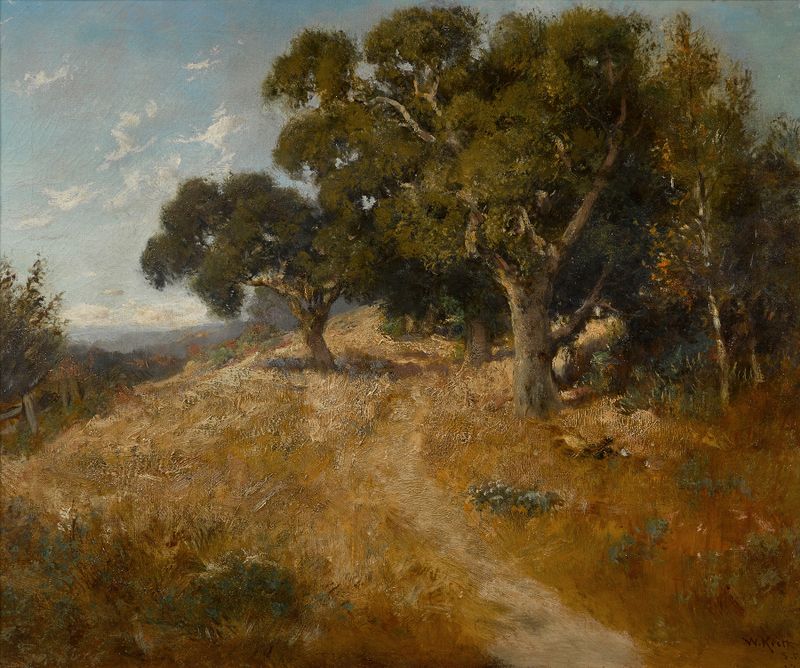
Did the painter know this moment would outlive them? Each brushstroke in Landscape seems to echo a whisper of eternity, capturing nature's profound beauty and the passage of time, inviting reflection on our own destinies. Look to the foreground, where a gentle stream weaves its way through a meadow lush with wildflowers. Notice how the vibrant greens mingle with soft yellows and delicate blues, creating a harmonious palette that breathes life into the scene. The towering trees in the background, kissed by a warm glow, stand sentinel over the landscape, their rugged bark and lush canopies rendered with meticulous detail.
Keith’s masterful technique not only showcases the natural world but also evokes a sense of peace and serenity. In this tranquil setting, a subtle tension unfolds. The interplay of light and shadow suggests the duality of life and nature, with each bright patch symbolizing hope and vitality, contrasted against the deep shadows that signify the unknown. The winding stream, a metaphor for the journey of life, hints at the transient nature of existence — while the landscape appears everlasting, it is a moment captured in time, forever on the brink of change. William Keith created Landscape in the latter part of the 19th century, a period marked by profound transformations in the art world and society.
Living in California during this time, he became known for his romanticized views of the American wilderness, as the country grappled with ideas of expansion and identity. His work reflects a deep appreciation for nature while also embodying the artist's quest to connect the viewer to a sense of place and purpose amid the shifting tides of history.
More Artworks by William Keith
Browse all →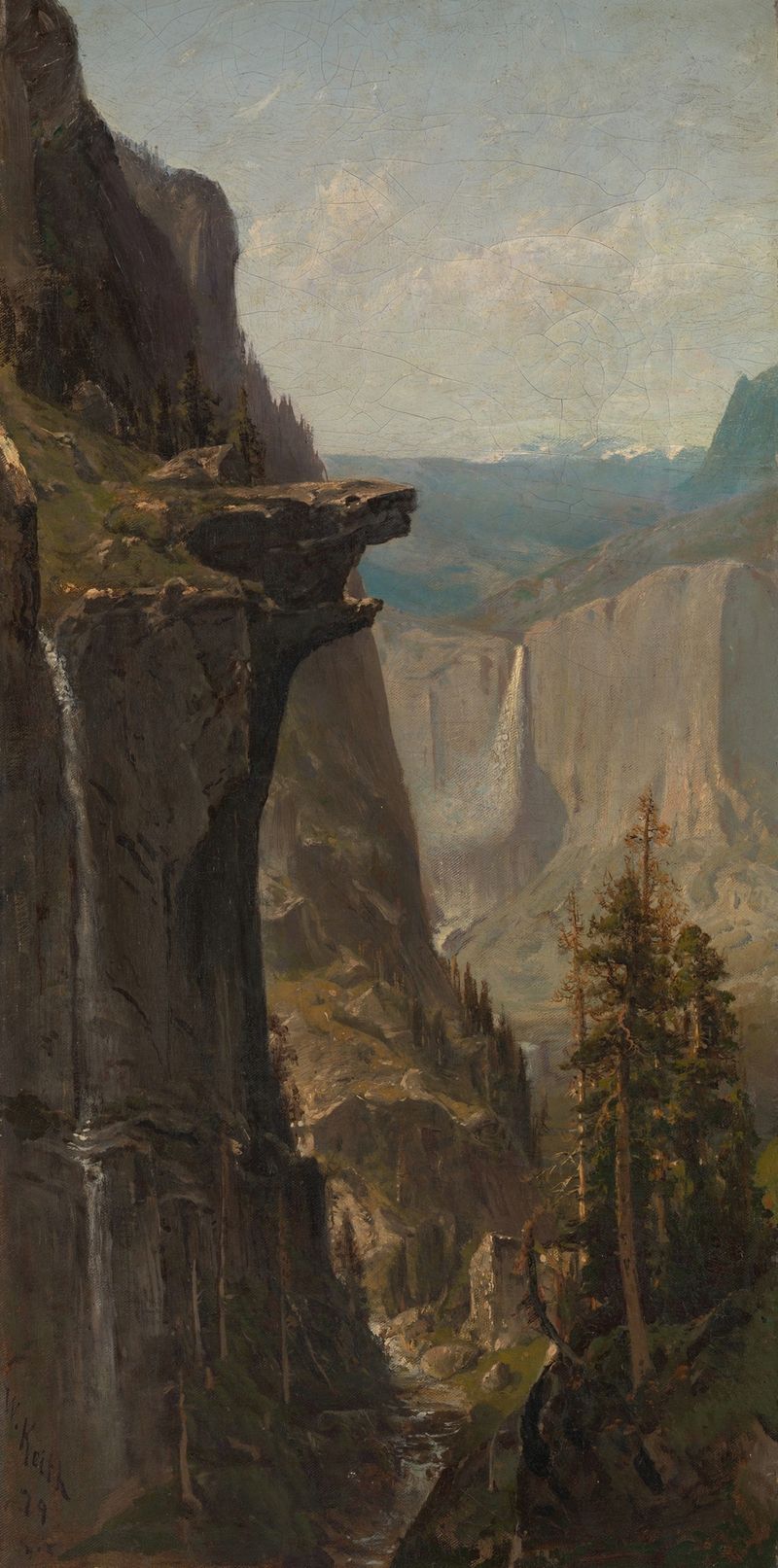
Yosemite Falls, from Glacier Point
William Keith

Half Dome, Yosemite
William Keith
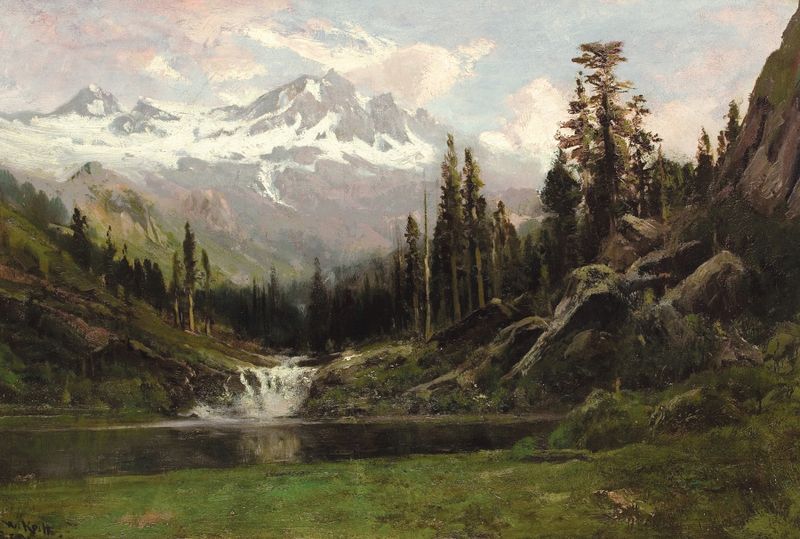
View of Mount Shasta
William Keith
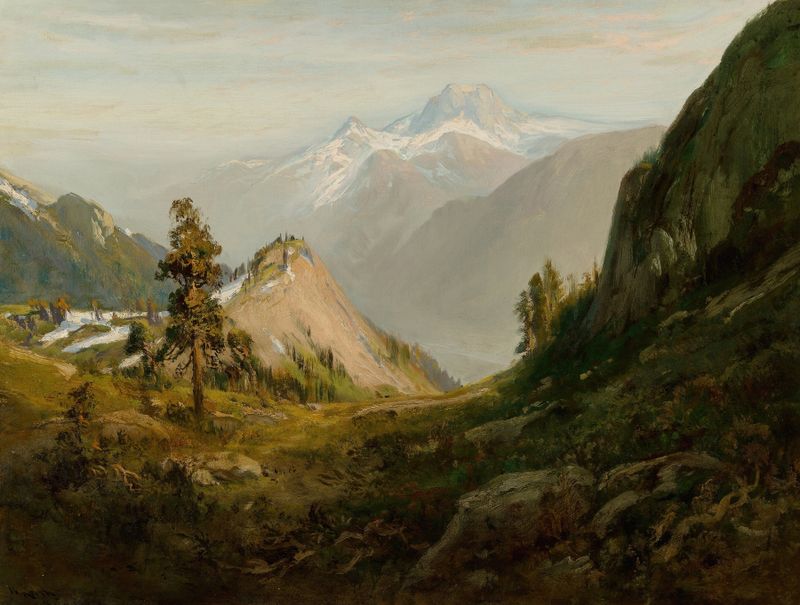
Where Gold was Found in California
William Keith

Mount Tamalpais from the North West
William Keith

Yosemite Valley
William Keith
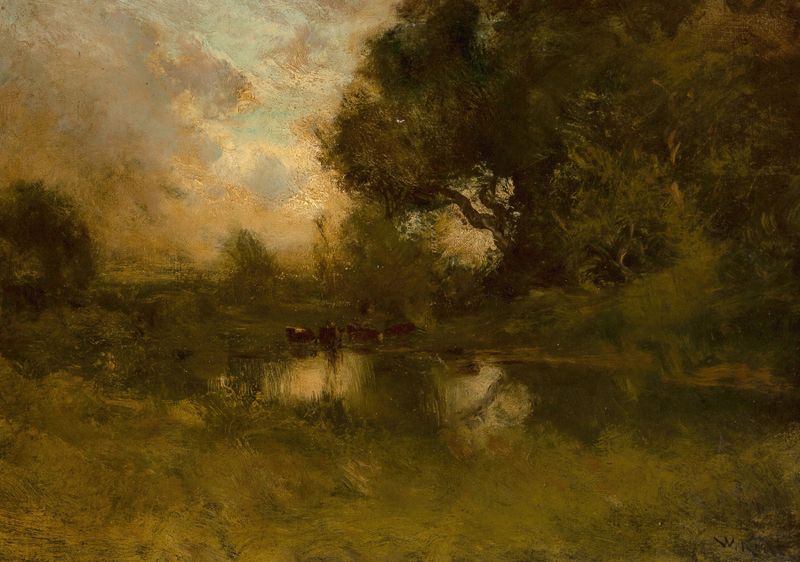
Napa Creek
William Keith
Path through California oaks
William Keith

Landscape
William Keith

Landscape Painting
William Keith





