
Landscape — History & Facts
When did color learn to lie? In the realm of artistry, hues weave narratives that sometimes transcend the earthly and touch upon the divine. Look to the foreground, where a tapestry of lush greens speaks of vitality and life, contrasting with the darker, weighty clouds that loom above. Notice how the soft strokes of the brush create an ethereal quality, blending the horizon where the land meets the sky. The light seems to dance across the canvas, directing your gaze toward the hidden details of the landscape, inviting an exploration of depth and shadow. Within this serene yet tumultuous scene lies a tension between tranquility and unease.
The serene fields suggest a pastoral paradise, yet the encroaching storm clouds hint at an impending upheaval, representing nature's duality. The subtle interplay of light and shade reflects the dichotomy of divinity—both beautiful and foreboding—capturing the viewer's imagination and stirring feelings that echo through the ages. In the 19th century, Verboeckhoven painted this work during a time of burgeoning artistic exploration and heightened interest in nature's majesty. Living in Belgium, he was influenced by his contemporaries while delving into landscapes that revealed the sublime and the tumultuous.
This period marked a fascination with capturing the essence of the natural world, a theme that resonated deeply in Verboeckhoven’s artistic endeavors.
More Artworks by Eugène Joseph Verboeckhoven
Browse all →
The Guardian Of The Flock
Eugène Joseph Verboeckhoven
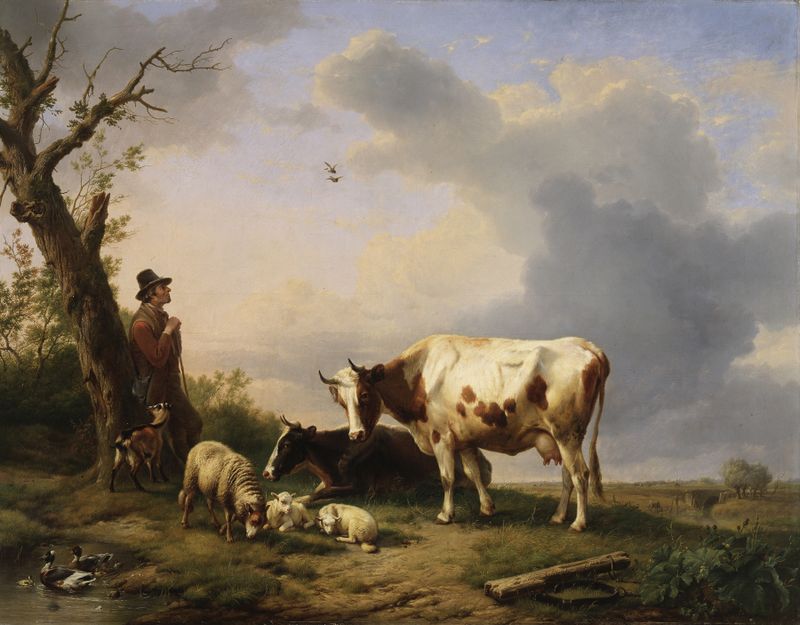
Landscape with animals
Eugène Joseph Verboeckhoven
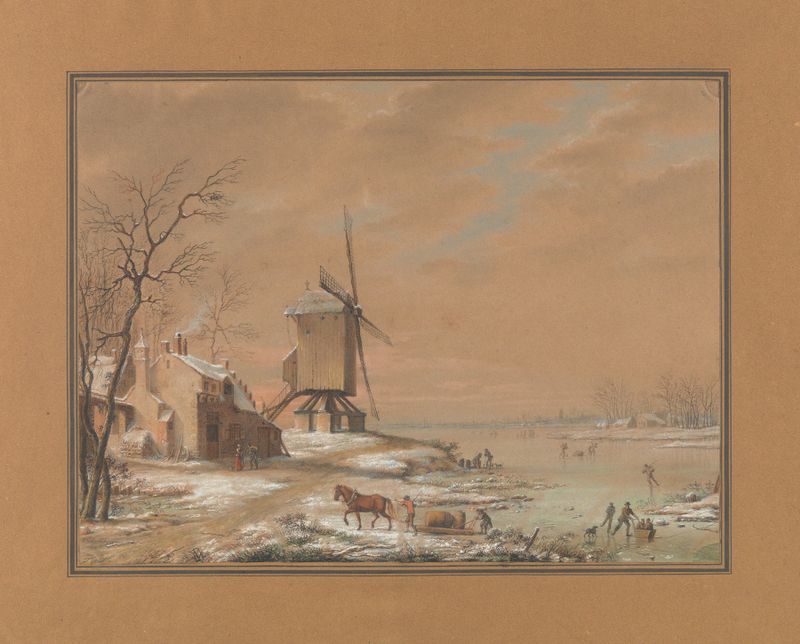
Winterlandschap
Eugène Joseph Verboeckhoven

Sheep and Chicken in a Landscape
Eugène Joseph Verboeckhoven
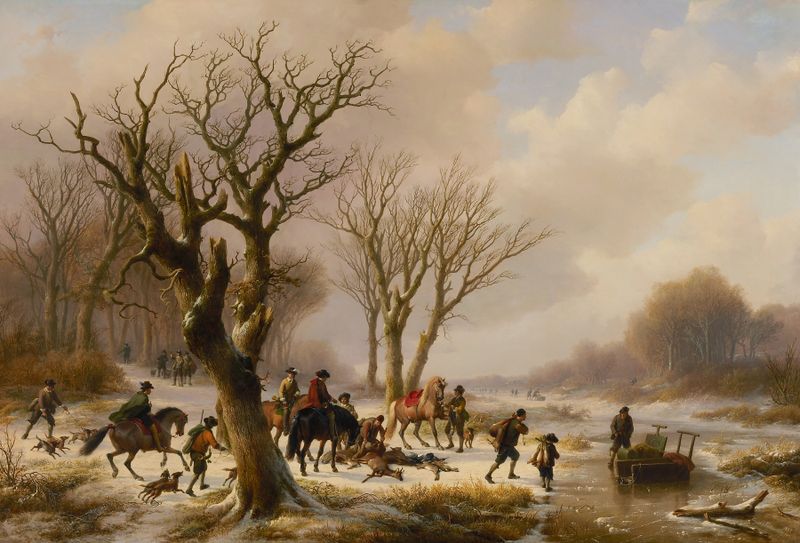
Na de jacht
Eugène Joseph Verboeckhoven
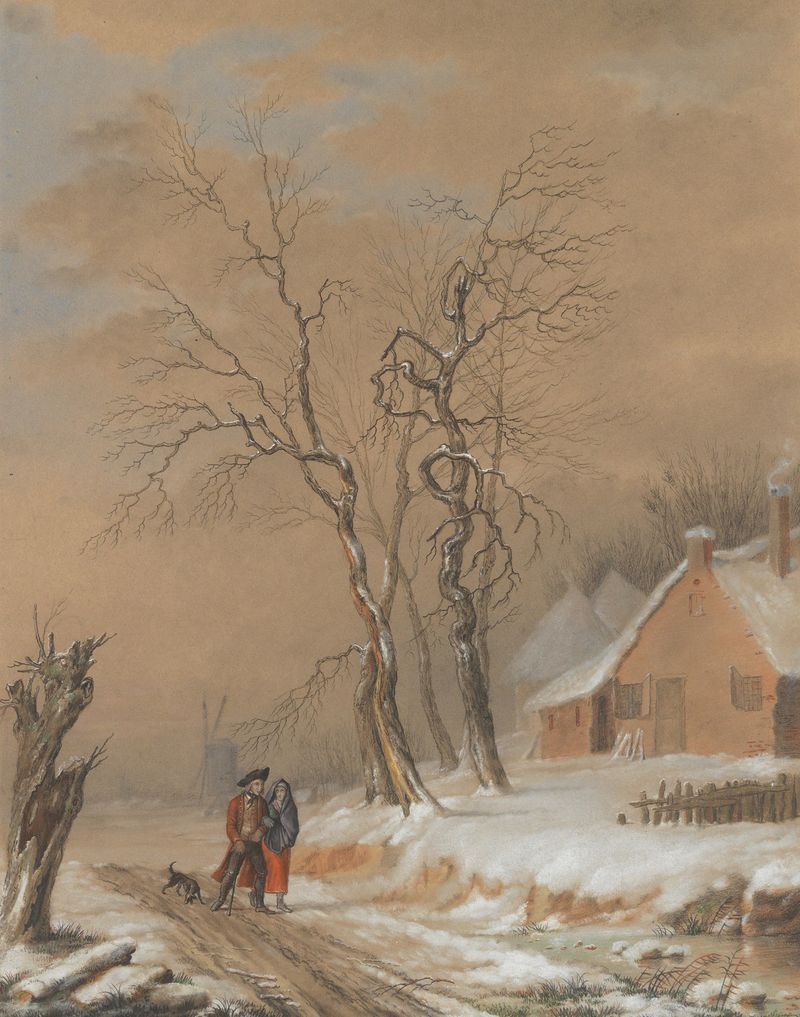
Winter landscape with two figures and a dog
Eugène Joseph Verboeckhoven

Horseman Resting
Eugène Joseph Verboeckhoven
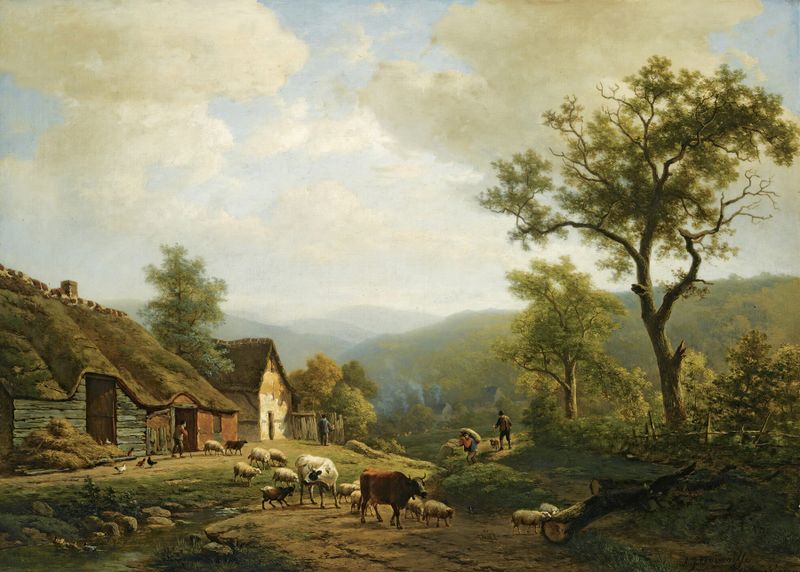
A Hilly Landscape With Cattle Going To The Fields
Eugène Joseph Verboeckhoven
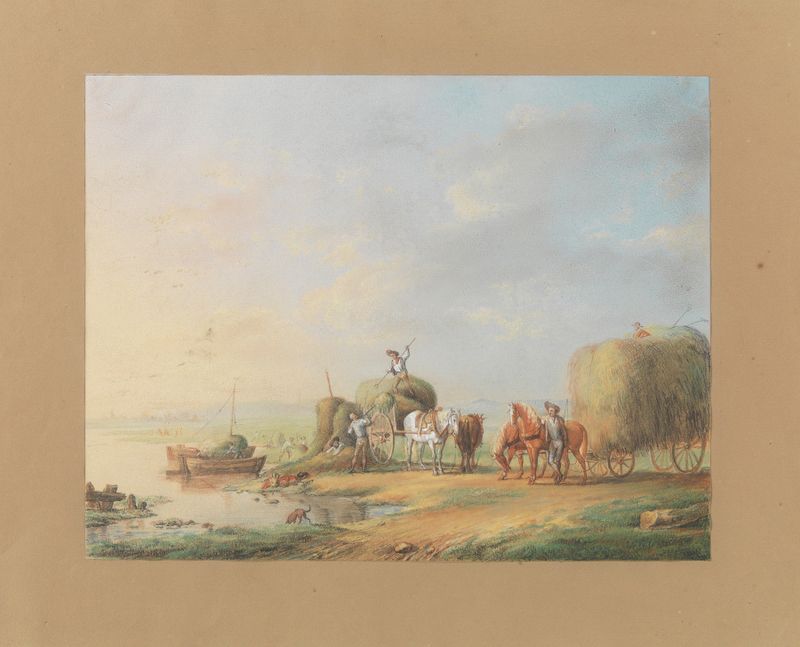
Boeren met paarden en hooiwagens aan de oever van een rivier
Eugène Joseph Verboeckhoven
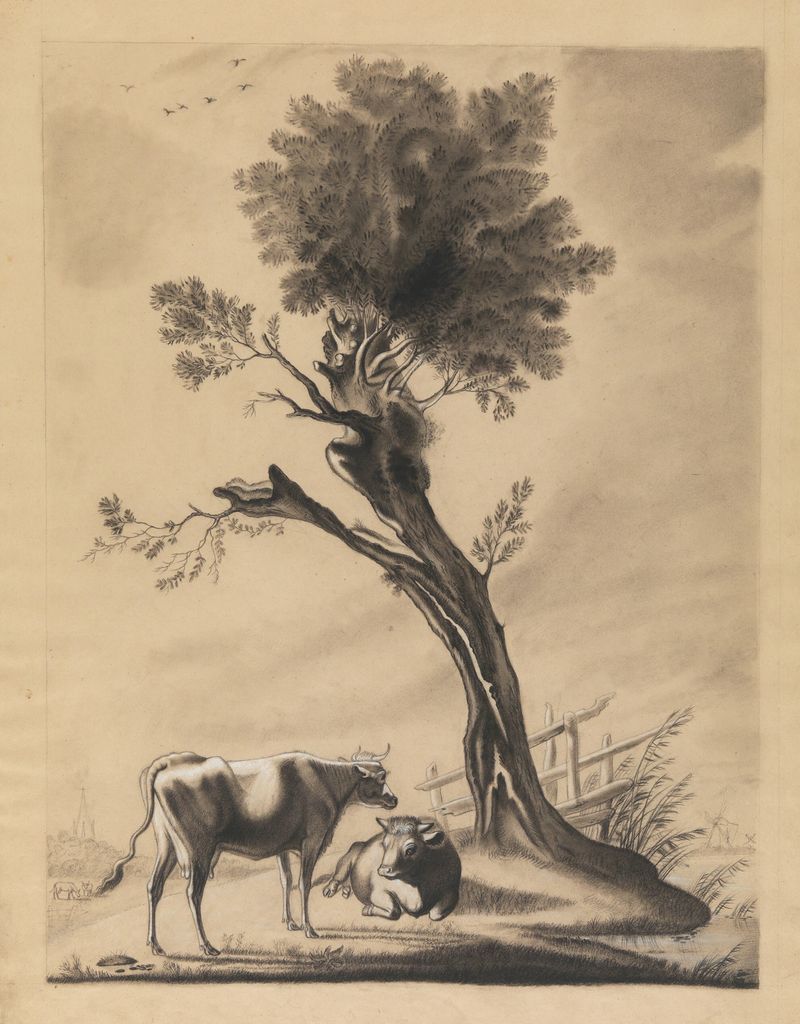
Cows in a landscape
Eugène Joseph Verboeckhoven





