
Landscape — History & Facts
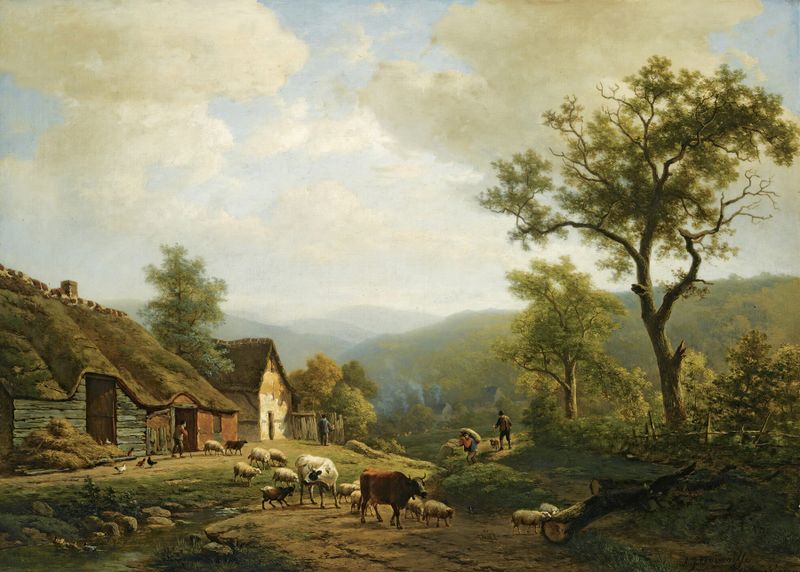
Could beauty survive in a century of chaos? In a world where nature and humanity often fall into disarray, the essence of this Landscape prompts reflection on resilience amid decay. Look to the soft, undulating hills that cradle the horizon, where a muted palette of greens and browns blends seamlessly. Just beneath the surface, wisps of cloud scatter the sky, hinting at an approaching storm while simultaneously illuminating the landscape below. The delicate brushwork creates a texture that invites you to trace the pathways winding through the scene, leading the eye to the subtle play of light filtering through the trees, revealing an almost eerie tranquility amid the elements. Beneath the serene beauty lies an undercurrent of disquiet.
The trees, while majestic, exhibit signs of wear, their gnarled branches suggesting a struggle against time and environmental shifts. A distant farmhouse peeks through the foliage, decaying yet stubbornly enduring, symbolizing human persistence even in uncertain conditions. The juxtaposition of nature's vitality against the inevitable decay underscores a poignant commentary on both existence and transience. Eugène Joseph Verboeckhoven created Landscape in the 19th century, a time marked by rapid industrialization and shifting societal norms.
Living in Belgium, he painted against a backdrop of change, where the pastoral life was increasingly threatened by urban expansion. This piece reflects not just a personal vision but also the broader anxieties of an epoch wrestling with the balance between beauty and decay.
More Artworks by Eugène Joseph Verboeckhoven
Browse all →
The Guardian Of The Flock
Eugène Joseph Verboeckhoven
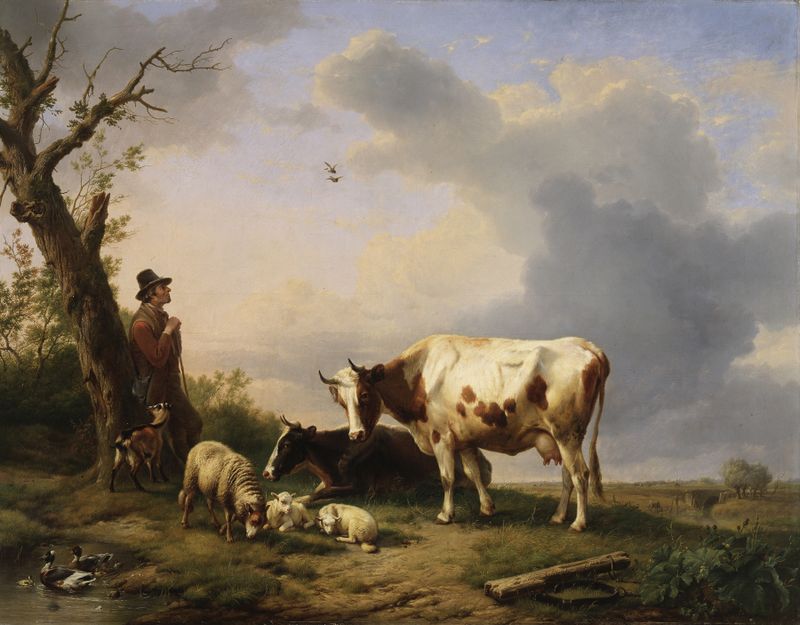
Landscape with animals
Eugène Joseph Verboeckhoven
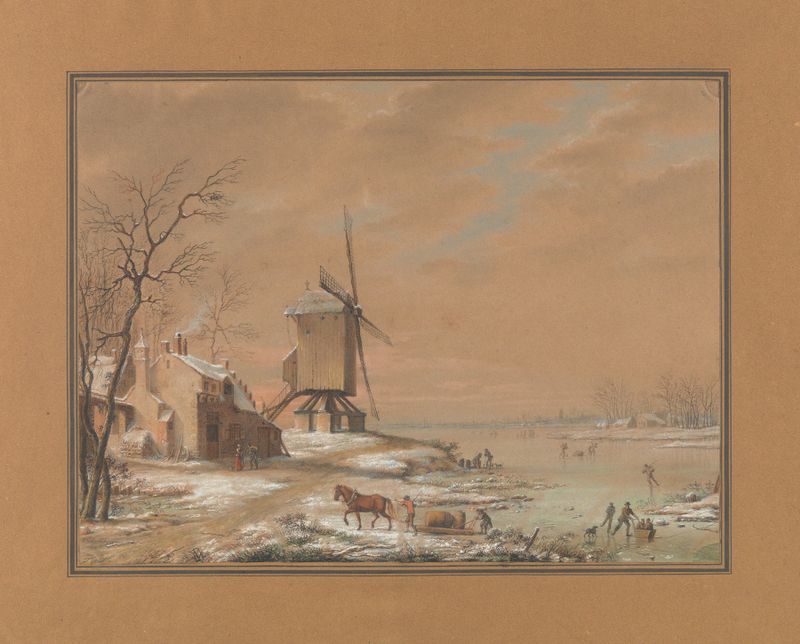
Winterlandschap
Eugène Joseph Verboeckhoven

Sheep and Chicken in a Landscape
Eugène Joseph Verboeckhoven
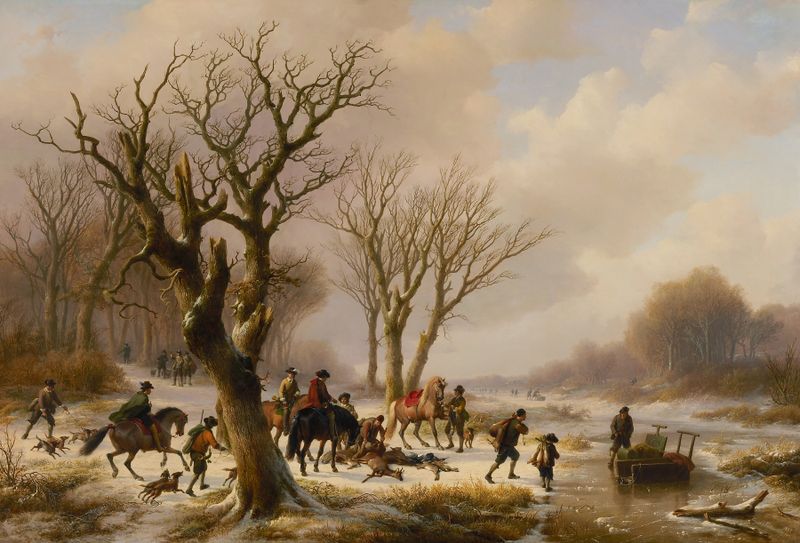
Na de jacht
Eugène Joseph Verboeckhoven
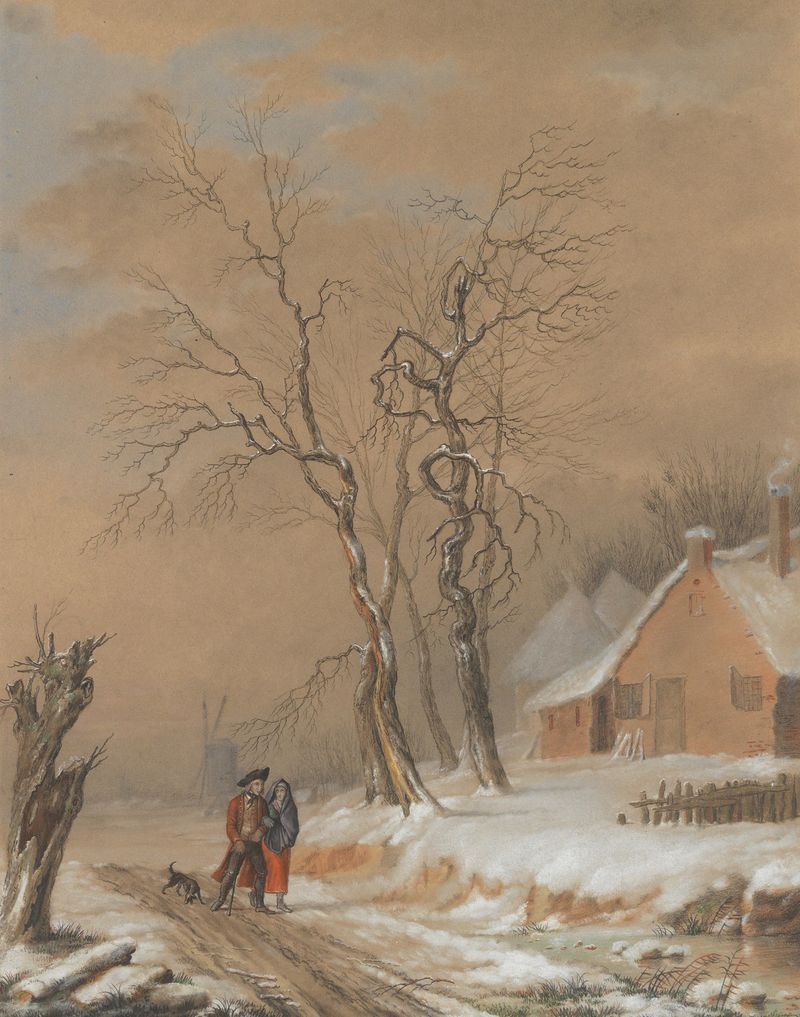
Winter landscape with two figures and a dog
Eugène Joseph Verboeckhoven

Horseman Resting
Eugène Joseph Verboeckhoven
A Hilly Landscape With Cattle Going To The Fields
Eugène Joseph Verboeckhoven
Boeren met paarden en hooiwagens aan de oever van een rivier
Eugène Joseph Verboeckhoven
Cows in a landscape
Eugène Joseph Verboeckhoven





