
Landscape — History & Facts
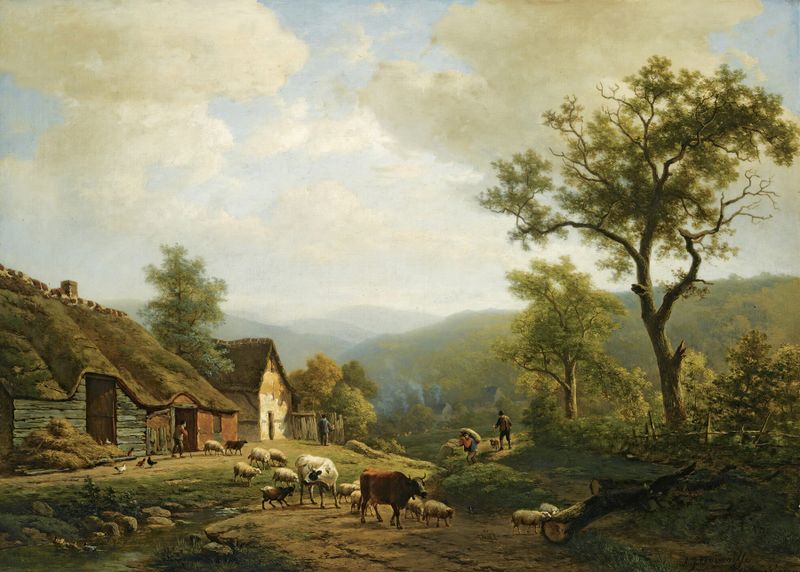
In Landscape, the echoes of a silent world resonate through its melancholic tones, inviting reflection and reverie. Look to the foreground, where gentle hills undulate like whispered secrets beneath the weight of a brooding sky. The muted greens and browns create a harmony that feels both familiar and distant, as if the landscape is both a memory and a dream. Notice how the light, filtered through heavy clouds, casts a soft glow that dances delicately along the edges of the foliage, accentuating the texture and depth of the scene.
The horizon line is low, allowing the expansive sky to dominate, evoking a feeling of solitude and introspection. As the eye wanders across the canvas, the interplay of light and shadow conveys a sense of time resting. The trees, slightly bent as if bowing under the weight of unseen burdens, mirror a shared human experience of longing and loss. In the distance, a trace of movement suggests life—a solitary figure, perhaps a traveler or a wanderer, walking the path that leads into the unknown, inviting viewers to ponder their own journeys through moments of quiet despair. Eugène Joseph Verboeckhoven painted Landscape during the 19th century in Belgium, a time when the Romantic movement was giving way to Realism.
The artist was absorbed in the natural world, reflecting a shift towards a deeper connection with landscapes while grappling with the changing contemporary art scene. This work embodies his exploration of emotion through nature, marking a pivotal moment in his artistic evolution amidst the vibrant changes of his time.
More Artworks by Eugène Joseph Verboeckhoven
Browse all →
The Guardian Of The Flock
Eugène Joseph Verboeckhoven
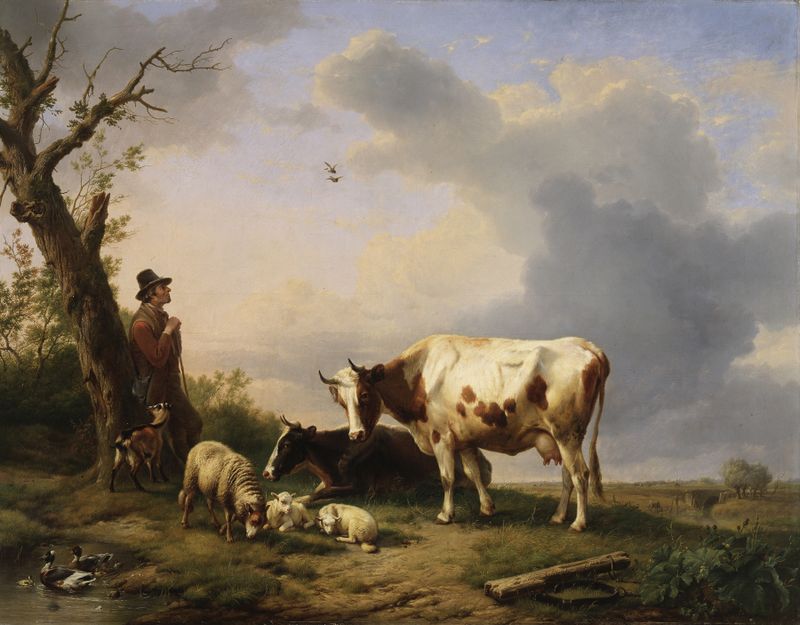
Landscape with animals
Eugène Joseph Verboeckhoven
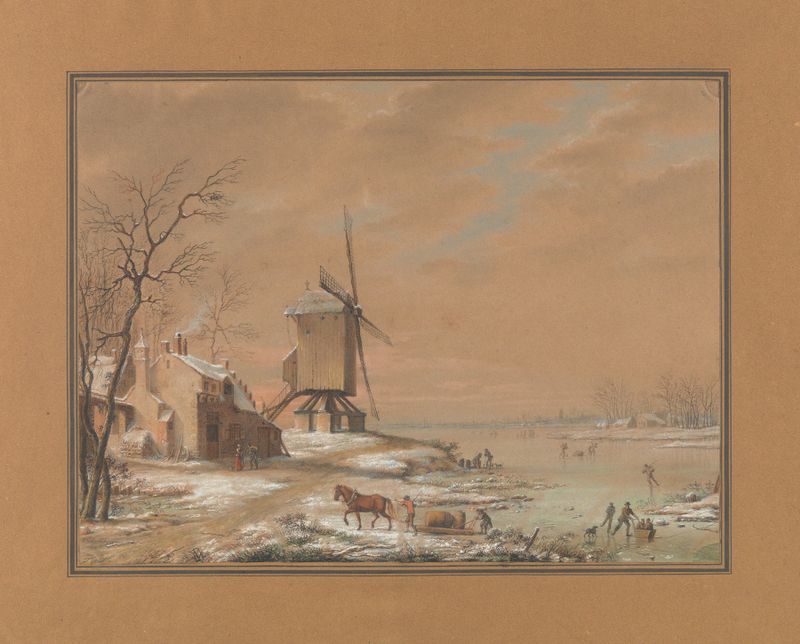
Winterlandschap
Eugène Joseph Verboeckhoven

Sheep and Chicken in a Landscape
Eugène Joseph Verboeckhoven
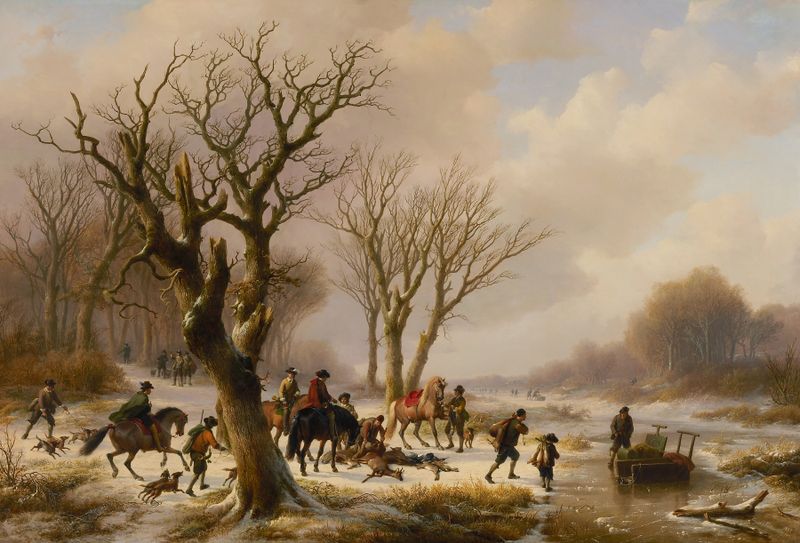
Na de jacht
Eugène Joseph Verboeckhoven
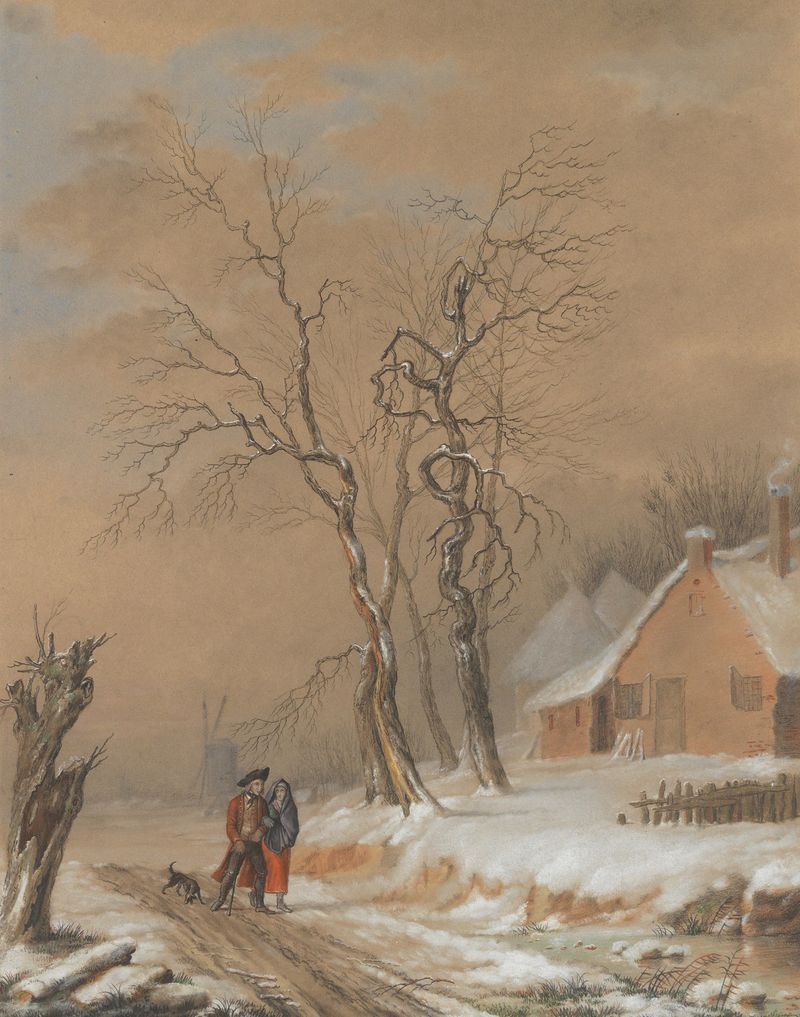
Winter landscape with two figures and a dog
Eugène Joseph Verboeckhoven

Horseman Resting
Eugène Joseph Verboeckhoven
A Hilly Landscape With Cattle Going To The Fields
Eugène Joseph Verboeckhoven
Boeren met paarden en hooiwagens aan de oever van een rivier
Eugène Joseph Verboeckhoven
Cows in a landscape
Eugène Joseph Verboeckhoven





