
Landscape — History & Facts
When did color learn to lie? The interplay of vibrant hues in a dreamscape offers a tantalizing glimpse into our subconscious, where reality blurs with imagination. Focus on the lush expanse of greenery that fills the canvas, where shades of emerald and jade dance together under a radiant sun. Notice how the sky transitions from soft cerulean to wisps of golden warmth, drawing your eye upward toward the horizon. Each brushstroke seems to breathe life into the scene, while the delicate handling of light creates an ethereal glow, inviting you to step into this tranquil world. The composition balances serenity with tension; the trees, stoic yet swaying, embody both stability and movement.
Observe the figures in the distance—almost ghostly—immersed in their activities, evoking a sense of mystery. Are they dreamers or real? This ambiguity deepens as hues transition, challenging our perception of time and space. Each detail whispers secrets of longing and nostalgia, urging the viewer to reflect on their own aspirations and dreams. Eugène Joseph Verboeckhoven created this piece in the 19th century, a time marked by a growing interest in romanticism and the natural world.
Living in Belgium, he was influenced by the changing art landscape, where color became a vital means of expression. The period saw artists exploring the relationship between nature and emotion, which is poignantly reflected in this landscape, capturing both the beauty and the complexities of the human experience.
More Artworks by Eugène Joseph Verboeckhoven
Browse all →
The Guardian Of The Flock
Eugène Joseph Verboeckhoven
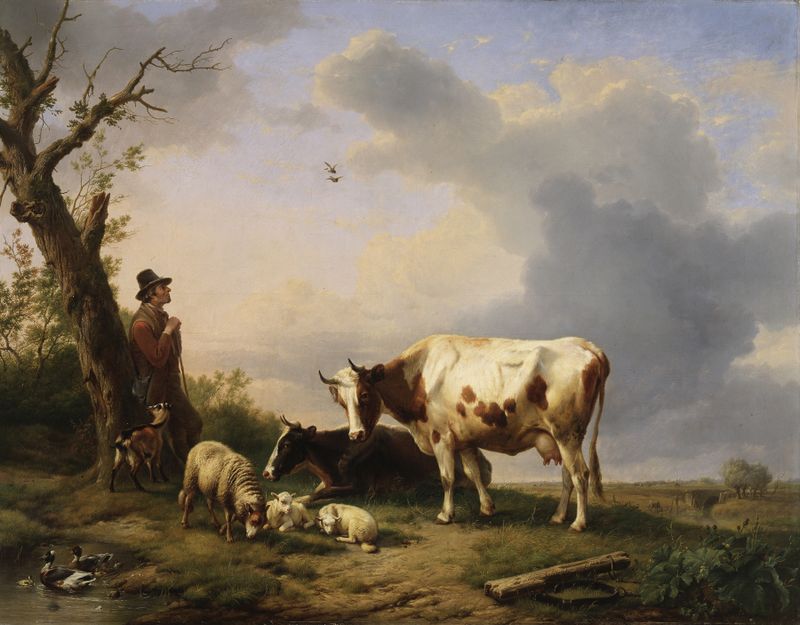
Landscape with animals
Eugène Joseph Verboeckhoven
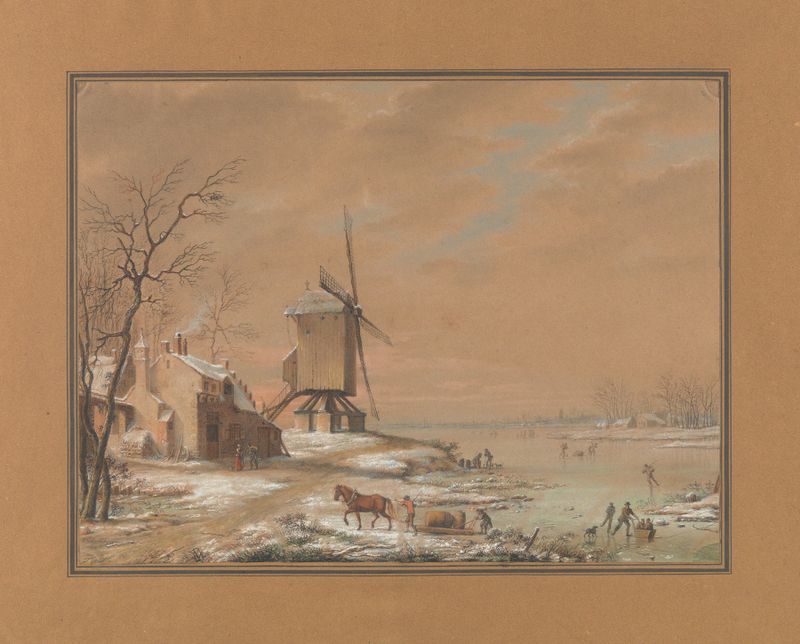
Winterlandschap
Eugène Joseph Verboeckhoven

Sheep and Chicken in a Landscape
Eugène Joseph Verboeckhoven
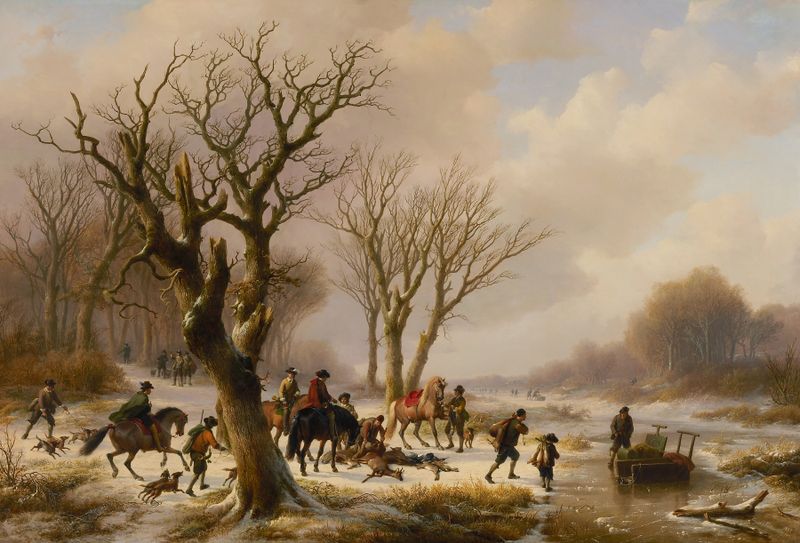
Na de jacht
Eugène Joseph Verboeckhoven
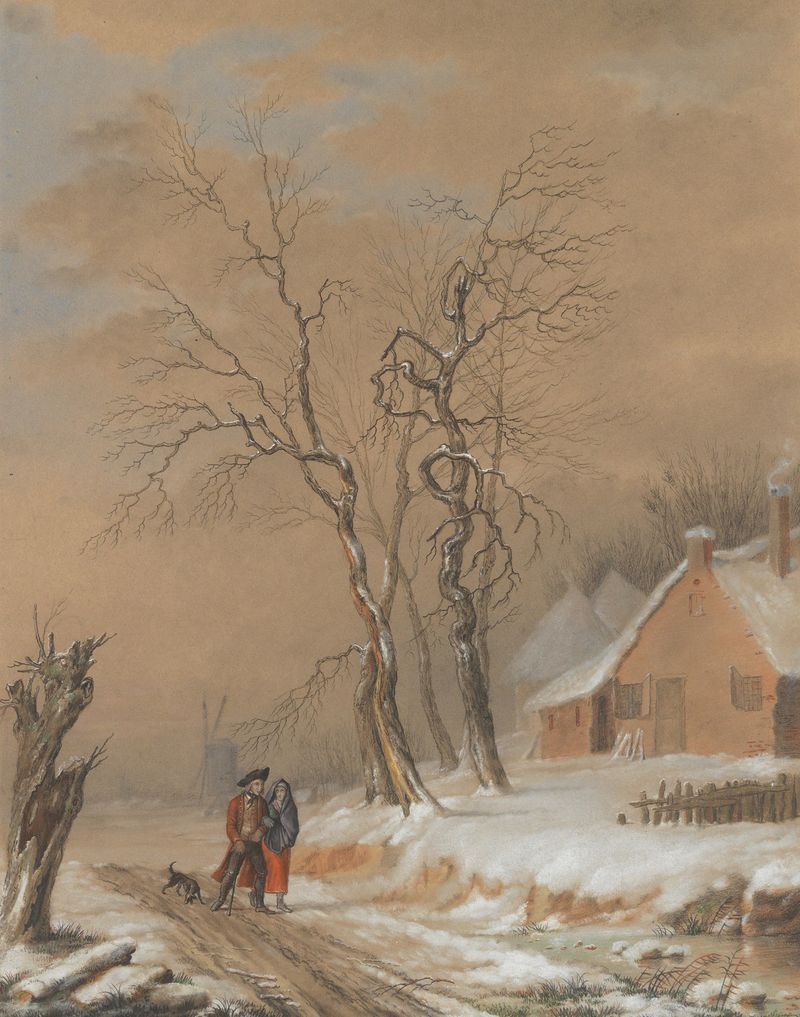
Winter landscape with two figures and a dog
Eugène Joseph Verboeckhoven

Horseman Resting
Eugène Joseph Verboeckhoven
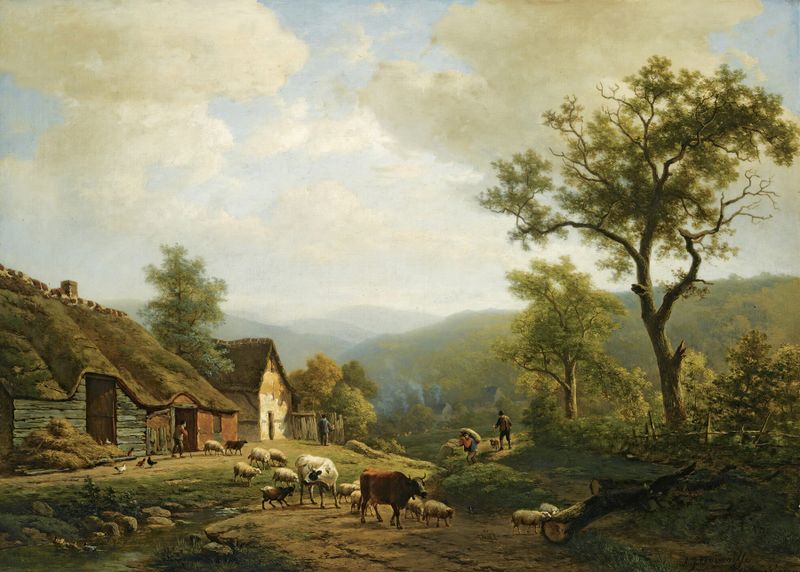
A Hilly Landscape With Cattle Going To The Fields
Eugène Joseph Verboeckhoven
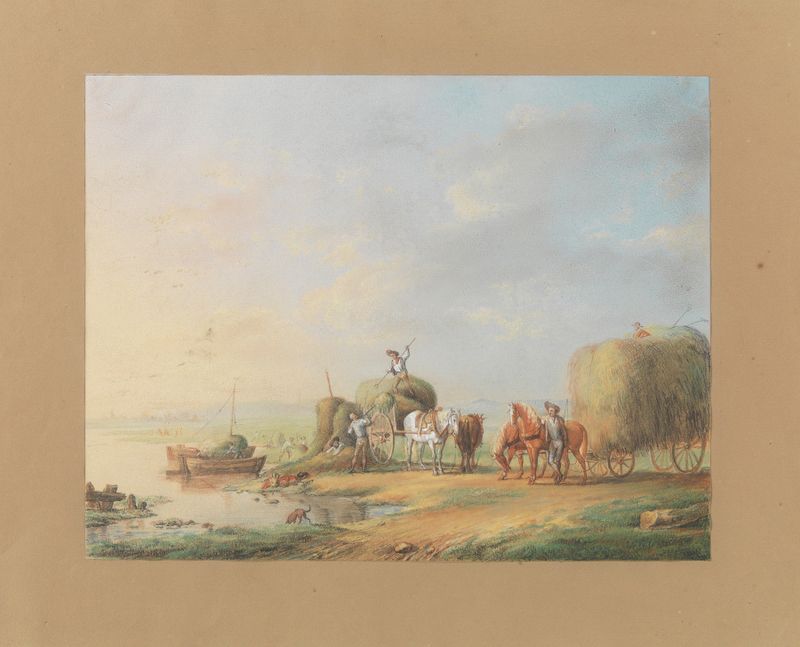
Boeren met paarden en hooiwagens aan de oever van een rivier
Eugène Joseph Verboeckhoven
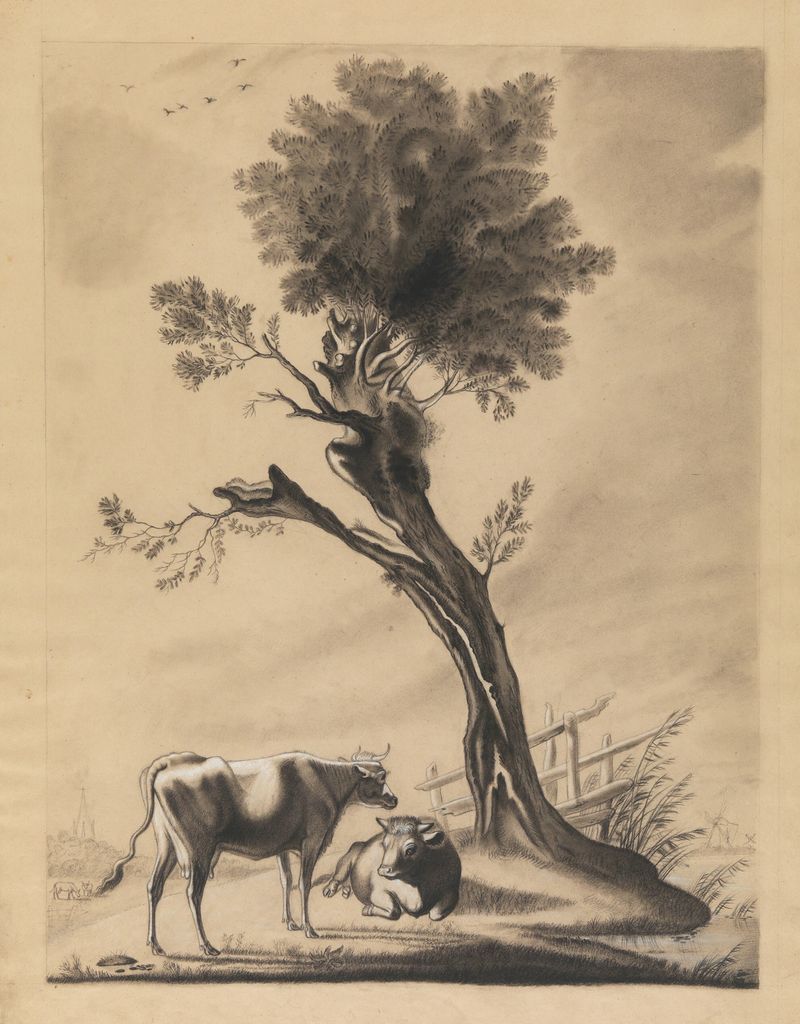
Cows in a landscape
Eugène Joseph Verboeckhoven





