
Landscape — History & Facts
When did color learn to lie? Innocence can sometimes wear a mask, veiling the truth behind hues that deceive and distract. Look to the soft greens and gentle browns of the foreground, where an idyllic pastoral scene unfolds. The brushstrokes dance lightly across the canvas, suggesting a tranquil harmony between nature and its silent inhabitants. The delicate interplay between light and shadow invites the viewer to explore each corner, revealing wisps of clouds that drift lazily across the azure sky, hovering over lush meadows that seem to stretch infinitely. Yet, beneath this serene surface, tensions brew; the brightness of the landscape might conceal the fragility of nature and the transient nature of life.
Notice the subtle contrasts between the vibrant flora and the muted tones of the farmhouse in the distance, a starker reminder of humanity's encroachment upon this paradise. With each brushstroke, the artist captures not only the beauty but also an underlying melancholy—echoes of innocence lost in the pursuit of progress. Verboeckhoven painted this work in the 19th century, a period marked by rapid industrialization and changing landscapes across Europe. Living in Belgium, he found inspiration in the pastoral beauty around him, juxtaposing it with the emerging realities of modern life.
His focus on pastoral scenes reflected both a deep appreciation for nature and a yearning for simplicity amid the complexities of contemporary society.
More Artworks by Eugène Joseph Verboeckhoven
Browse all →
The Guardian Of The Flock
Eugène Joseph Verboeckhoven
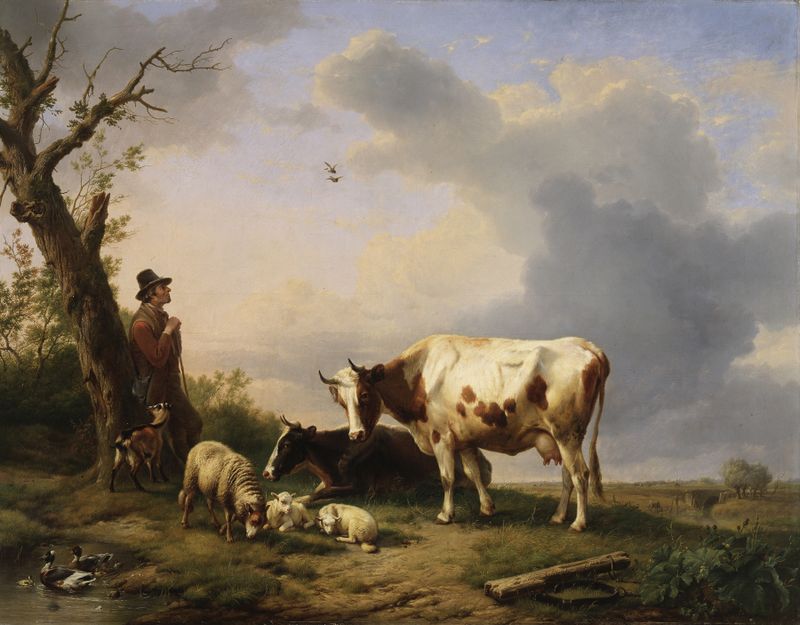
Landscape with animals
Eugène Joseph Verboeckhoven
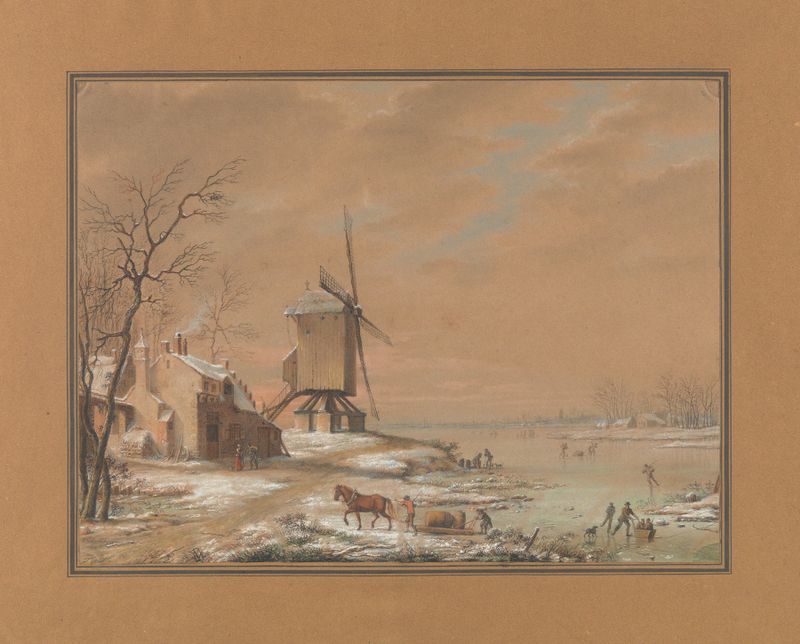
Winterlandschap
Eugène Joseph Verboeckhoven

Sheep and Chicken in a Landscape
Eugène Joseph Verboeckhoven
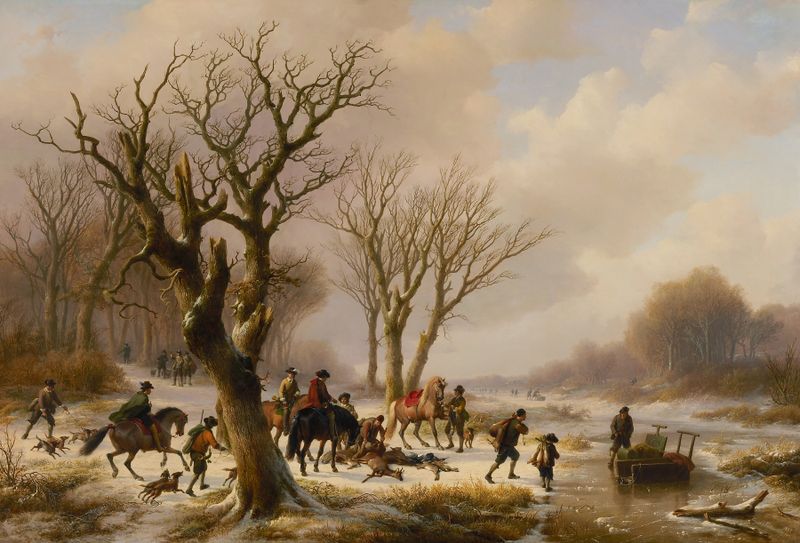
Na de jacht
Eugène Joseph Verboeckhoven
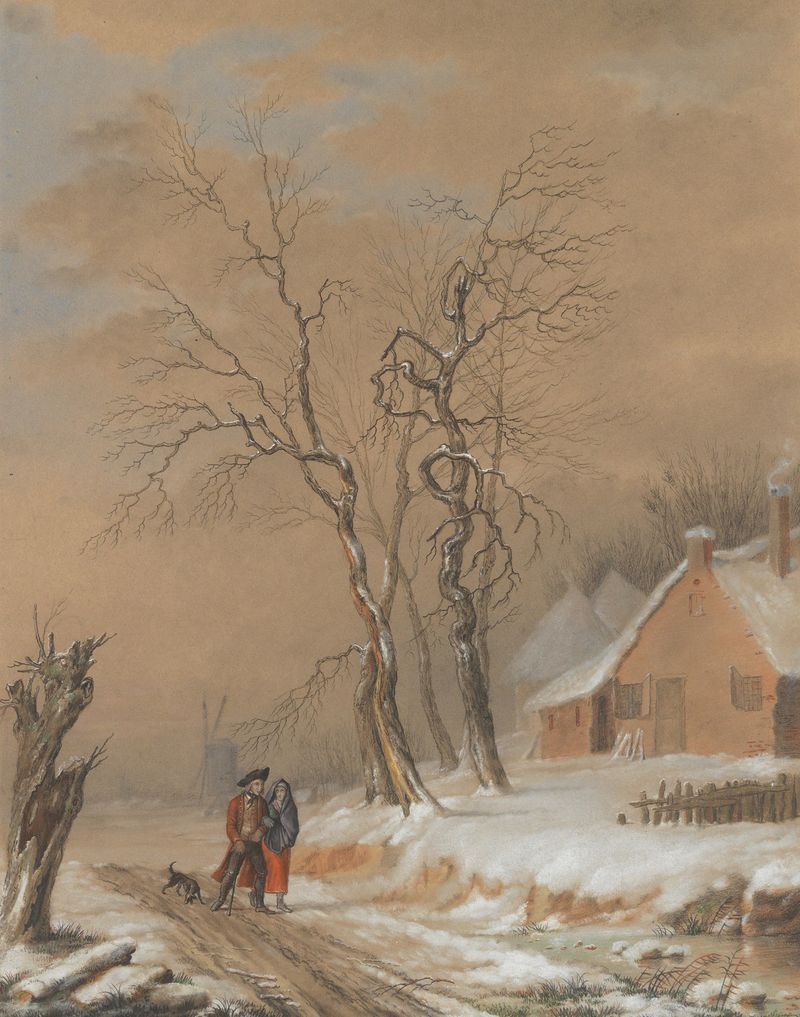
Winter landscape with two figures and a dog
Eugène Joseph Verboeckhoven

Horseman Resting
Eugène Joseph Verboeckhoven
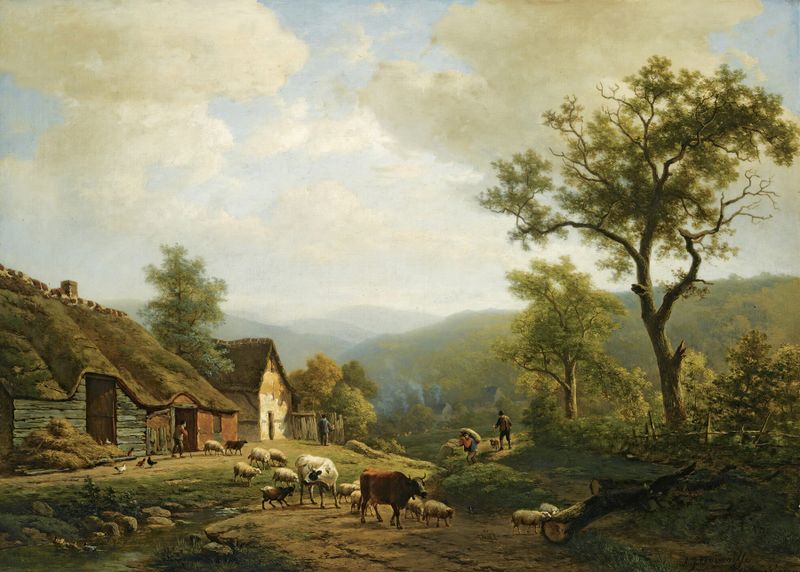
A Hilly Landscape With Cattle Going To The Fields
Eugène Joseph Verboeckhoven
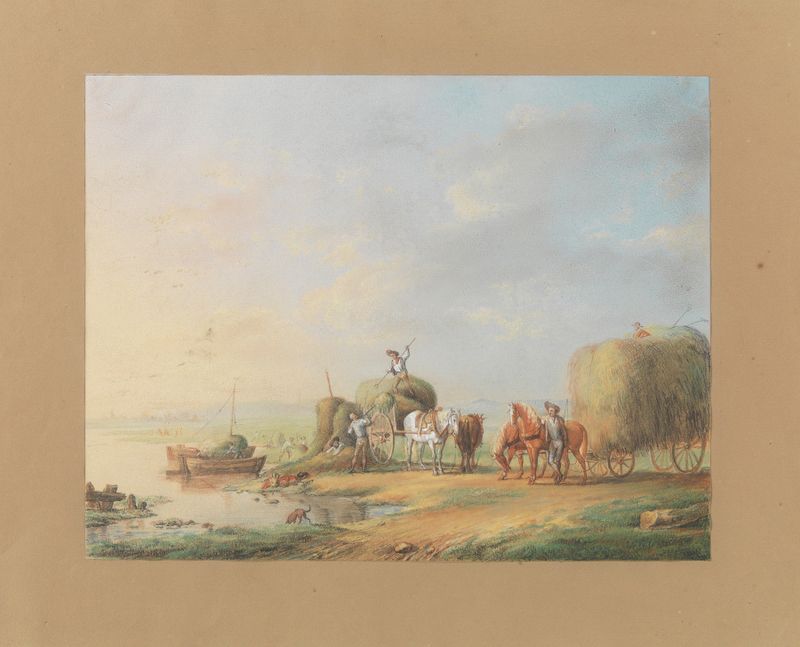
Boeren met paarden en hooiwagens aan de oever van een rivier
Eugène Joseph Verboeckhoven
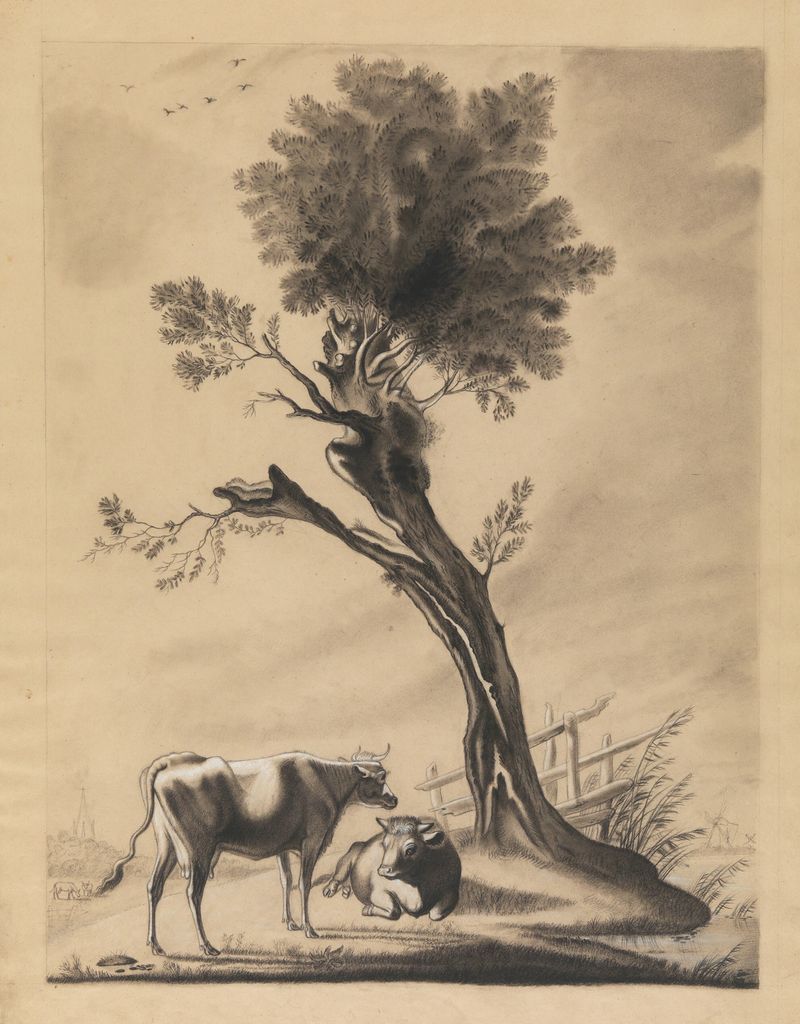
Cows in a landscape
Eugène Joseph Verboeckhoven





