
Landscape — History & Facts
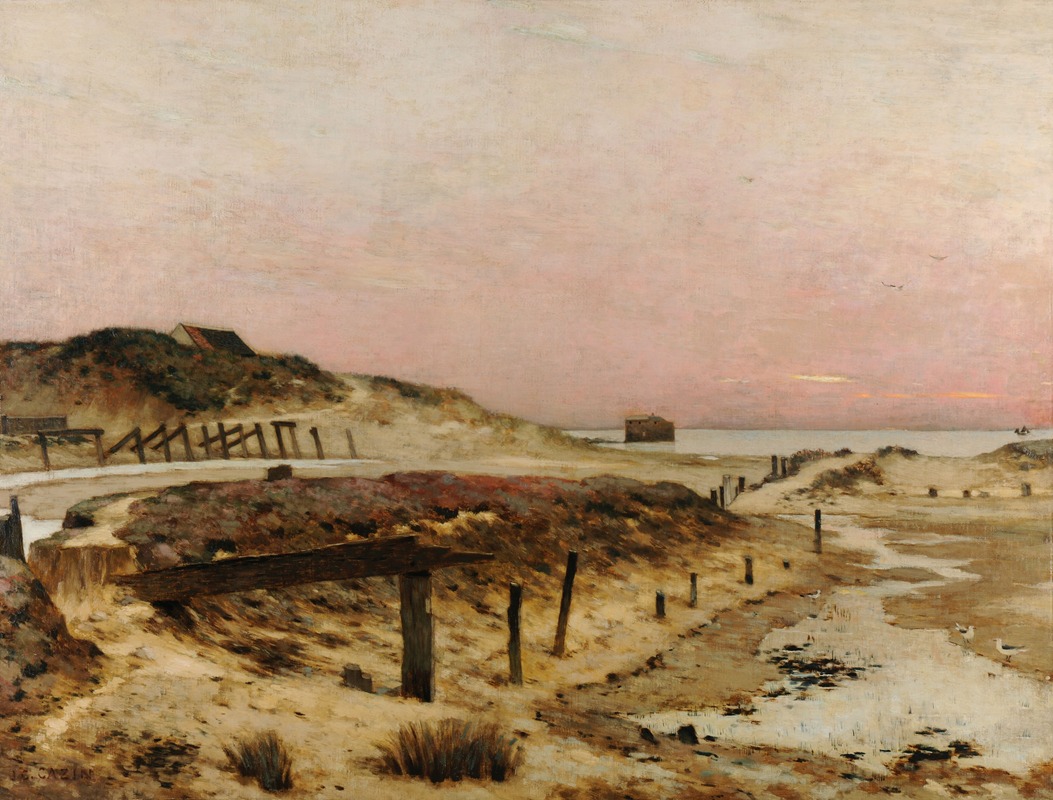
When did color learn to lie? In the quiet embrace of nature, there exists an unspoken promise woven through every brushstroke, where hues evoke both nostalgia and aspiration. Look to the left at the soft, rolling hills that cradle the horizon, their greens fading into the warm embrace of a setting sun. The delicate interplay of light and shadow guides the eye across the canvas, revealing a tranquil pathway that beckons the viewer to wander. Notice how the artist's palette blends earth tones with vibrant bursts of sky blue, creating a sense of harmony that invites contemplation and connection. Yet, amidst this serene landscape, subtle contrasts emerge.
The foreground, textured with rich, undulating brushstrokes, hints at the labor of the earth, while the distant sky, painted with ethereal light, speaks of hope and infinite possibilities. This duality evokes a tension between what is known and what lies just beyond the visible, urging the viewer to consider the deeper emotions that reside within such a peaceful scene. In the late 19th century, Cazin painted this work around 1880, during a period when the Impressionist movement was reshaping art's conventions. Living in France, he experienced the rise of new artistic philosophies, which celebrated the portrayal of light and atmosphere.
Cazin's commitment to capturing the essence of nature and its emotive power reflects his personal journey as well as the broader context of art's evolution during this vibrant era.
More Artworks by Jean Charles Cazin
Browse all →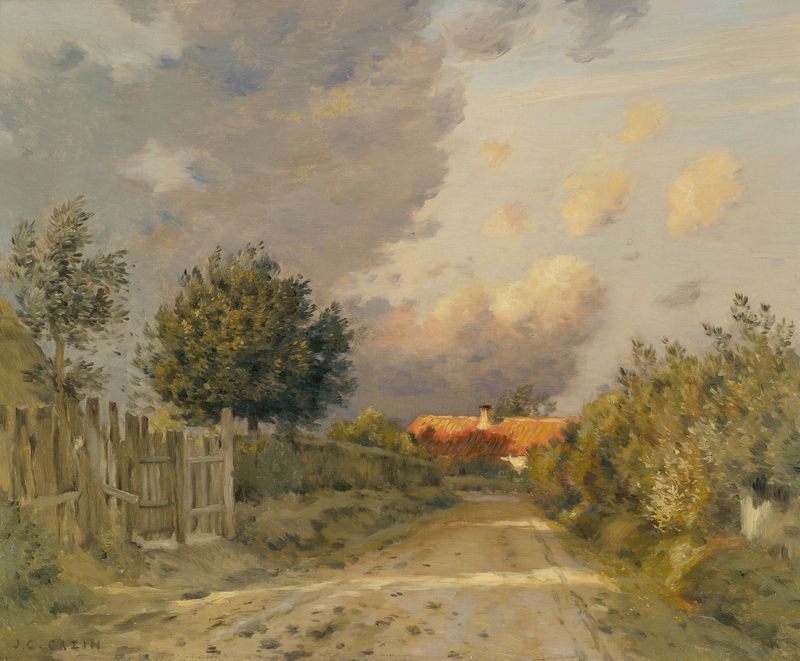
Early Evening In The French Countryside
Jean Charles Cazin
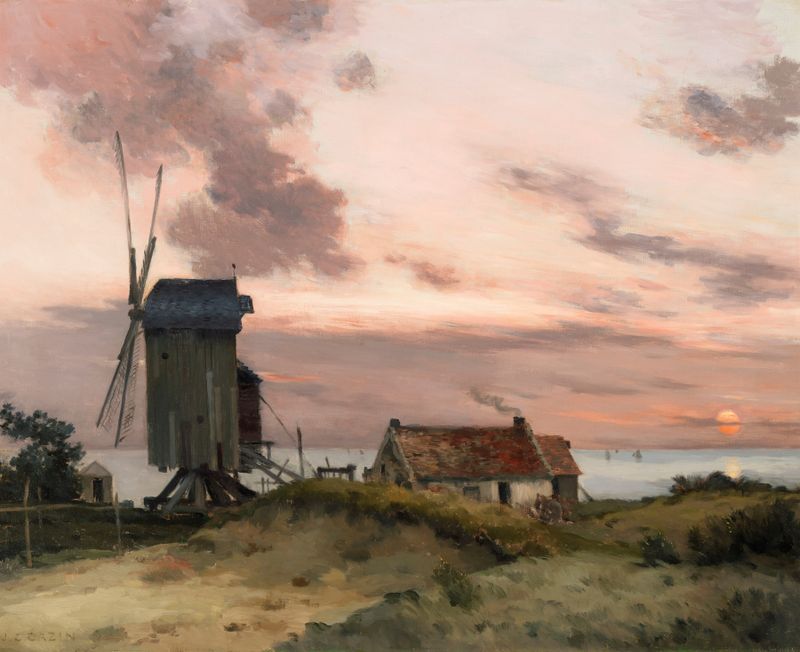
Windmill on a Beach
Jean Charles Cazin
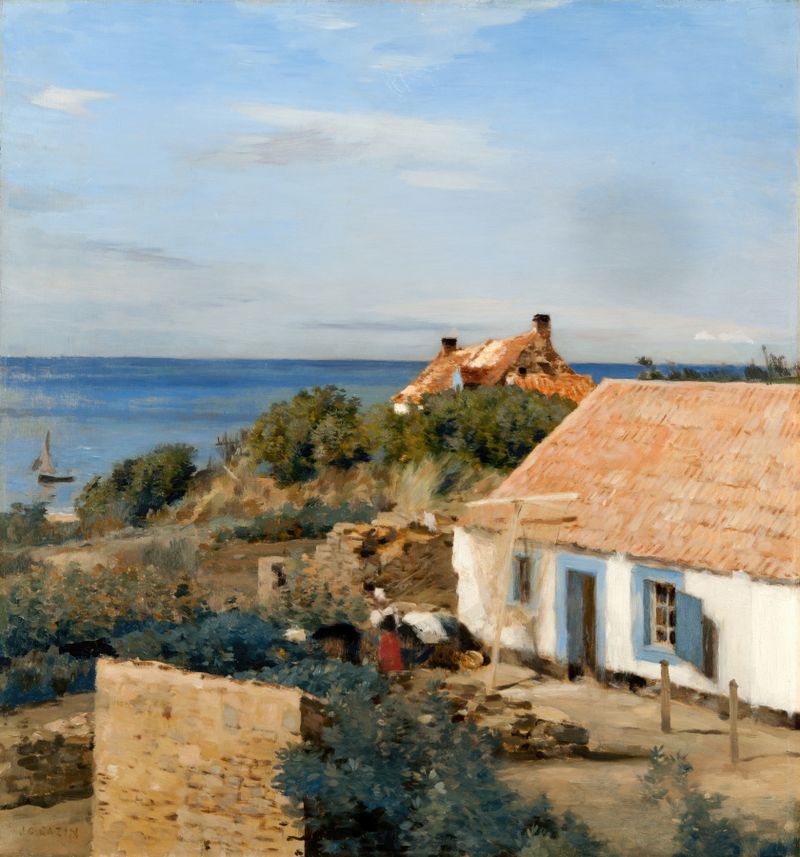
French Landscape
Jean Charles Cazin
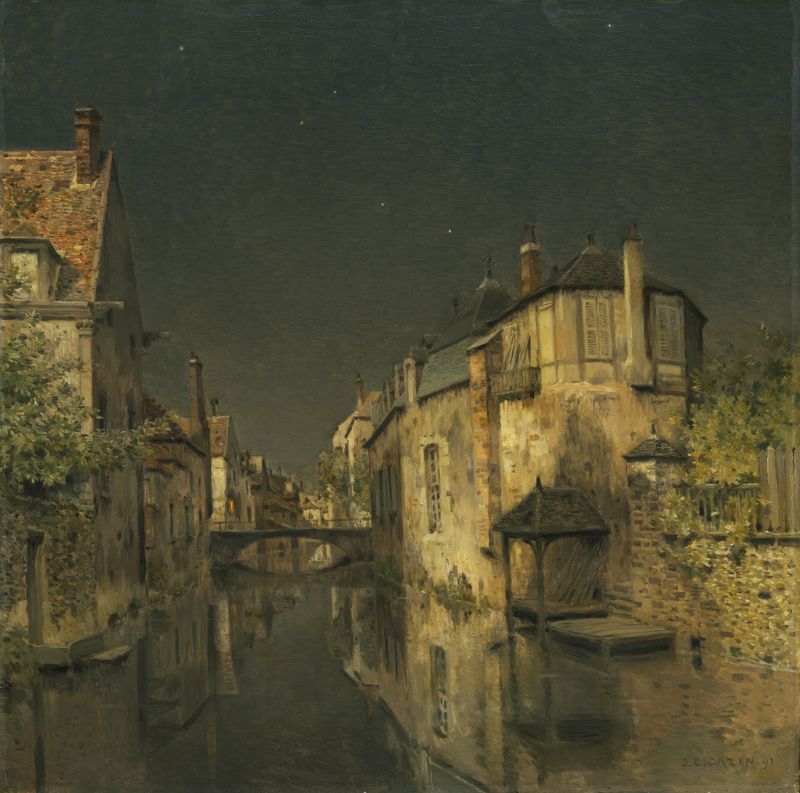
Midnight
Jean Charles Cazin

Tobias and the Angel
Jean Charles Cazin

October Day
Jean Charles Cazin

Paysage au clair de lune
Jean Charles Cazin
Rest on the Flight into Egypt
Jean Charles Cazin
Cottage in the Dunes
Jean Charles Cazin

The Boatyard
Jean Charles Cazin





