Landscape — History & Facts
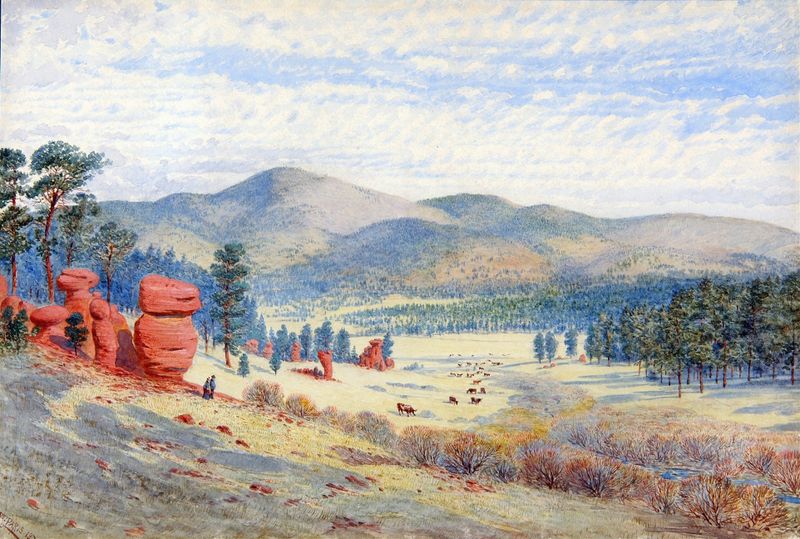
Could beauty survive in a century of chaos? In Landscape, the interplay of tranquil nature and human presence suggests a fragile harmony, a delicate reflection of the world’s state during tumultuous times. Look to the horizon, where rolling hills unfurl beneath a vast expanse of sky. The subtle transition from warm gold to cool blue invites you to explore the nuanced gradation of color. Notice how the artist’s brushstrokes create texture, the leaves shimmering with life, while the distant mountains stand stoic and unwavering.
The composition leads the eye from the foreground’s intricate details—a cluster of wildflowers—to the serene backdrop, framing them in a gentle embrace. Beneath the surface, hidden tensions emerge: the wildflowers may represent resilience, thriving amid uncertainty, yet their ephemeral beauty hints at impermanence. The mountains, imposing and unmovable, contrast with the delicate flora, evoking a sense of struggle between the forces of nature and the inevitable march of man. Together, they form a visual dialogue about balance and fragility in a world poised on the brink of change. Walter Paris completed this work in 1883, a pivotal time marked by rapid industrialization and societal upheaval.
Living in a world where the romantic ideals of nature clashed with modern advancements, he sought to capture moments of peace and beauty. This painting reflects his desire to document the landscape, even as the art world began to shift towards impressionism, embracing light and color over the traditional forms that had once dominated.