
Landscape — History & Facts
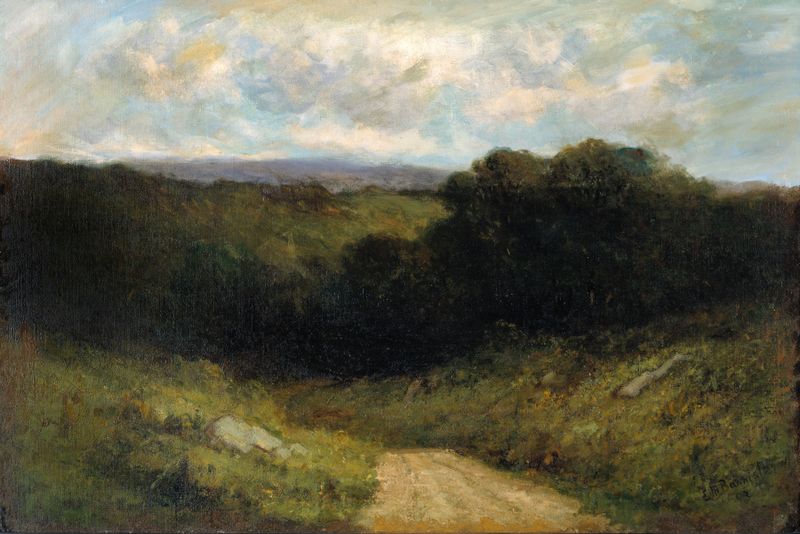
When did color learn to lie? In Landscape, Edward Mitchell Bannister reveals the unspoken truth hidden in the hues of nature. Look to the center of the canvas where lush trees stand sentinel over a tranquil lake, their reflections shimmering and distorting in the water. The palette is rich, with deep greens and browns contrasting against the soft blues of the sky. The brushwork is fluid yet deliberate, drawing the viewer's gaze across the intricate interplay of light and shadow.
Notice how the sunlight filters through the branches, casting dappled patterns on the surface of the lake, suggesting a moment caught between stillness and movement. Bannister plays with emotional contrasts in this piece — the serene beauty of the landscape juxtaposed with an underlying tension that hints at the complexities of life. The rocks jutting from the earth suggest resilience, a silent reminder of the passage of time and the forces that shape our environment. The vibrant colors evoke a sense of revelation, inviting viewers to ponder the deeper narratives that the landscape holds within its natural forms. Created in the late 19th century, this artwork emerged during a pivotal time for Bannister, who was both influenced by and contributed to the American Impressionist movement.
Living in Providence, Rhode Island, he faced racial barriers in a predominantly white art world. This period was marked by both personal struggles and a yearning for recognition, shaping his approach to capturing the essence of nature with a unique sensibility that transcended his contemporaries.
More Artworks by Edward Mitchell Bannister
Browse all →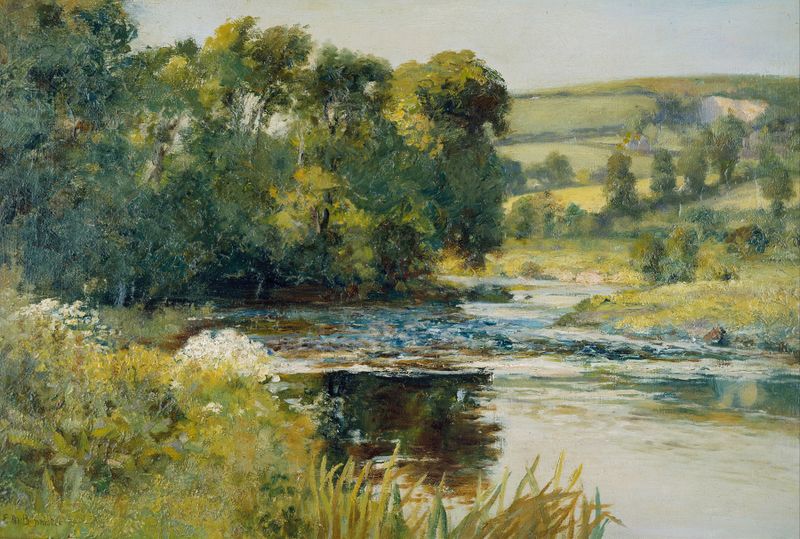
Streamside
Edward Mitchell Bannister

Untitled
Edward Mitchell Bannister

On the Seekonk
Edward Mitchell Bannister

Morning on the Shore
Edward Mitchell Bannister

Summer Twilight
Edward Mitchell Bannister
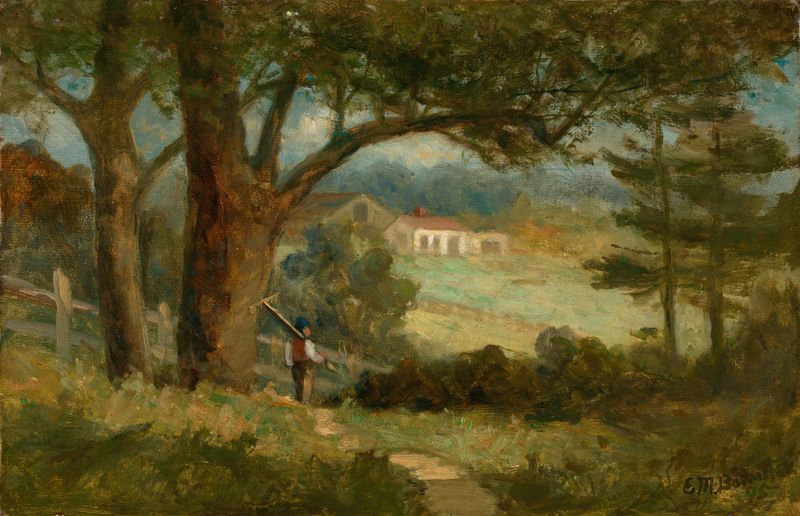
Homeward
Edward Mitchell Bannister
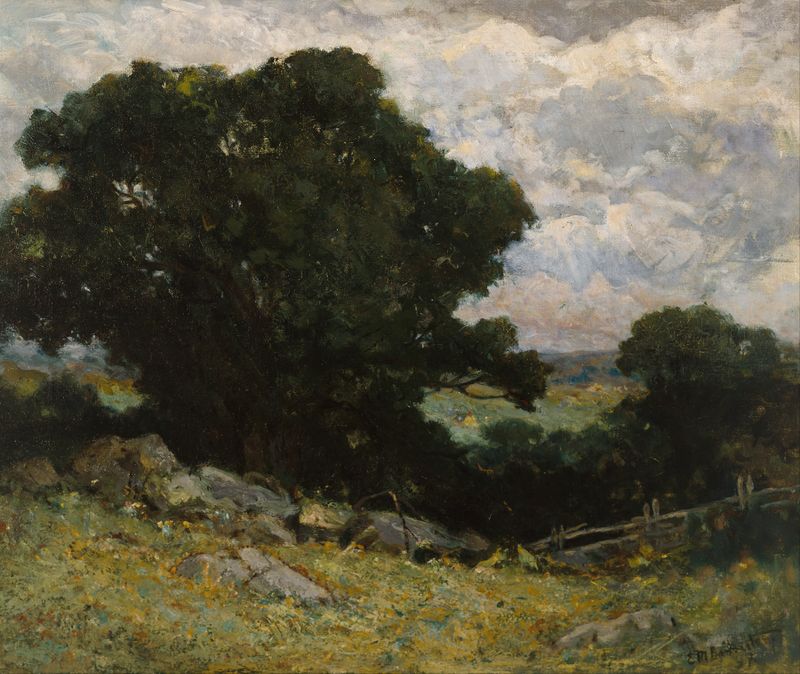
Landscape
Edward Mitchell Bannister
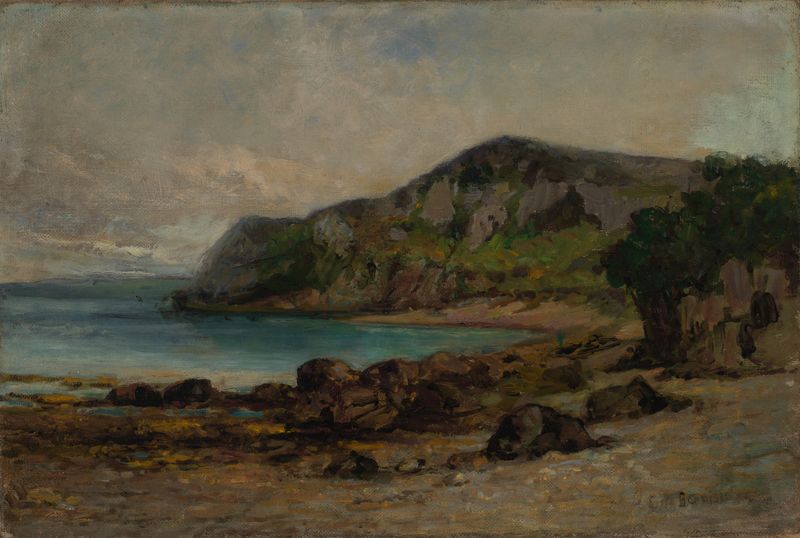
Rocks at Newport
Edward Mitchell Bannister

Sunset
Edward Mitchell Bannister
The Road to the Valley
Edward Mitchell Bannister





