Landscape — History & Facts
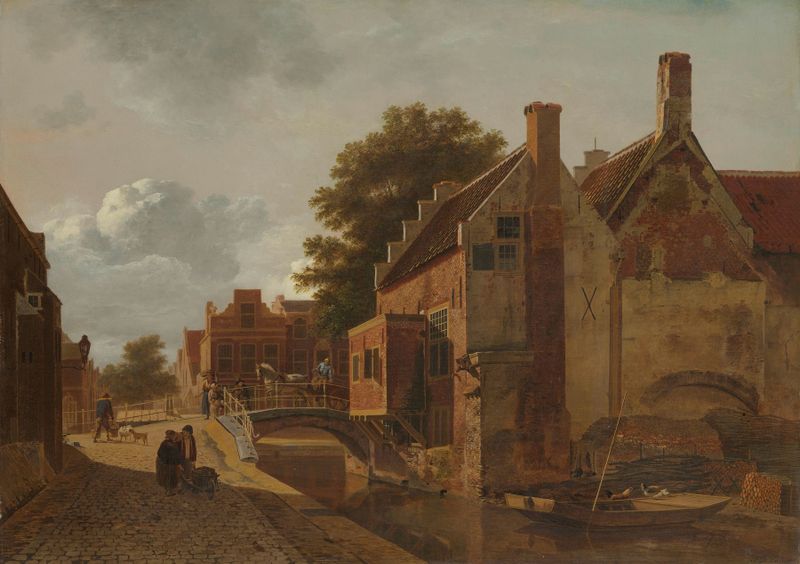
Did the painter know this moment would outlive them? The fragility of a single breath, captured on canvas, resonates through time, inviting us to ponder the transience of existence. Look to the left at the gentle curve of the horizon where the sun kisses the earth, casting a golden hue across the landscape. The artist employs soft brushstrokes that blend greens and browns, creating a harmonious yet dynamic interplay of nature. Notice how the sky swirls with delicate clouds, a mastery in technique that suggests movement, as if the scene is alive, breathing and changing with each passing moment. In this tranquil expanse, the delicate balance between light and shadow reveals deeper layers of meaning.
The verdant fields portray a sense of serenity, yet the looming distant mountains hint at the wildness of nature, a contrast that embodies both beauty and the threat of chaos. Each tree, painted with meticulous attention, stands as a testament to resilience in a world where all is fleeting. This juxtaposition hints at the artist's awareness of life’s impermanence, urging viewers to cherish the moment. Jean François Valois painted this landscape during a period of personal and artistic transition, likely between 1800 and 1853.
Living in a time marked by social upheaval and the rise of Romanticism, he sought to capture nature's sublime beauty as a reflection of human emotion. This work encapsulates an era where the distinction between man and nature began to blur, as artists like Valois explored the depths of feeling and the fragility of life itself.