The Kalvermarkt, The Hague — History & Facts
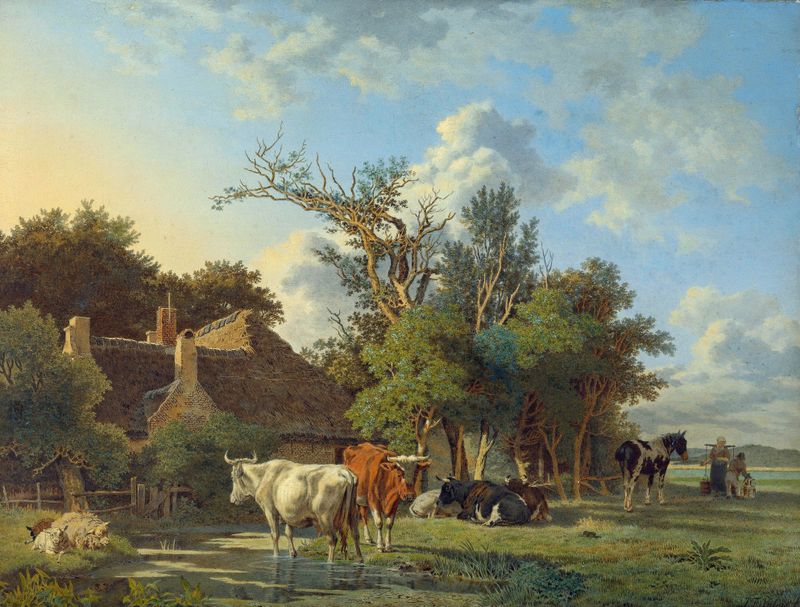
In the serene stillness of The Kalvermarkt, The Hague, time pauses, revealing a world cloaked in contemplation and reflection. This moment invites the viewer not just to see, but to feel the pulse of history, echoing softly in every brushstroke. Look to the right at the bustling market scene; stalls adorned with vibrant fabrics beckon the eye. The artist’s deft strokes breathe life into the figures, their gestures animated yet composed amidst the hum of daily life.
Notice how the light falls upon the cobblestones, glistening like memories waiting to be unearthed. The palette of warm earth tones juxtaposes with the cool blues in the sky, creating a harmonious balance that draws you deeper into the marketplace's heart. Amidst the lively activity, hidden tensions emerge in the contrast between the animated figures and the serene backdrop of architecture. The careful arrangement of each element builds a narrative of connection and detachment, as merchants engage in commerce while the world around them remains indifferent.
Each shadow seems to whisper secrets; the reflections in the water hint at deeper undercurrents of human experience and the passage of time. Created between 1805 and 1808, this work emerges from Valois’s exploration of urban life during a period marked by transition in Europe. Living in The Hague, he was influenced by the burgeoning interest in realism and the depiction of everyday scenes in art. This painting not only captures a moment in time but also encapsulates the artist’s intent to reflect the soul of society against the backdrop of shifting cultural currents.