Landscape fin the vicinity of Kameničky — History & Facts
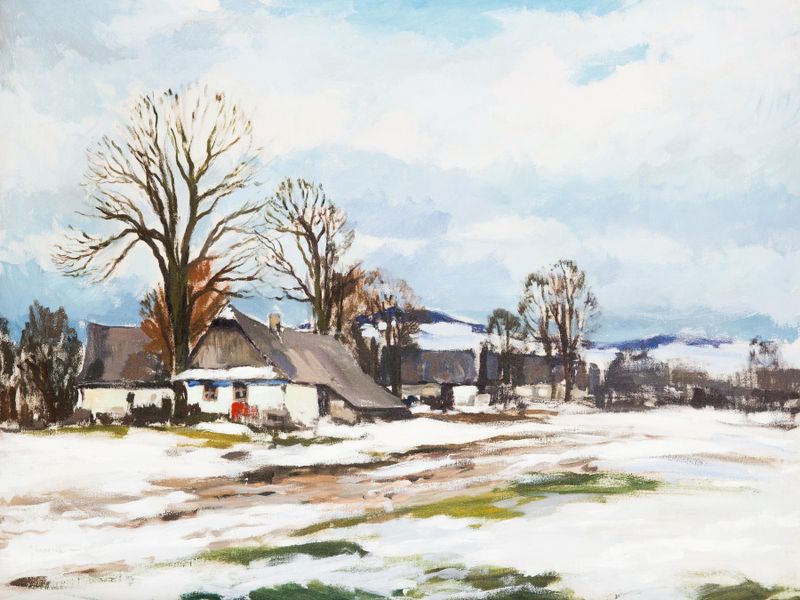
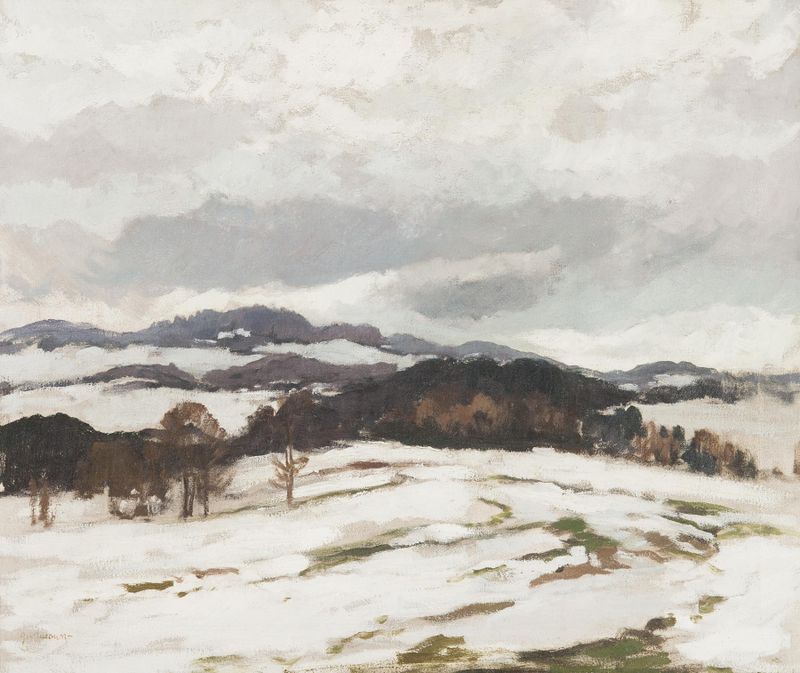
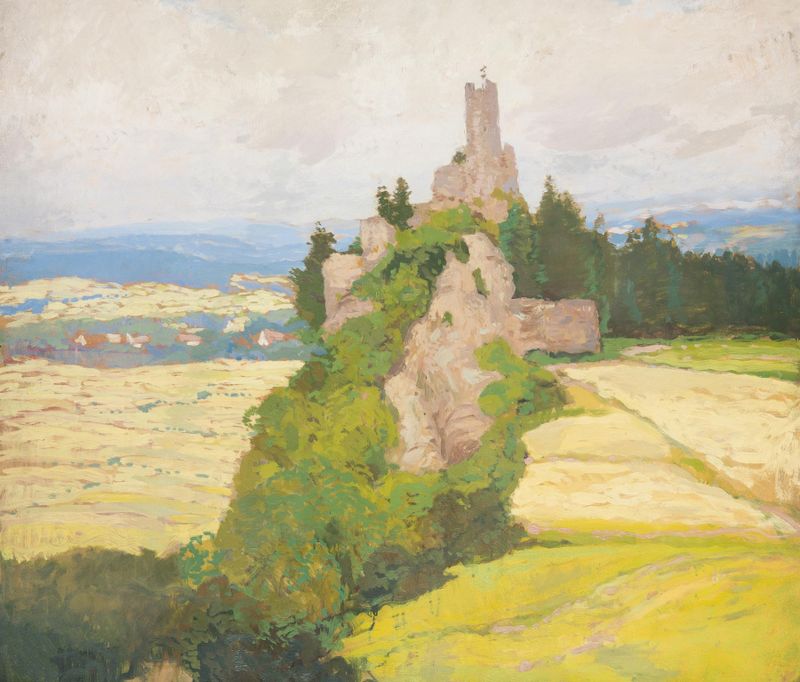
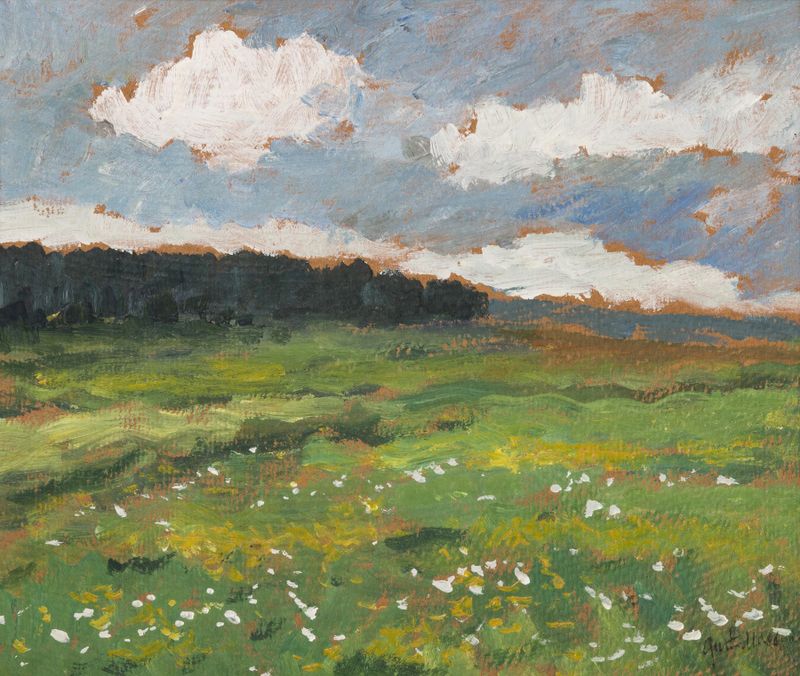
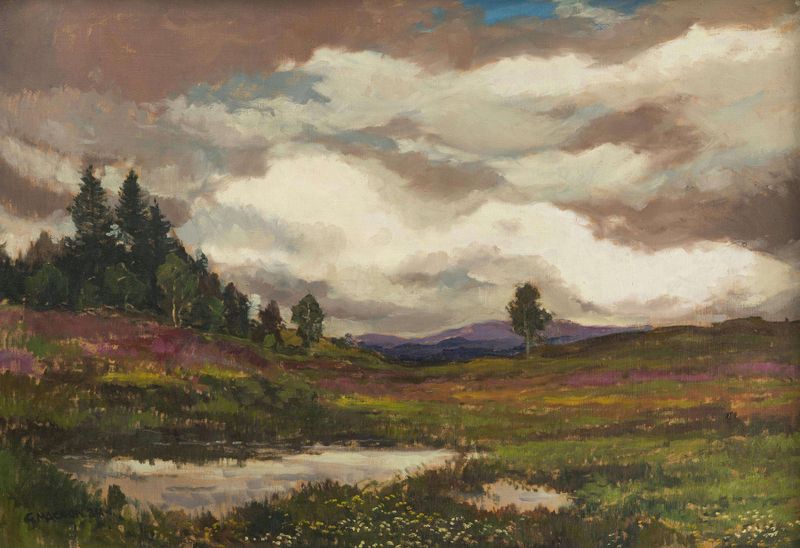
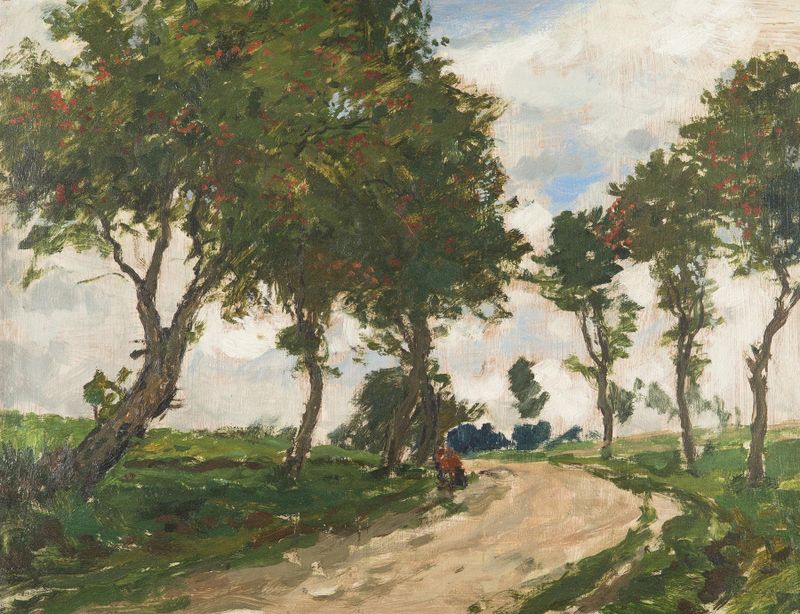
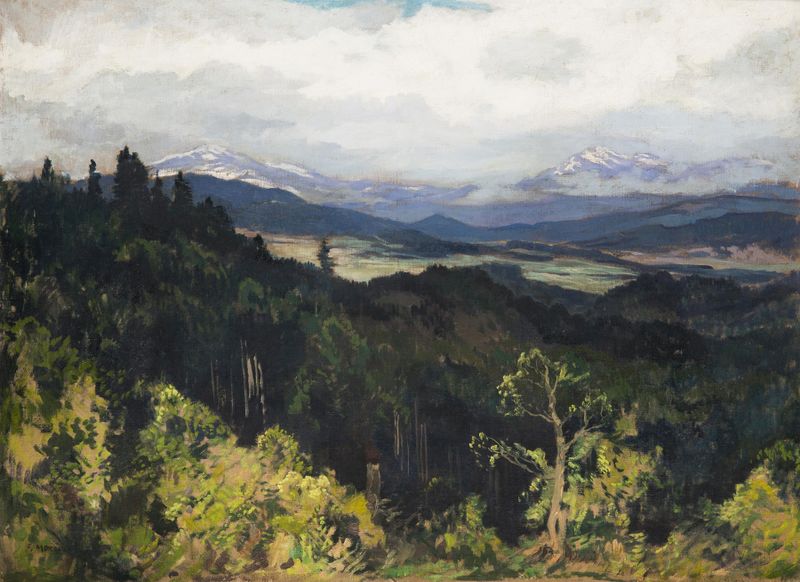
Did the painter know this moment would outlive them? In Landscape fin the vicinity of Kameničky, a haunting stillness envelops the scene, beckoning the viewer into the essence of awakening captured on canvas. Focus on the soft transition of colors in the sky, where pale hues of dawn merge seamlessly with the deepening blue of the night. Notice how the rolling hills cascade into each other, their gentle curves defining the horizon. The brushwork, both delicate and robust, creates a texture that invites you to feel the cool morning air as it dances across the landscape.
The muted palette hints at a world not yet fully alive, evoking a sense of anticipation and quiet reverence. Beneath the serene surface lies an emotional tension—the juxtaposition of light and shadow symbolizes the delicate balance between night and day, past and present. The solitary tree on the left stands resilient, a metaphor for endurance amid change, while the glimmering water reflects the awakening sky, hinting at the interconnectedness of all life. Each element harmonizes to suggest a deeper narrative, one of renewal and the cyclical nature of existence. Gustav Macoun painted Landscape fin the vicinity of Kameničky during a period rich in exploration of natural beauty.
While the exact date remains uncertain, it is believed that the work emerged in the late 19th century when the art world was shifting toward Impressionism. During this time, Macoun was deeply engaged in his surroundings, capturing the essence of landscapes with a renewed focus on light and atmosphere, embodying the spirit of a changing artistic landscape.