Landscape in the Dauphiné — History & Facts
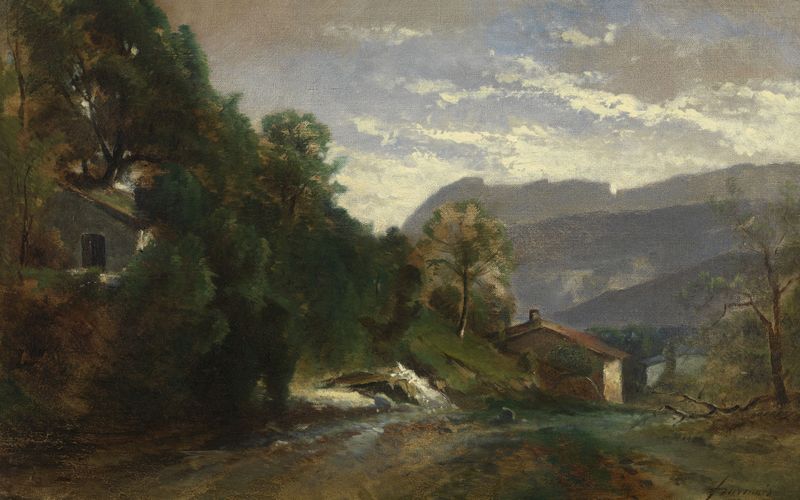
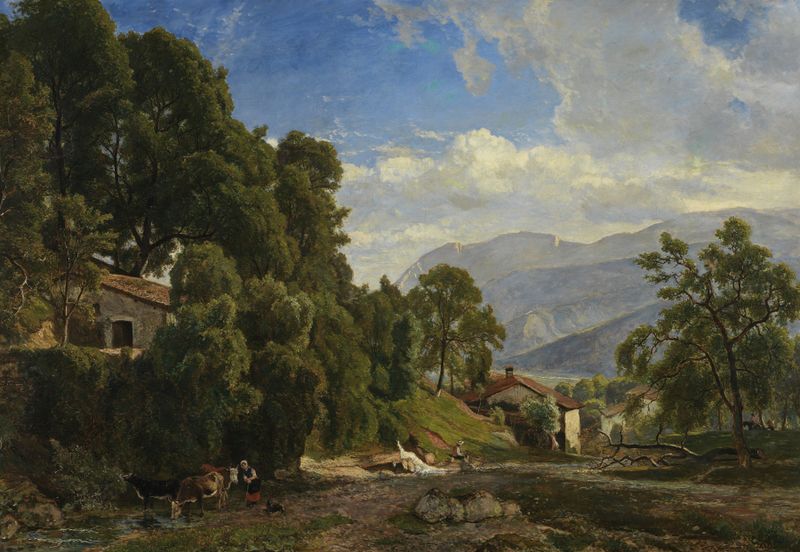
In the landscape of life, innocence and hardship often intertwine, crafting a poignant tapestry woven with threads of beauty and sorrow. Begin your exploration by focusing on the gentle slopes of the hills that cradle the horizon. Notice how the soft greens and muted browns blend seamlessly, inviting your gaze to wander deeper into the scene. Look closely at the interplay of light – it bathes the landscape in a warm, golden hue, suggesting both the vibrancy of life and the quiet decay that accompanies time.
The brush strokes, delicate yet deliberate, create a sense of rhythm, drawing you into the tranquil yet contemplative atmosphere of the painting. Yet, beneath the serene surface lies an emotional tension. The solitary tree on the left, bent but standing, speaks of enduring resilience, perhaps a nod to innocence lost yet still standing tall against adversity. The clouds gathering in the distance, heavy and foreboding, hint at storms that may come, contrasting beautifully with the idyllic foreground.
This duality of light and shadow evokes a sense of nostalgia, capturing the fleeting nature of youth in an ever-changing world. In 1846, Théodore Fourmois created Landscape in the Dauphiné while residing in France, a time marked by social upheaval and evolving artistic movements. The Romanticism that influenced his contemporaries pushed against the constraints of the neoclassical tradition, allowing for an exploration of emotion and the sublime. Fourmois, emerging from this rich context, painted scenes that celebrate the beauty of nature while echoing the complexities of the human experience, a reflection of his own life’s journey during a tumultuous period in history.