Mountainous Landscape at Voreppe, Dauphiné — History & Facts
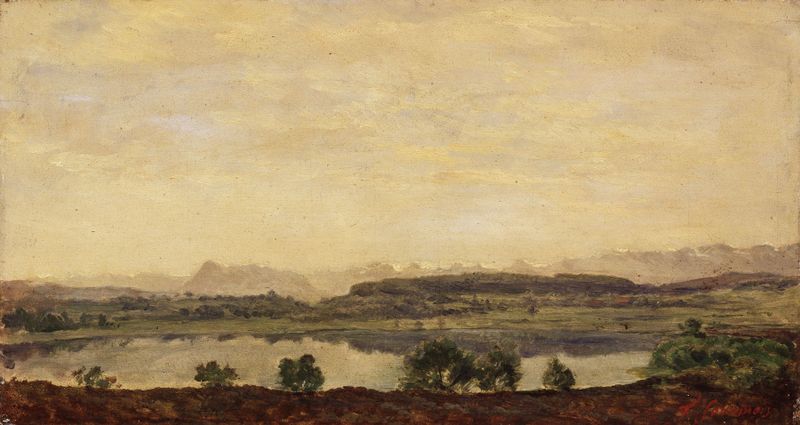
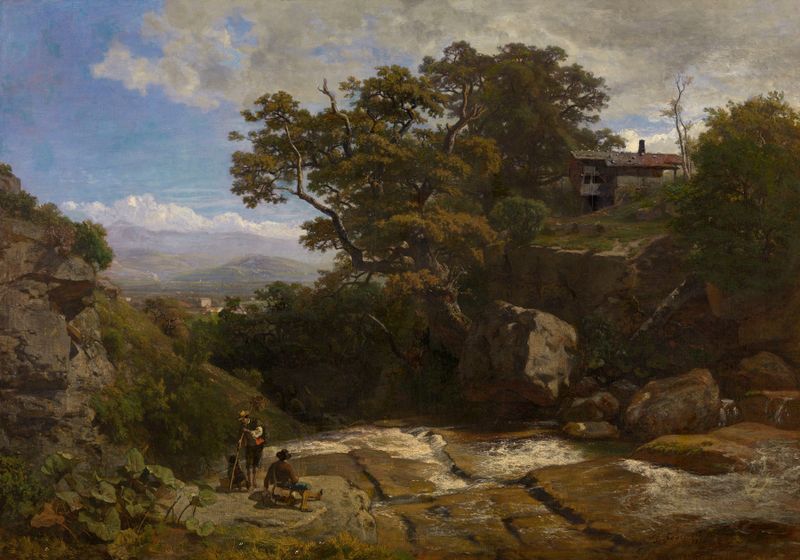
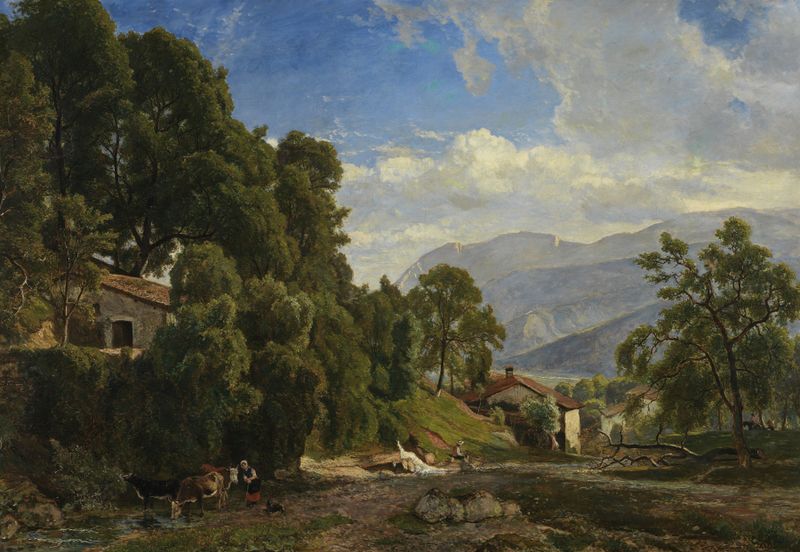
Who listens when art speaks of silence? In Mountainous Landscape at Voreppe, Dauphiné, the stillness of nature reverberates through every brushstroke, inviting contemplation and awe. Look to the lower right, where a gentle slope rises to meet the rugged peaks above—here, Fourmois captures the essence of contrast. The vibrant greens of the meadow harmonize with the muted grays and blues of the mountains, imbuing the scene with a sense of depth and perspective. Notice how the clouds, swirling softly above, appear to cradle the summits, their delicate brushwork suggesting both tranquility and the transience of time.
The skillful use of light plays across the landscape, creating a dance of shadows and highlights that beckons the viewer deeper into this serene world. Within the composition lies an emotional tension between the immensity of the mountains and the humble tranquility of the foreground. The delicate interplay between light and shadow evokes a sense of transcendence, as though nature itself holds its breath while beauty unfolds in silence. The distant peaks, majestic yet aloof, speak to the infinite, while the lush valley below invites intimate reflection—a reminder of our place within the vastness of the world. In 1850, Fourmois painted this piece during a period of burgeoning Romanticism, where artists sought to evoke emotional responses through the grandeur of nature.
Working in France, he found inspiration in the landscapes of his homeland, embracing the awe of mountainous terrains. At this time, many artists were exploring similar themes, attempting to convey the sublime quality of the natural world, and Fourmois’ work stands as a testament to that profound connection.