Mountains at Voreppe, Dauphiné — History & Facts
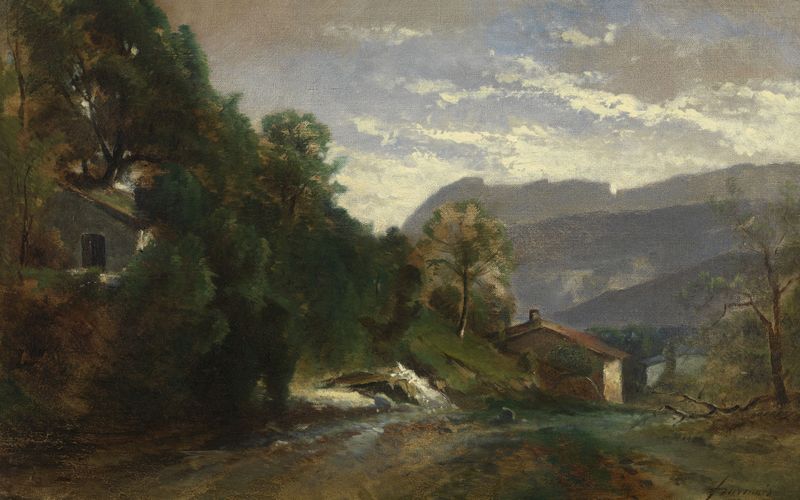
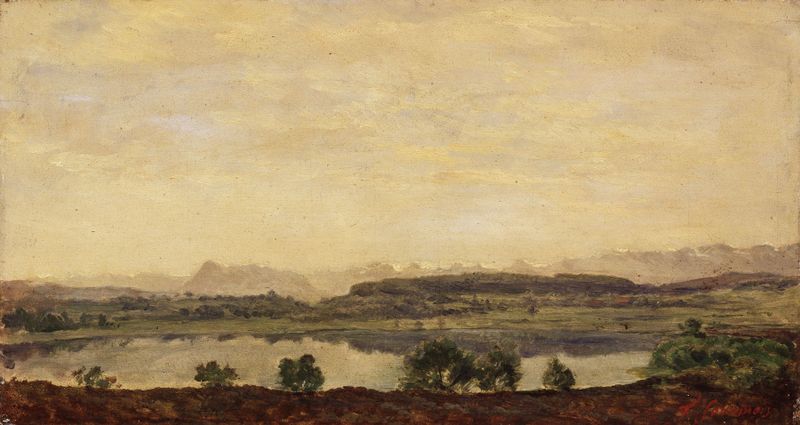
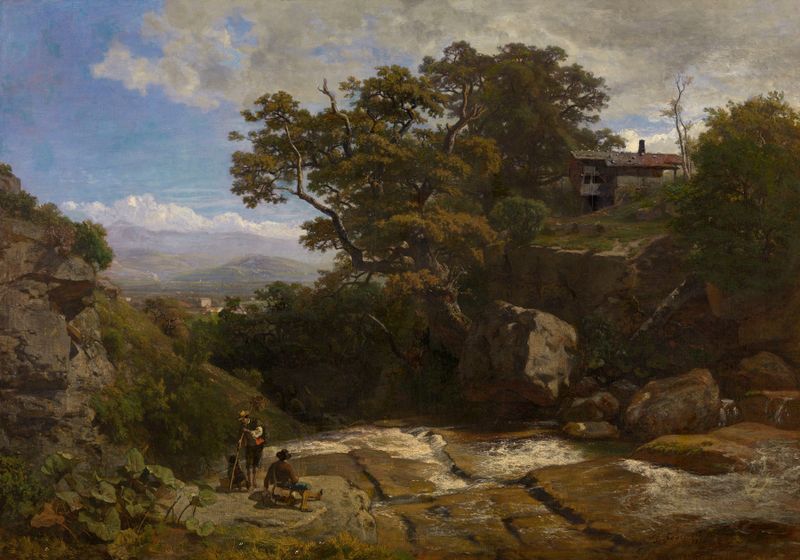
In the sweeping vistas captured by the hand of a master, nature itself cradles the weight of revolution, where the sublime collides with the tumult of human experience. Look to the foreground, where a tapestry of verdant hills rises like the hopes of a nation—the sharp, vibrant greens contrasting against the looming mountains in the distance. The peaks, layered in soft blues and grays, evoke both majesty and menace, their jagged silhouettes framing the horizon. Soft clouds drift lazily above, yet a tension lingers in the air, marked by the brushstrokes that speak to an unsettling tranquility. Amidst this serene landscape, one can sense the undercurrent of turmoil.
The interplay of light and shadow not only highlights nature's beauty but hints at the struggles brewing below the surface. In the distance, the outline of a village suggests a community caught in the throes of change, while the golden hues of the setting sun cast a bittersweet glow, encapsulating the dichotomy of beauty and pain that resonates through the piece. In 1850, Mountains at Voreppe, Dauphiné emerged from the brush of Théodore Fourmois as France was on the brink of social upheaval. The artist, influenced by the Romantic movement, sought to capture not just the physical landscape, but the emotional landscapes of a country grappling with its identity.
This period in art reflected the tension between admiration for nature and the impending chaos of revolution, making this painting a poignant commentary on both beauty and struggle.