Landscape in the Dauphiné — History & Facts
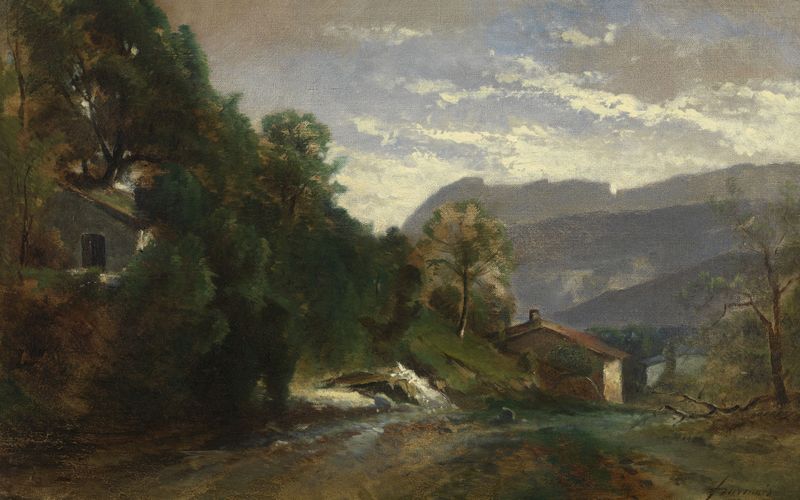
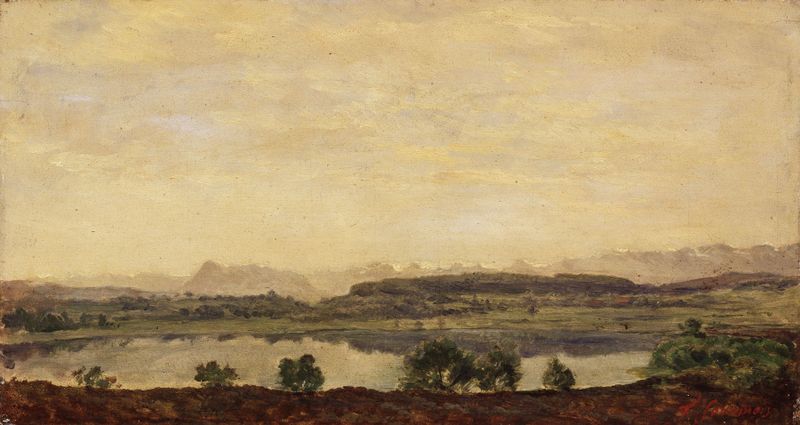
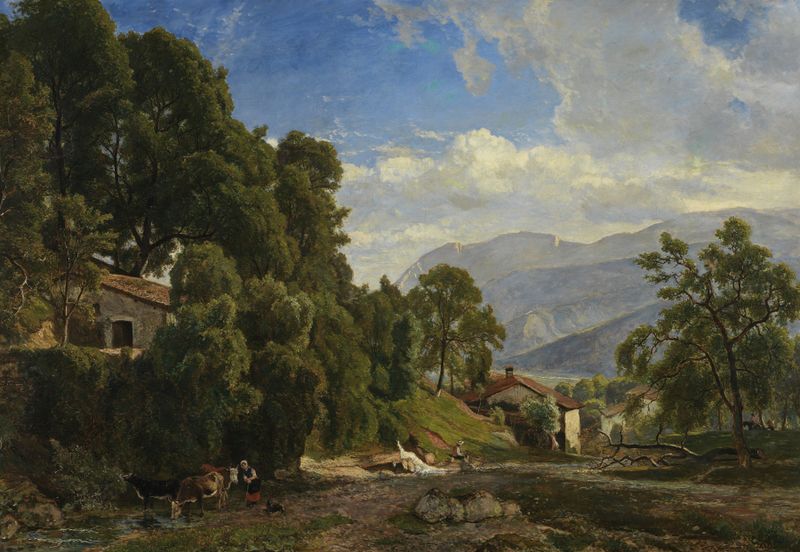
In the quiet embrace of nature, grief seeps into the landscape, whispering melancholic tales beneath vibrant hues. Look to the foreground, where a gentle river meanders, its reflective surface capturing the soft blues and greens of the surrounding foliage. Notice how the artist employs a palette that balances both warmth and coolness, creating an ethereal quality that invites contemplation. The layering of brushstrokes evokes a sense of movement in the clouds above, while the rugged mountains in the distance stand resolute, grounding the ephemeral beauty of the scene. As your gaze wanders, consider the juxtaposition of light and shadow, each stroke revealing an emotional undertow beneath the surface.
The lush greenery may seem inviting, yet the stillness of the water hints at deeper currents of sorrow. The expansive sky, awash in the golden glow of twilight, suggests the fleeting nature of existence, where joy and grief coexist in delicate harmony, urging the viewer to reflect on their own experiences of loss. In 1854, Fourmois was immersed in a world shifting towards impressionism, a period marked by experimentation and emotional depth. Painting in the Dauphiné region of France, he sought to capture the essence of the landscape around him, while also navigating personal challenges.
His work during this time mirrors the broader transformations occurring in art, as artists began to embrace more expressive techniques to convey the complexities of human emotion and the transient beauty of nature.