
Landscape near Rome — History & Facts
Can beauty exist without sorrow? The serene landscapes often hide the echoes of long-forgotten pasts, whispering tales of emptiness that linger beneath their tranquil surfaces. Look to the left side of the canvas, where gentle hills undulate in soft greens and golds, drawing your gaze toward the horizon. The sky, a delicate wash of blues and whites, cradles the land below in a nurturing embrace. Notice the way the light bathes the scene in warmth, fostering an inviting atmosphere despite the palpable solitude evoked by the sprawling emptiness.
Each brushstroke, precise yet fluid, creates a harmonious balance between the earth and sky, revealing the artist’s mastery in capturing nature’s exquisite quietness. Delve deeper, and you may detect an underlying tension within the landscape. The vastness, though beautiful, evokes a profound sense of isolation, as if the viewer stands alone amidst a world of overwhelming stillness. Shadows cast by distant trees suggest the passage of time, inviting reflection on the transience of life itself, while the absence of figures hints at an uninhabited realm where silence reigns.
This juxtaposition of beauty and bleakness speaks to the human condition—our search for connection in an expansive world. In 1741, Paolo Anesi painted this work during a time when landscape painting was evolving in Italy, moving towards more emotional and personal interpretations. Living in Rome, Anesi was influenced by the natural beauty surrounding him, yet he faced the complexities of a changing artistic landscape. As artists began to embrace Romantic ideals, Anesi’s thoughtful approach to capturing both beauty and solitude set him apart in an era of burgeoning innovation.
More Artworks by Paolo Anesi
Browse all →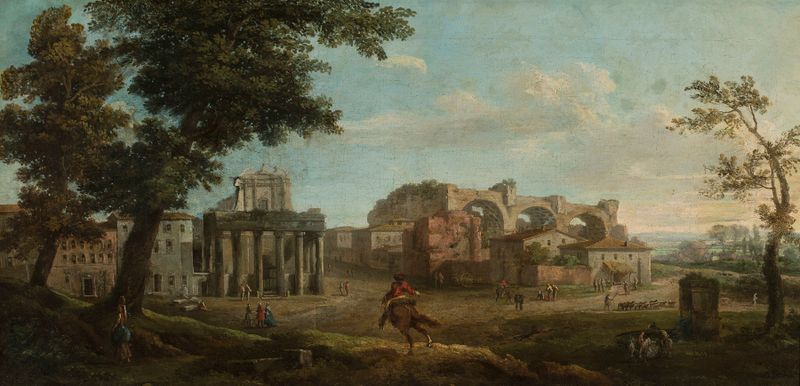
View of Rome
Paolo Anesi
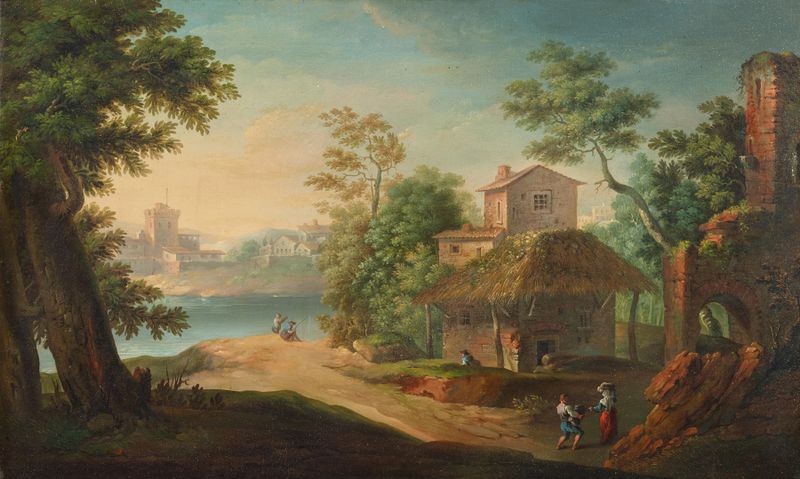
A village by a river with anglers and peasants
Paolo Anesi
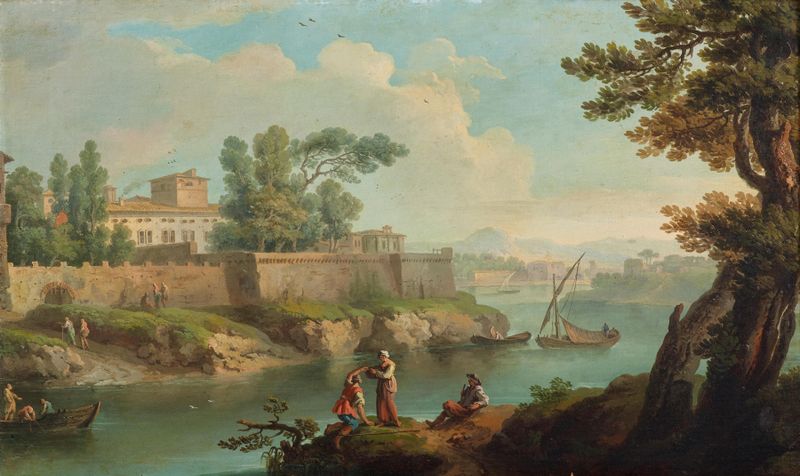
A river landscape with fishermen and travellers at rest by a fortified village
Paolo Anesi
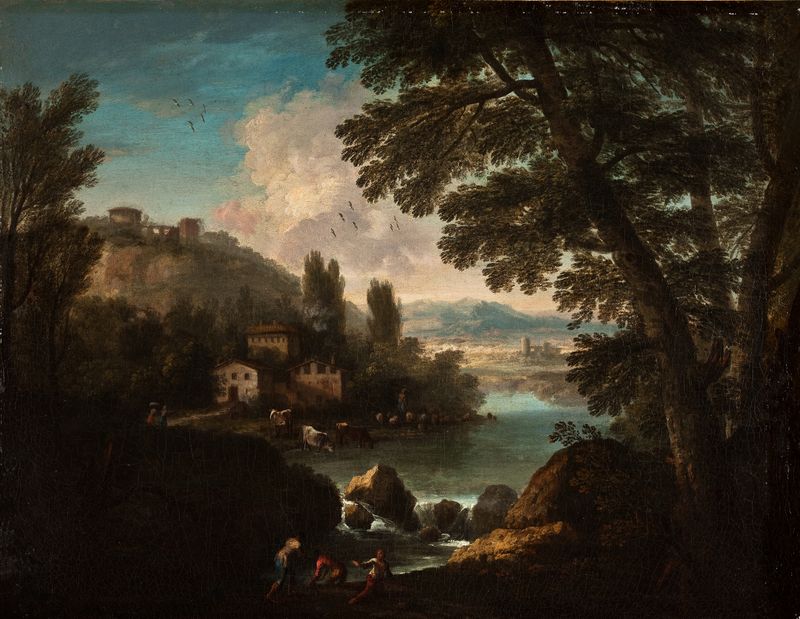
Landscape
Paolo Anesi
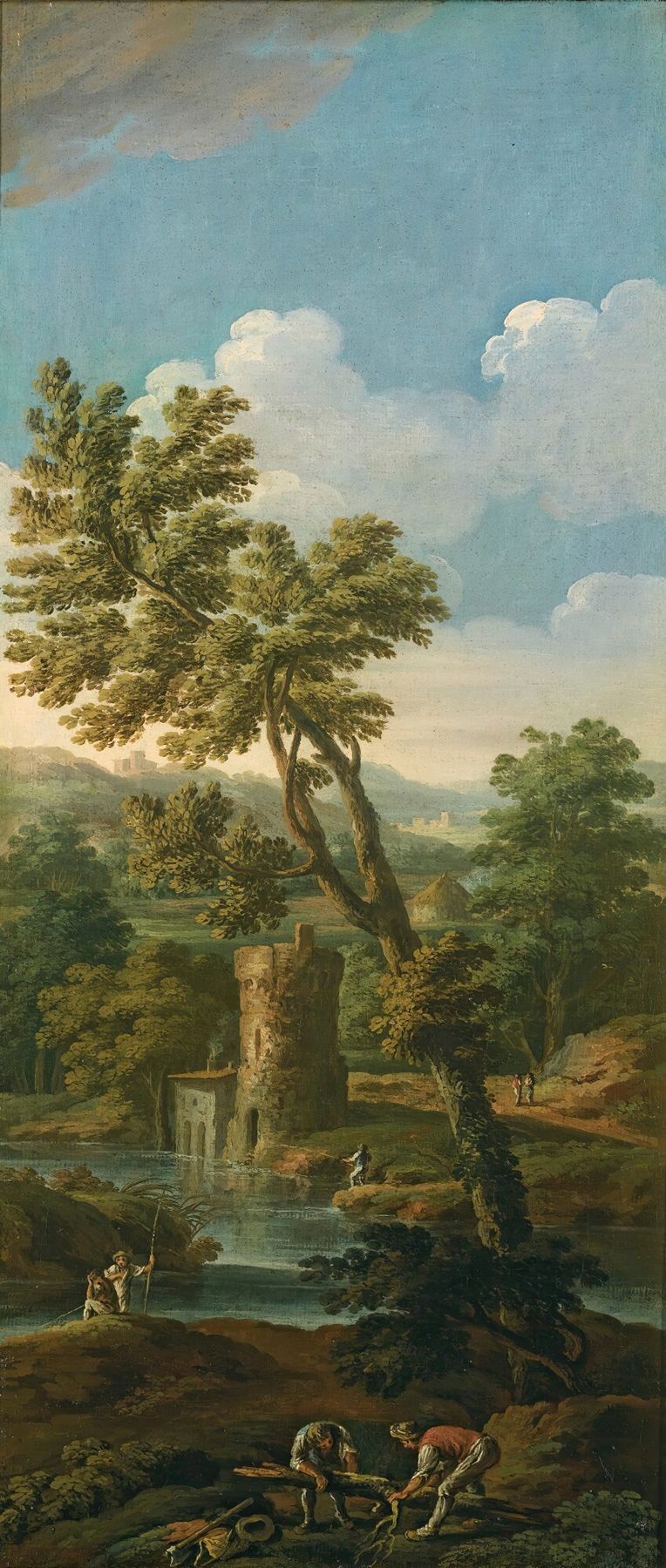
An italianate river landscape with figures in the foreground breaking up a tree, fishermen and mountains beyond
Paolo Anesi
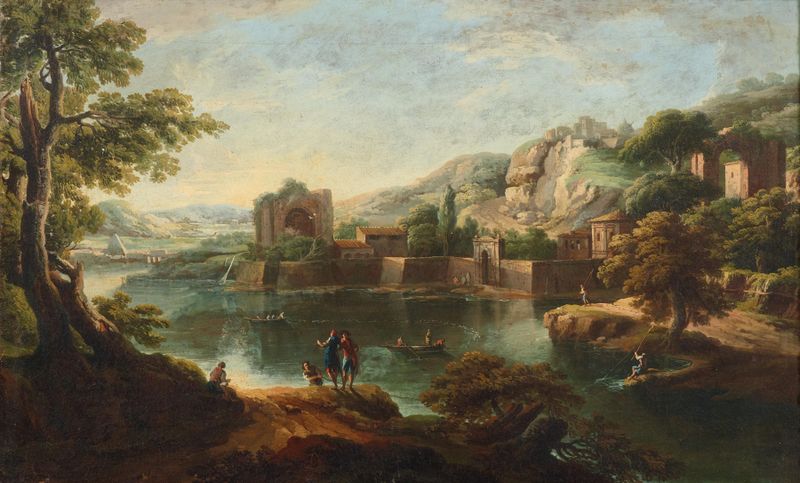
A mountainous river landscape with fishing boats and anglers, Roman ruins beyond
Paolo Anesi
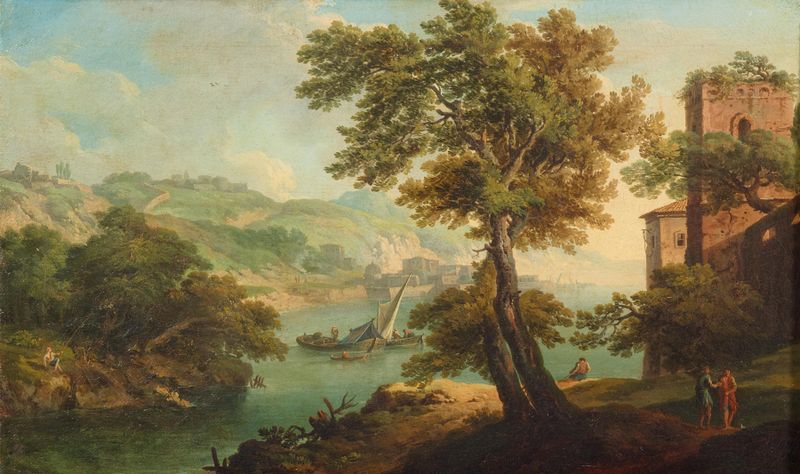
A mountainous river landscape with fishermen, a village beyond
Paolo Anesi





