
Landscape Study — History & Facts
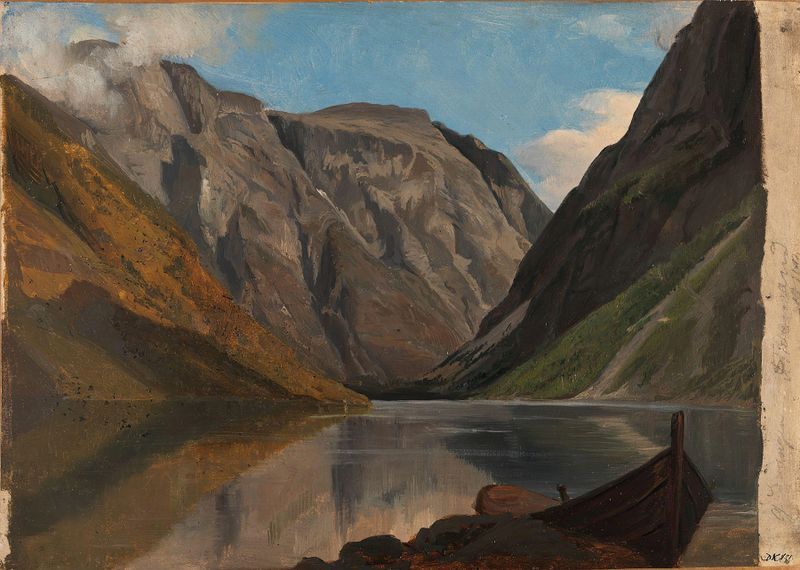
Who listens when art speaks of silence? In the quiet cradle of nature, an awakening unfolds, drawing the viewer into a world where every brushstroke breathes life into stillness. Look to the foreground, where the delicate lines of the trees create a tender embrace with the undulating hills. The light dances across the canvas, illuminating the soft greens and earthy browns, inviting your gaze to wander deeper into the landscape. Notice how the sky, a subtle gradient of blues and grays, mirrors the tranquility of the scene, while the gentle movement of clouds hints at the passing of time. Amidst this serene beauty lies an emotional tension—a juxtaposition between the peaceful scenery and the weight of absence it conveys.
The solitude of the landscape resonates with a sense of longing, as if the viewer is witnessing a moment frozen in time, touched by the ephemeral whispers of nature. The interplay of light and shadow creates depth, revealing layers of meaning that reflect both the artist's reverence for the natural world and a deeper reflection on humanity's connection to it. In 1830, Tidemand painted this work during a period marked by a growing interest in Romanticism, emphasizing emotion and individual experience within art. Residing in Norway, he was inspired by the sweeping vistas of his homeland, capturing not just landscapes but the essence of a shared human experience.
This painting reflects a pivotal moment in his career, as he sought to harmonize the beauty of nature with the complex emotions it evokes.
More Artworks by Adolph Tidemand
Browse all →
Bridal Procession on the Hardangerfjord
Adolph Tidemand

Fra Haugsbygd
Adolph Tidemand

Domkirkeruinen, Hamar
Adolph Tidemand
View of Gudvangen
Adolph Tidemand

Hagestad prestegård, Ulvik i Hardanger
Adolph Tidemand

View from Gudvangen
Adolph Tidemand

Fra Gulsvik
Adolph Tidemand

From Kullen in Sweden
Adolph Tidemand

Country Road
Adolph Tidemand

Untitled
Adolph Tidemand





