
Landscape Study — History & Facts
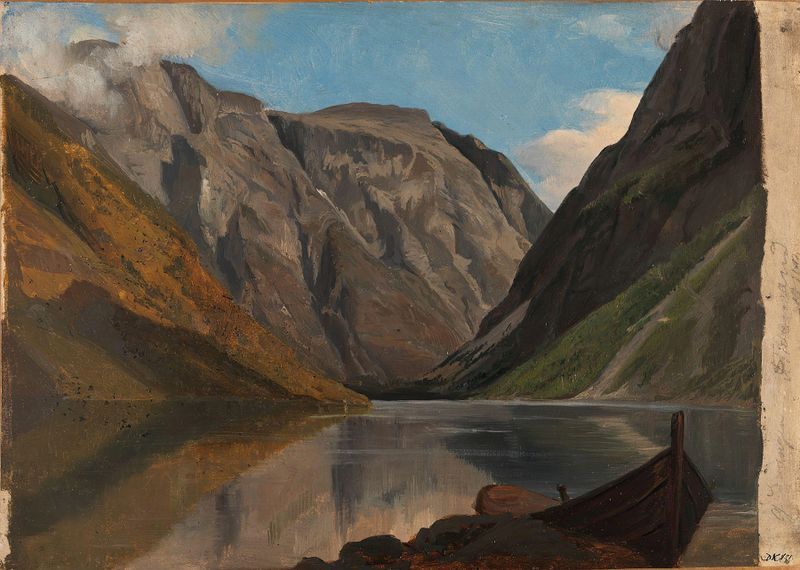
What if silence could speak through light? In a world where transformation happens quietly, the interplay of shadows and illumination reveals deeper truths about nature and existence. Look to the foreground of Landscape Study, where the verdant greens of the rolling hills meet the gentle, reflective surface of a meandering stream. Notice how the soft light filters through the trees, casting dappled patterns onto the ground below. The subdued color palette evokes a sense of tranquility, while the subtle brushwork invites the viewer to linger and explore the serene details of the landscape. Yet, hidden beneath this calm façade lies a complexity of emotional tension.
The juxtaposition of the lush greenery with the still water suggests a moment suspended in time, evoking a feeling of nostalgia. The delicate balance between light and shadow emphasizes the transient nature of beauty, hinting at the transformations that occur silently beneath the surface of life—much like the changing seasons. In 1838, during a period marked by increasing interest in Romanticism, Tidemand created Landscape Study as he navigated both personal and artistic growth. At that time, he was refining his technique and exploring the emotional resonance of landscapes, influenced by the natural beauty of Norway.
The art world was shifting towards a deeper appreciation of nature's subtleties, mirroring Tidemand's own journey of transformation as an artist.
More Artworks by Adolph Tidemand
Browse all →
Bridal Procession on the Hardangerfjord
Adolph Tidemand

Fra Haugsbygd
Adolph Tidemand

Domkirkeruinen, Hamar
Adolph Tidemand
View of Gudvangen
Adolph Tidemand

Hagestad prestegård, Ulvik i Hardanger
Adolph Tidemand

View from Gudvangen
Adolph Tidemand

Fra Gulsvik
Adolph Tidemand

From Kullen in Sweden
Adolph Tidemand

Country Road
Adolph Tidemand

Untitled
Adolph Tidemand





