
Landscape view in Cumberland — History & Facts
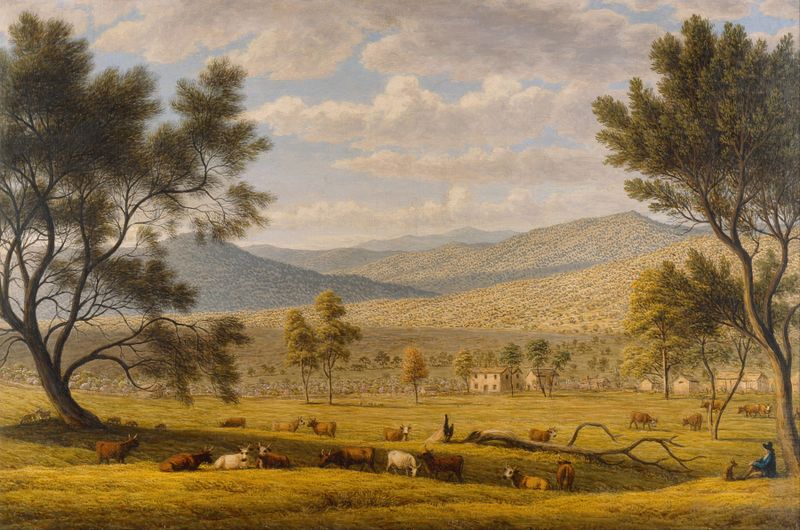
Could beauty survive in a century of chaos? John Glover's Landscape view in Cumberland whispers that even amidst turmoil, nature endures, cradled within its tranquil embrace. Look to the left at the rolling hills, their verdant green melting into the gentle hues of the sky. Glover's brushstrokes capture the softness of the clouds, while warm sunlight filters through, illuminating patches of wildflowers below. Notice how the composition draws your eye towards the distant mountains, almost beckoning you to explore their hidden depths.
The harmony of colors, from earthy browns to vibrant greens, invites a sense of peace that belies the tumult of the times. Yet, beneath this idyllic surface lies an undercurrent of loss. The absence of human figures suggests a solitude that evokes both reverence and yearning—a longing for connection that is as elusive as the fleeting light. Each element, from the gentle sway of the grass to the distant silhouette of the hills, speaks to a world that has been shaped by both beauty and absence, revealing the fragility of serenity in an ever-changing landscape. In 1820, John Glover was establishing himself in Tasmania after leaving England, where the Romantic movement was gaining momentum.
His work reflected a shift towards appreciating nature's beauty amidst the societal upheavals of the Industrial Revolution. This painting encapsulates his desire to connect with the untouched landscapes of Australia, marking a pivotal moment as he sought to redefine artistic expression in response to his new surroundings and the era's complexities.
More Artworks by John Glover
Browse all →
A view of the artist’s house and garden, in Mills Plains, Van Diemen’s Land
John Glover
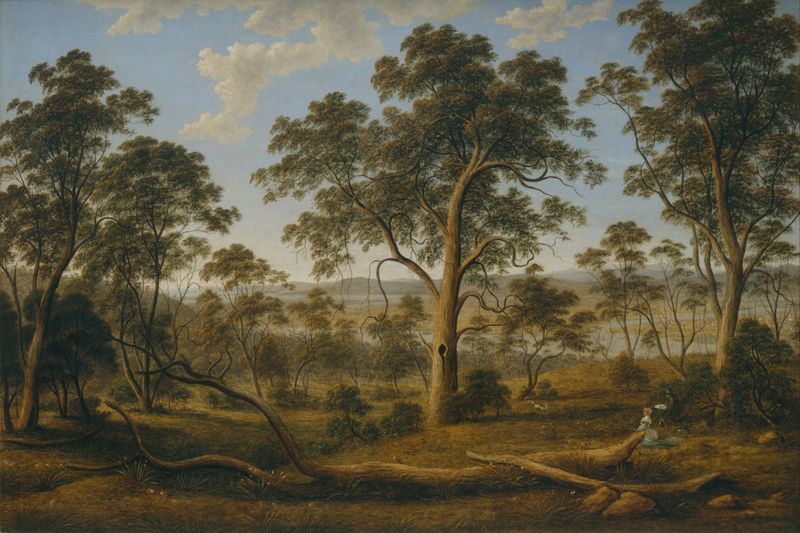
Launceston and the river Tamar
John Glover
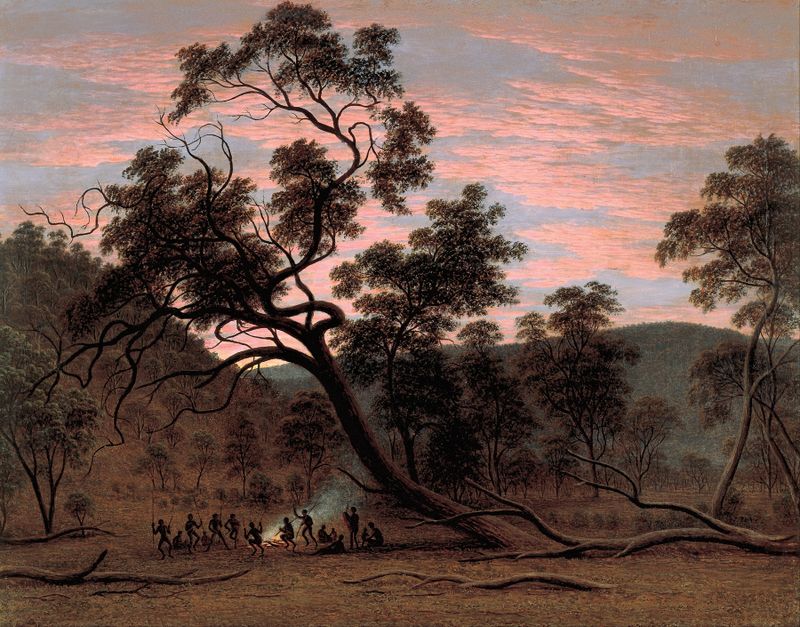
A corroboree of natives in Mills Plains
John Glover

Mount Wellington and Hobart Town from Kangaroo Point
John Glover

Mr Robinson’s house on the Derwent, Van Diemen’s Land
John Glover
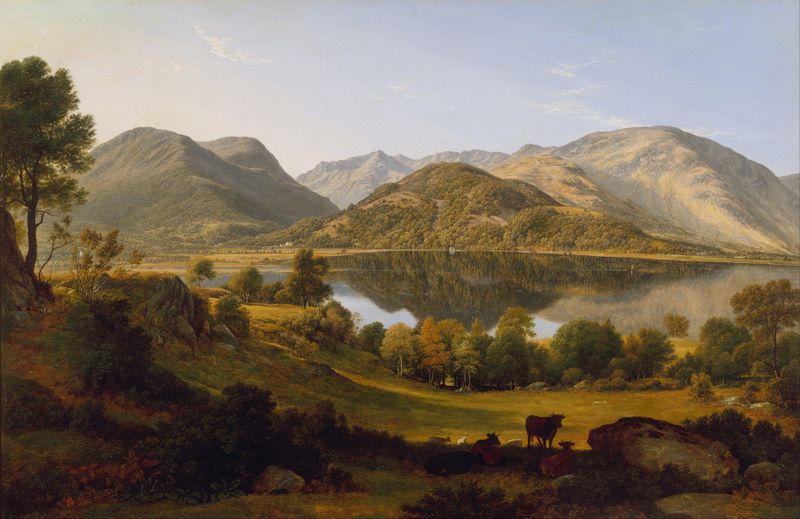
Ullswater, early morning
John Glover
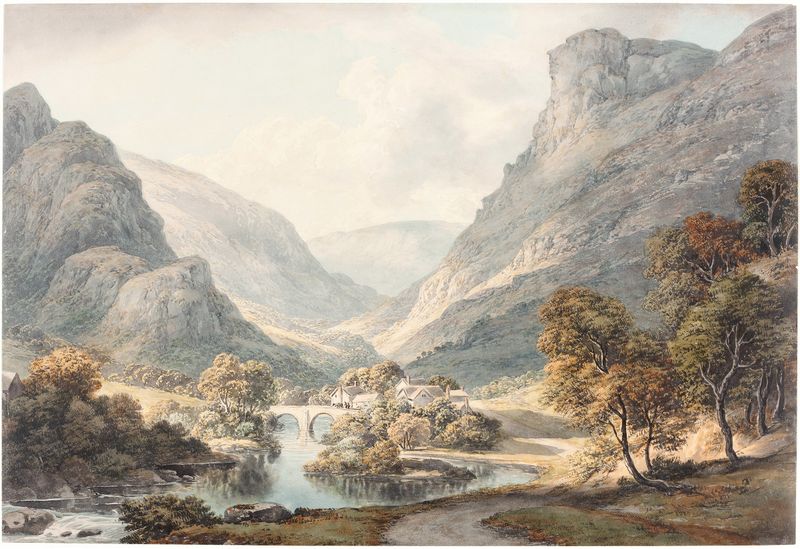
A View of Dovedale
John Glover

The bath of Diana, Van Diemen’s Land
John Glover
Patterdale farm
John Glover
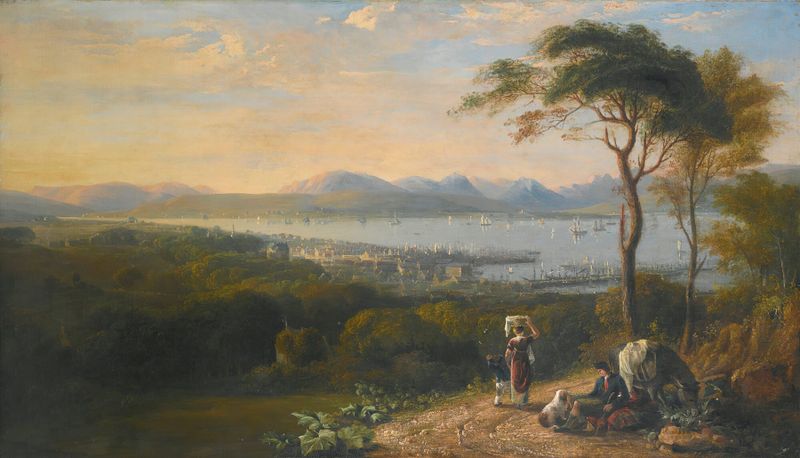
View Of Port Glasgow And Greenock On The Firth Of Clyde, The Argyll Hills Beyond
John Glover





