
Launceston and the river Tamar — History & Facts
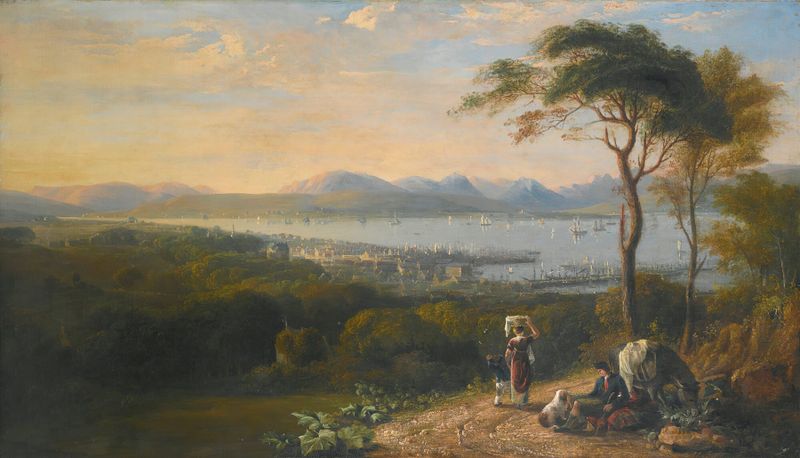
What if beauty was never meant to be finished? In the delicate embrace of nature, a violent tempest brews beneath the tranquil surface, hinting at the chaos that often resides within the serene. Look to the left, where the bold strokes of green and brown define the rugged hills, rising majestically against the expansive sky. Notice how Glover masterfully employs light, with the sun casting golden hues over the rippling waters of the Tamar, subtly concealing the turbulence beneath. The contrast between the calm river and the jagged cliffs hints at an underlying tension, inviting the viewer to probe deeper into the scene’s complexities. As you explore further, observe the tiny figures dotting the landscape, seemingly oblivious to the looming storm clouds gathering overhead.
This juxtaposition of serenity and impending turmoil reflects a broader commentary on the human condition—how we often traverse beauty while remaining blind to its darker undertones. The shadows stretch long across the painting, evoking a sense of unease that dances around the edges of admiration. In 1832, Glover was deeply engaged in his exploration of Australian landscapes, having settled in Tasmania after leaving England. This painting emerged during a time of significant change, as the burgeoning European settlement began to reshape the land, often violently.
His work captures both the breathtaking allure of the scenery and an implicit awareness of the struggles entwined with colonization, a poignant reminder of the conflict that accompanies the beauty of nature.
More Artworks by John Glover
Browse all →
A view of the artist’s house and garden, in Mills Plains, Van Diemen’s Land
John Glover
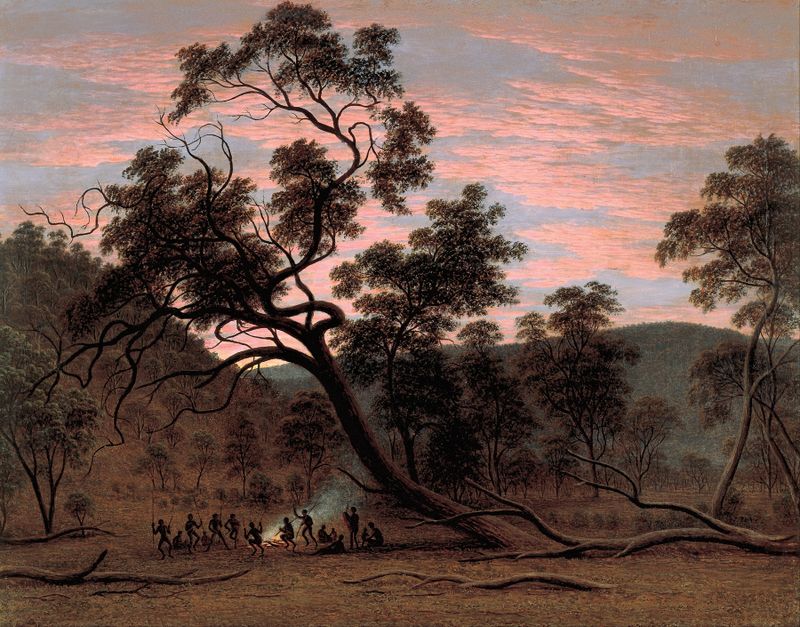
A corroboree of natives in Mills Plains
John Glover

Mount Wellington and Hobart Town from Kangaroo Point
John Glover

Mr Robinson’s house on the Derwent, Van Diemen’s Land
John Glover
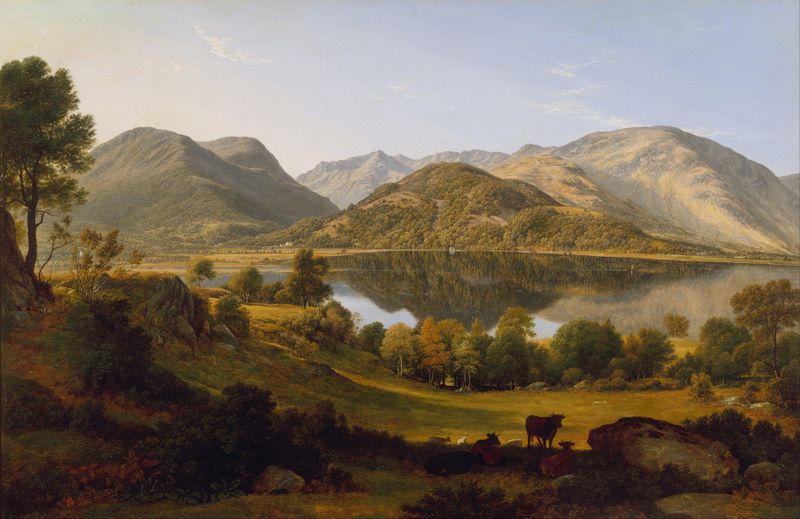
Ullswater, early morning
John Glover
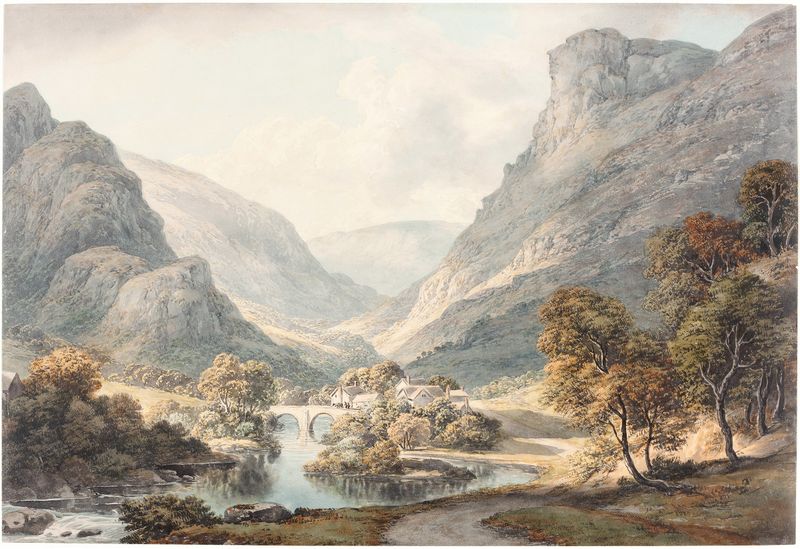
A View of Dovedale
John Glover

The bath of Diana, Van Diemen’s Land
John Glover

Landscape view in Cumberland
John Glover
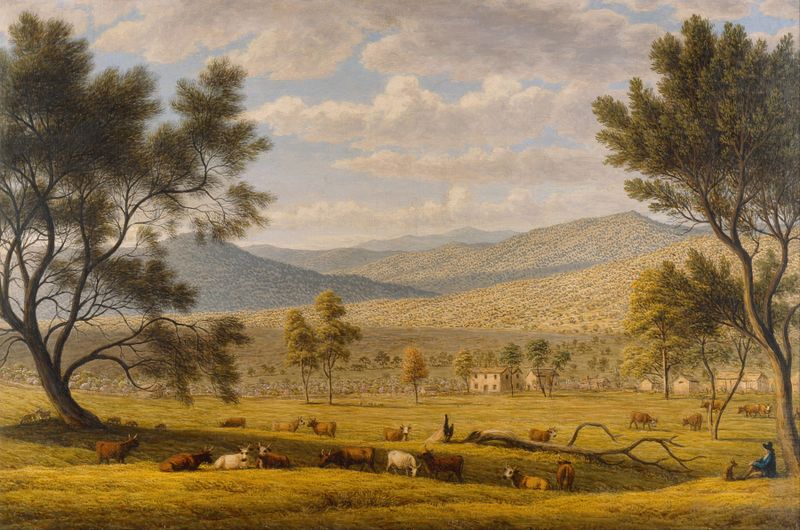
Patterdale farm
John Glover
View Of Port Glasgow And Greenock On The Firth Of Clyde, The Argyll Hills Beyond
John Glover





